
Resources



My School Battery – Explore, Understand and Manage Energy Levels at School
Help children understand their energy before they hit empty. Explore what drains their battery, discover what helps recharge it, recognise their personal low-energy warning signs and create a Recharge Plan they can actually use at school.
Member Account Includes
- Access over 800 downloadable mental health resources for children and teens
- Resource packs, activities, games, worksheets, teaching resources and more
- Seasonal themed resources
- Unlimited downloads
- Request your own resources
- Cancel anytime
Resource Info
My School Battery – Explore, Understand and Manage Energy Levels
A practical wellbeing toolkit to help children understand their energy, recognise what drains and recharges their battery, spot their low-energy warning signs and create a personalised recharge plan.
About This Resource
My School Battery uses the simple idea of an internal ‘battery’ to help children explore their own energy levels. Children will consider how their energy changes throughout a typical school day, identify their personal battery drainers and battery chargers, explore the warning signs that tell them their energy is running low and use everything they have discovered to create their own Recharge Plan.
The resource reinforces an important message throughout: everyone’s battery is different. Something that drains one child may recharge another, helping children develop greater awareness of their own individual needs without comparing themselves to others.
What’s Included?
The activities guide children through their school battery step by step:
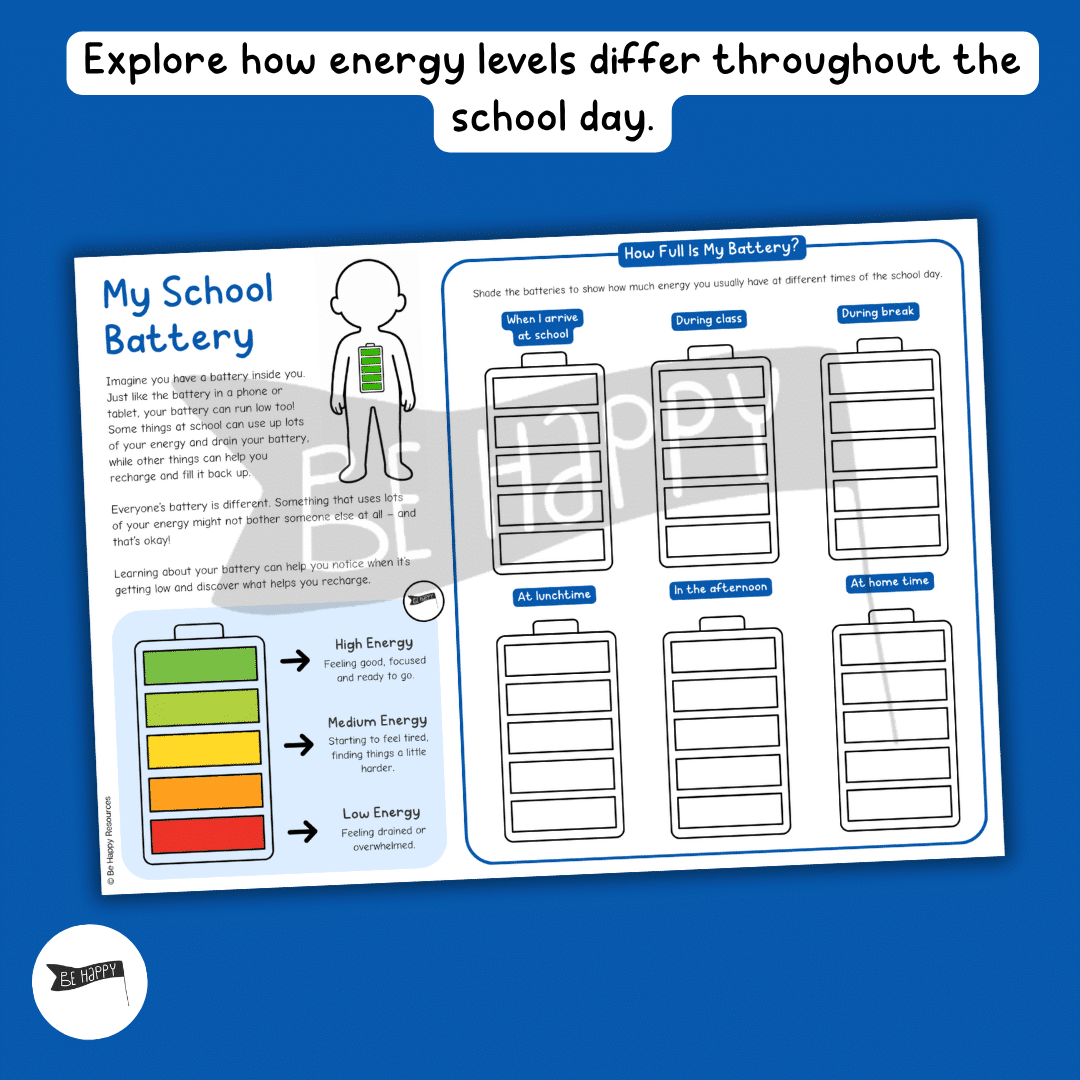
How Full Is My Battery?
Children shade batteries to show how much energy they usually have at different points throughout their school day, helping them notice patterns in when their energy is highest and lowest.
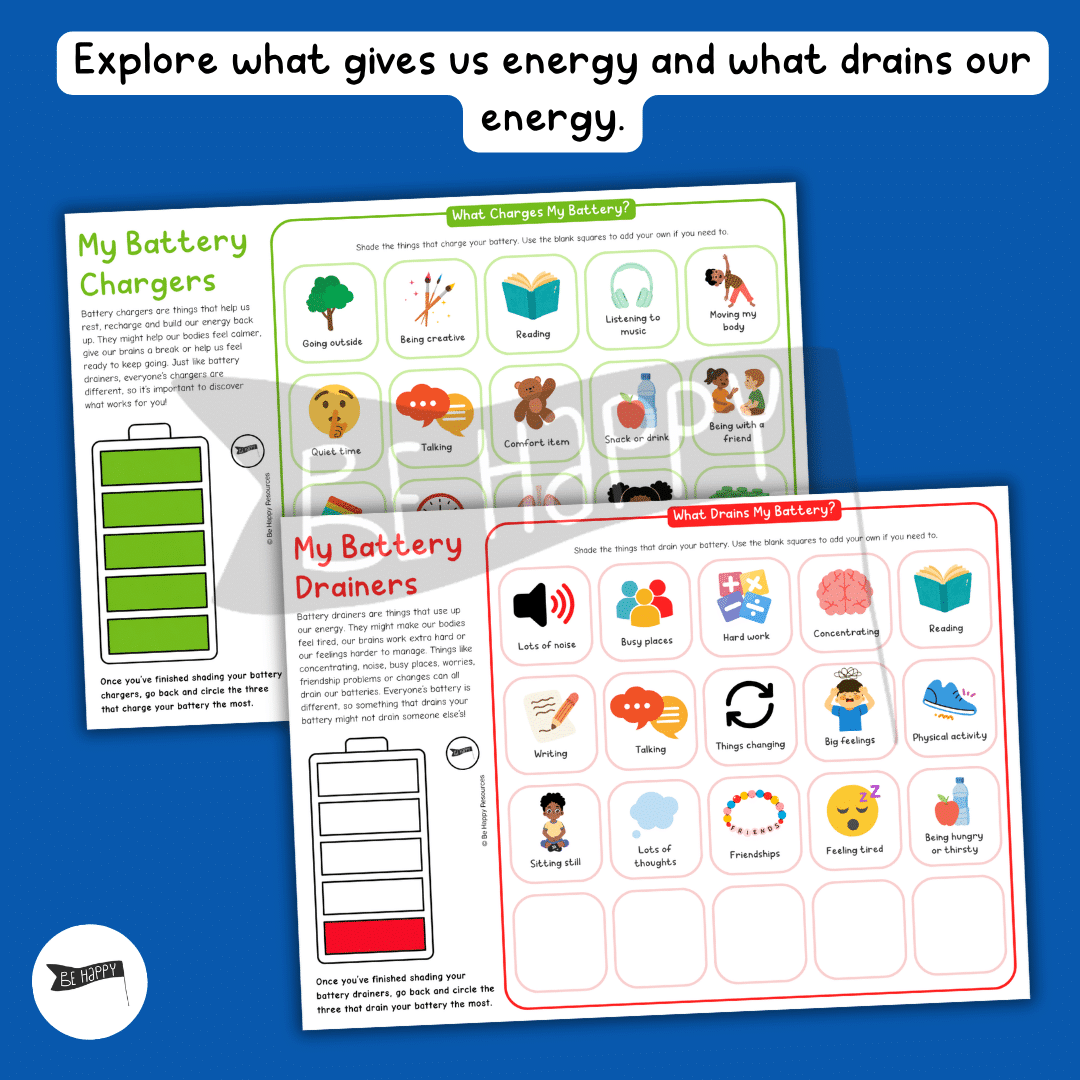
My Battery Drainers
Explore what uses up energy at school, from noise, busy environments and concentrating to friendships, physical activity, big feelings and tiredness. Children can shade the drainers that apply to them, add their own and identify their top three.
My Battery Chargers
Explore the activities, people and experiences that help children recharge. Children identify their own chargers and consider which have the biggest positive effect on their energy.
My Low Battery Warning Signs
Help children recognise the signals their body, thoughts, feelings and behaviour might give them when their energy is running low. Children can use the examples provided before recording or drawing their own warning signs.
My Recharge Plan
Bring everything together into a personalised plan. Children explore their signs at different energy levels and identify their Quick Chargers, Brain Chargers, People Chargers and Location Chargers.
Benefits
My School Battery can help children:
- Build awareness of their individual energy levels and needs
- Recognise patterns across the school day
- Identify experiences that drain their energy
- Discover what helps them rest, regulate and recharge
- Notice early warning signs before becoming completely drained
- Develop emotional and body awareness
- Communicate their needs more easily to trusted adults
- Build a personalised collection of realistic coping and regulation strategies
- Understand that different people can experience the same situation differently
- Begin to take an active role in managing their wellbeing at school
How to Use
Work through the activities in order so children gradually build a picture of their individual school battery.
The resource can be completed independently by older primary-aged children or explored alongside a trusted adult with younger children or pupils who need additional support.
Encourage children to think about their own experience, rather than what they think the ‘right’ answers should be. There are no good or bad battery drainers or chargers – and the same activity may even be a drainer for one child and a charger for another.
Once completed, the Recharge Plan can be kept somewhere accessible and revisited when needed. It can also provide a useful starting point for conversations between pupils and the adults supporting them.
Suggested Uses
Ideal for back-to-school transition, wellbeing check-ins, ELSA sessions, pastoral support, SEND support, emotional literacy work, regulation activities, individual interventions, PSHE, nurture groups and one-to-one work.
It could also be particularly useful for children who find the school day tiring or overwhelming, struggle to recognise when they need a break, experience sensory or emotional overload, or find it difficult to communicate what they need.
Perfect For
Primary schools • Teachers • Teaching assistants • ELSAs • SENCOs • Pastoral teams • Nurture groups • Therapists • Counsellors • Parents and carers


Our
Members Include


