
Resources
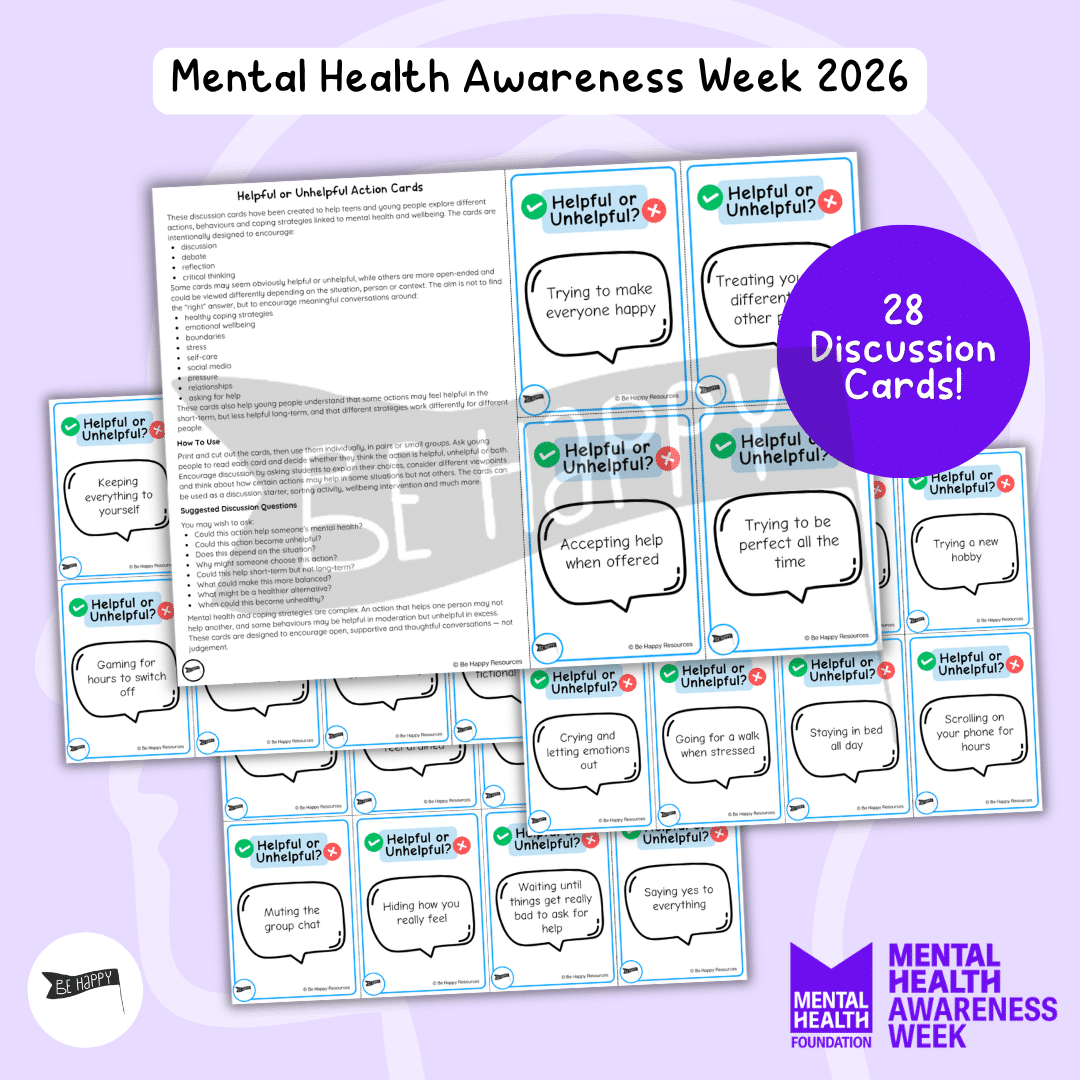
Helpful or Unhelpful Action Cards – Mental Health Debate and Discussion Prompts for Teens
Discussion-Based Mental Health Activity for Teens
Support meaningful conversations around mental health and wellbeing with these engaging Helpful or Unhelpful? discussion cards for teens and young people.
Created to reflect this year’s Mental Health Awareness Week theme, “Take Action,” these cards encourage students to explore different actions including coping strategies, behaviours, habits and emotional responses linked to mental health and wellbeing.
Unlike traditional “right or wrong” activities, these cards are intentionally designed to be open-ended and discussion-led. Some actions may seem obviously helpful or unhelpful, while others may depend on the situation, context or individual. This encourages deeper thinking, reflection and debate around healthy coping strategies, boundaries, emotions, social pressures and self-care.
Member Account Includes
- Access over 800 downloadable mental health resources for children and teens
- Resource packs, activities, games, worksheets, teaching resources and more
- Seasonal themed resources
- Unlimited downloads
- Request your own resources
- Cancel anytime
Resource Info
Helpful or Unhelpful Action Cards - Mental Health Debate and Discussion Prompts for Teens
This printable resource includes a set of teen-friendly discussion cards featuring a range of realistic actions, behaviours and coping strategies linked to mental health and wellbeing.
Topics explored include:
- friendships and relationships
- social media and screen time
- self-care and boundaries
- asking for help
- emotional regulation
- stress and overwhelm
- isolation and connection
- productivity and pressure
- coping strategies and avoidance
The cards are written in relatable, age-appropriate language designed specifically for KS3, KS4 and older teens.
How To Use
Print and cut out the cards, then use them individually, in pairs, small groups or as a whole-class discussion activity.
Students can:
- sort the cards into helpful, unhelpful or both
- explain and justify their choices
- discuss different viewpoints
- reflect on healthy coping strategies
- explore balance, boundaries and emotional wellbeing
- consider how some actions may help short-term but not long-term
These cards can be used as:
- PSHE activities
- wellbeing interventions
- pastoral support activities
- Mental Health Awareness Week discussions
- group work
- counselling or mentoring prompts
Suggested Uses
These prompts are extremely flexible and can easily fit into any classroom, therapy setting or youth club. Here are some ways you could use them:
Helpful, Unhelpful or Both Sorting Activity: Ask students to sort the cards into three categories: Helpful, unhelpful, both. Encourage discussion and debate around why they chose each category and whether different people may view the action differently.
Continuum Activity: Place signs around the room such as: Helpful, unhelpful, both or unsure. Read out each card and ask students to move to the area that best matches their opinion. Invite students to explain and discuss their choices.
Pair or Small Group Discussions: Give each pair or group a selection of cards to discuss together. Students can explain their viewpoints, challenge ideas respectfully and consider how certain actions may help in some situations but not others.
Debate Activity: Choose one card and split the group into two sides. One side argues how the action could help mental health, while the other discusses how it could become unhelpful.
Intervention or Therapy Sessions: Use the cards during 1:1 support, mentoring or small group interventions to encourage open conversations around emotions, coping strategies, stress and wellbeing.
Benefits
This resource helps young people to:
- develop emotional awareness
- explore healthy and unhealthy coping strategies
- build critical thinking skills
- understand emotional regulation
- reflect on social pressures and boundaries
- develop empathy and understanding
- engage in respectful discussion and debate
- recognise that mental health experiences are complex and individual
The open-ended nature of the cards encourages honest, thoughtful and non-judgemental conversations, helping teens explore mental health and wellbeing.


Our
Members Include


