
Resources
The Wellbeing Mountain – A Science-Backed Mental Health and Self-Care Tracker for Kids
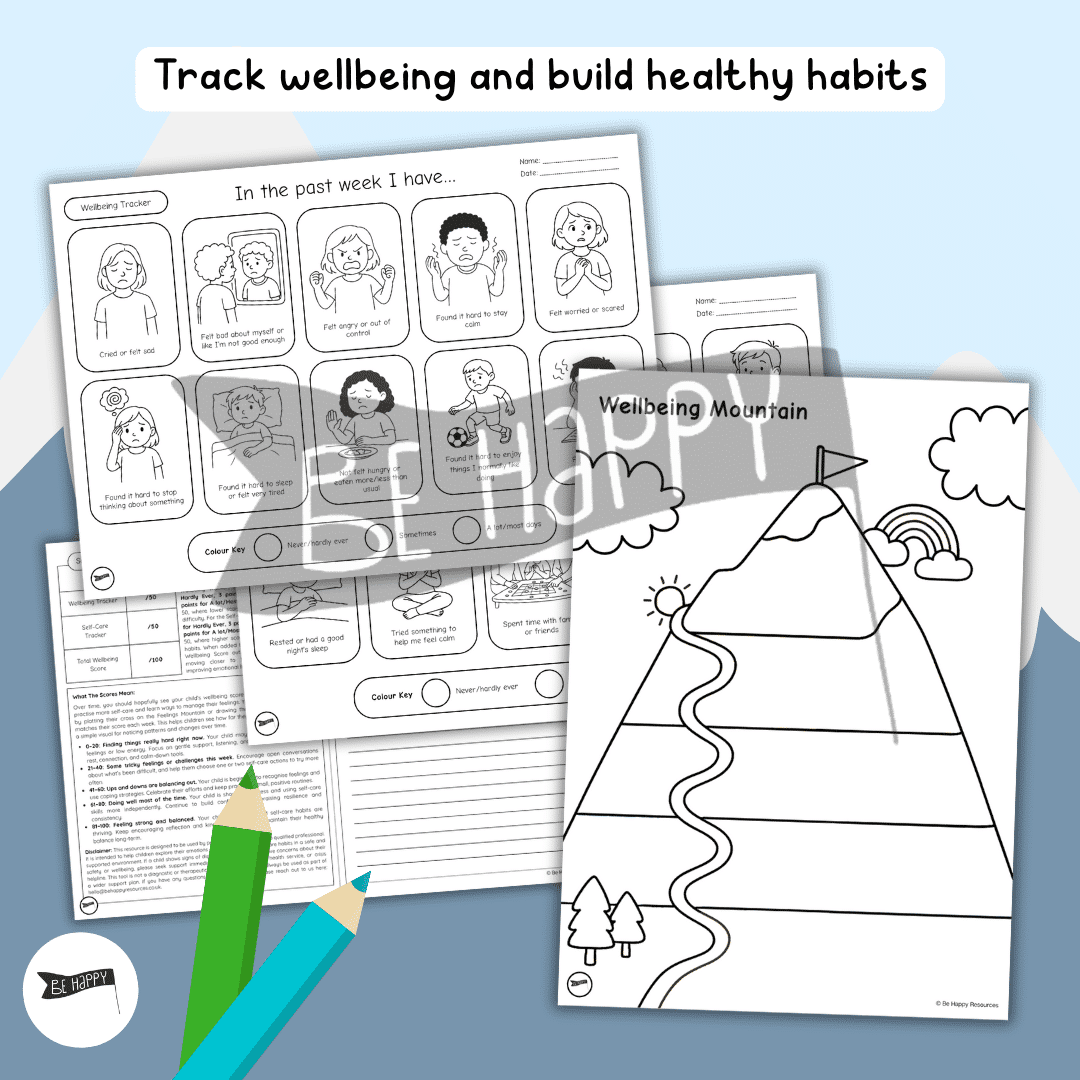
Our Wellbeing Mountain tracker is designed to help your child build healthy habits and reflect on their wellbeing week by week. Using our optional scoring system and engaging mountain metaphor, you can gently track how your child’s emotional health changes over time and support them in developing simple, meaningful self-care routines as they ‘climb’ their mountain.
The scoring system is intended as a guide, not an assessment tool. It simply helps you plot where your child’s wellbeing sits each week, recognising that mental health is not linear and will naturally rise and fall. Over time, it helps children begin to understand their signs and triggers, understand the correlation between self-care habits and wellbeing, and identify when they may need additional support.
It’s not a race to the top, the Wellbeing Mountain is about understanding that our mental health is a journey that will go up, down, and change direction throughout life. What matters most is noticing what helps us climb, recognising when we need a helping hand, and using our climbing tools (self care) to keep moving forward, one step at a time.
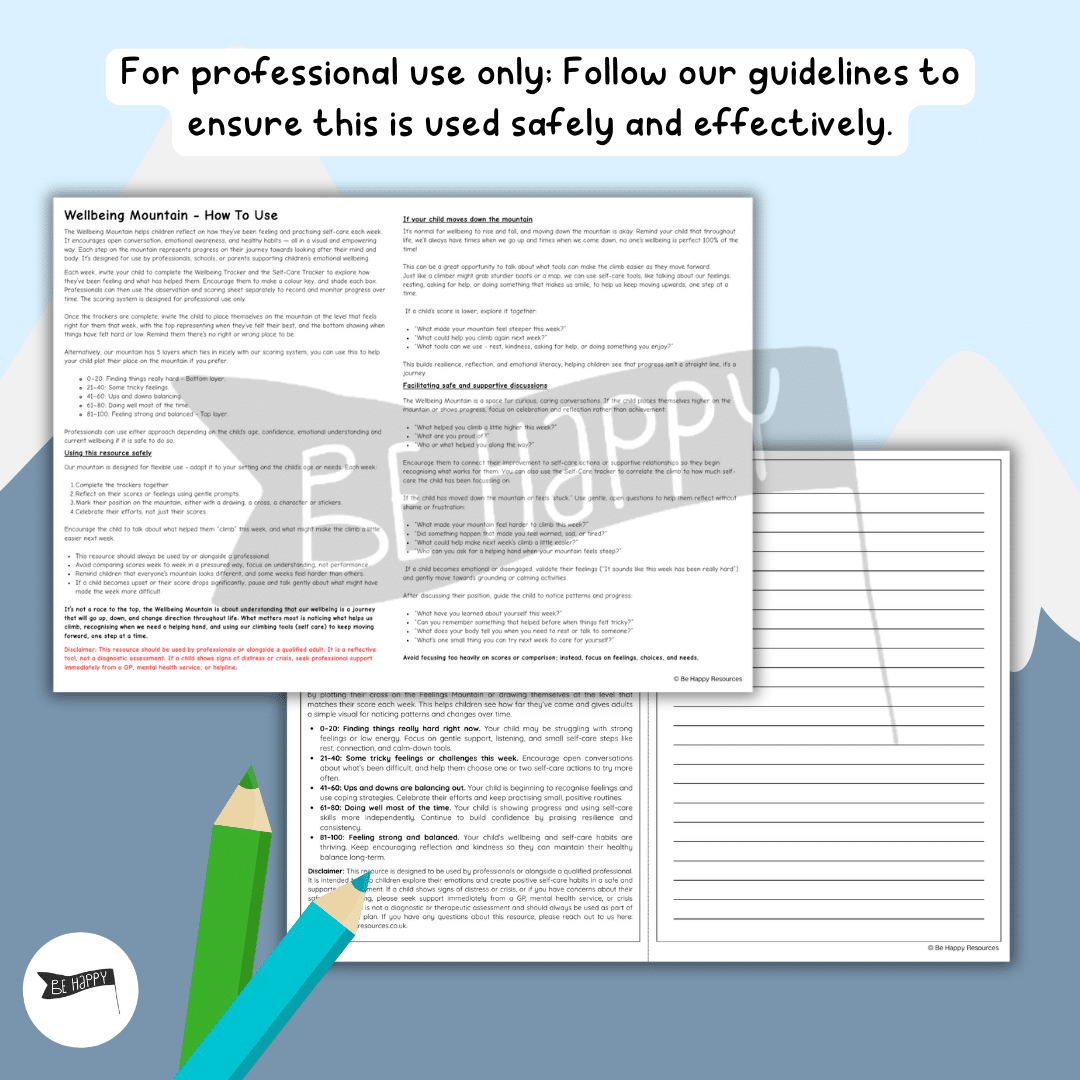
Disclaimer: This resource should be used by professionals or alongside a qualified adult. It is a reflective tool, not a diagnostic assessment. Please follow out guidelines to use this resource safely and seek further support if necessary.
Member Account Includes
- Access over 800 downloadable mental health resources for children and teens
- Resource packs, activities, games, worksheets, teaching resources and more
- Seasonal themed resources
- Unlimited downloads
- Request your own resources
- Cancel anytime
Resource Info
The Wellbeing Mountain – A Wellbeing and Self-Care Tracker for Kids
Helping children understand, reflect, and care for their emotional wellbeing.
About This Resource
The Wellbeing Mountain is a visual, reflective tool designed to help children explore their emotional wellbeing and practise healthy self-care habits.
Developed with child development and emotional literacy principles in mind, this resource helps children recognise how they feel, what affects their emotions, and what helps them cope. It’s a gentle, structured way for professionals and caregivers to open meaningful conversations about mental health and personal growth, while also tracking progress over time.
Features
-
Two interconnected trackers:
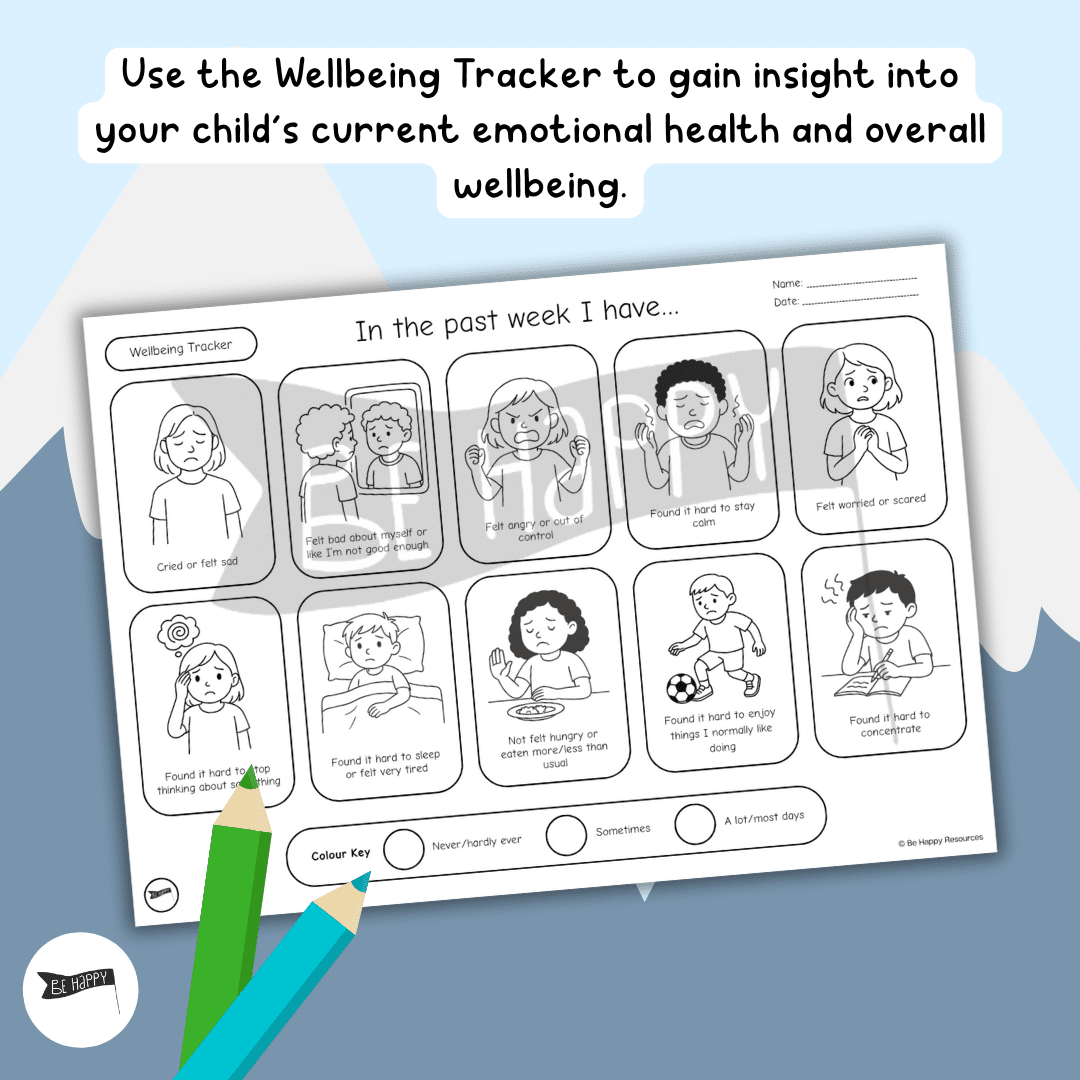
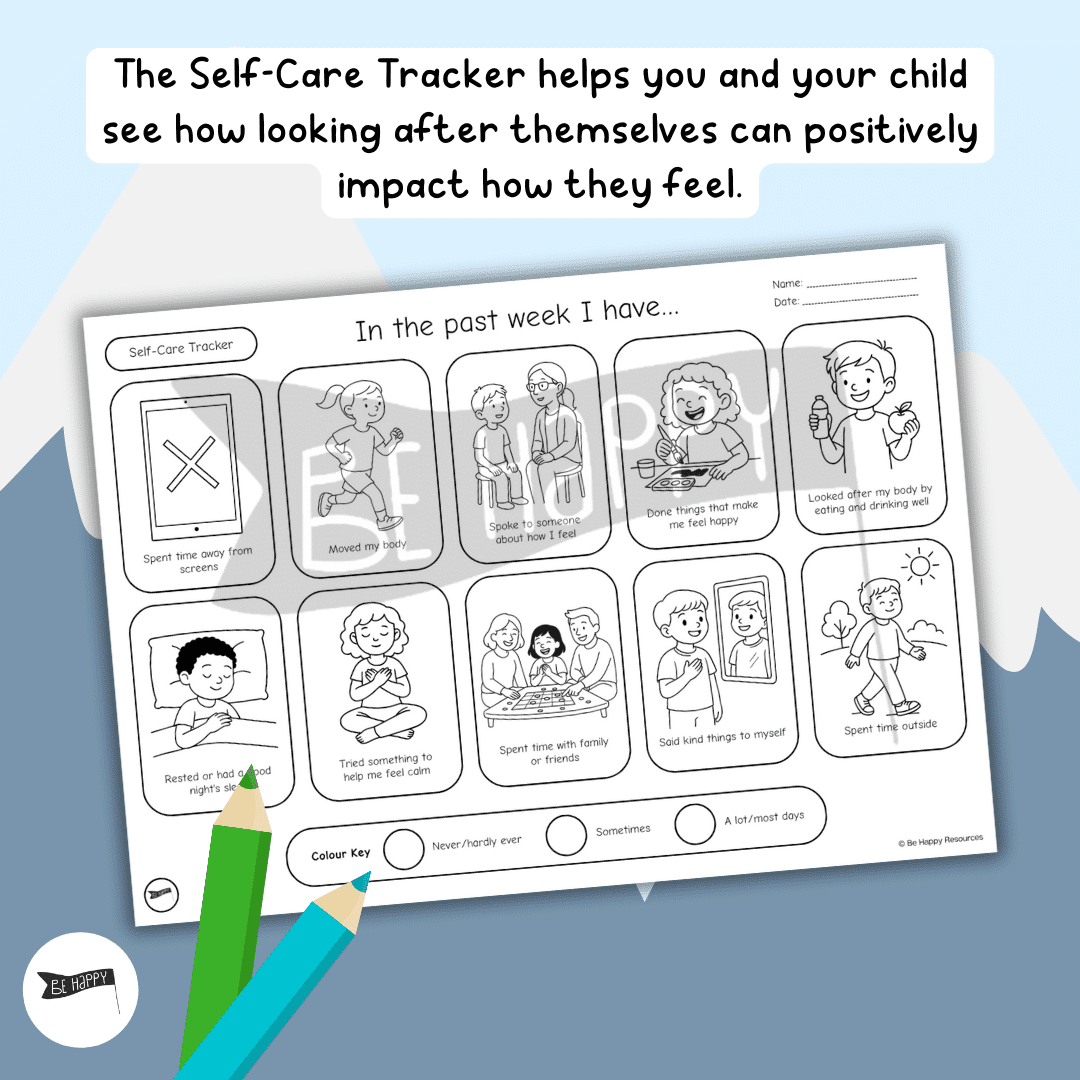
A Wellbeing Tracker (for emotional states) and a Self-Care Tracker (for positive coping actions). -
The Wellbeing Mountain visual:
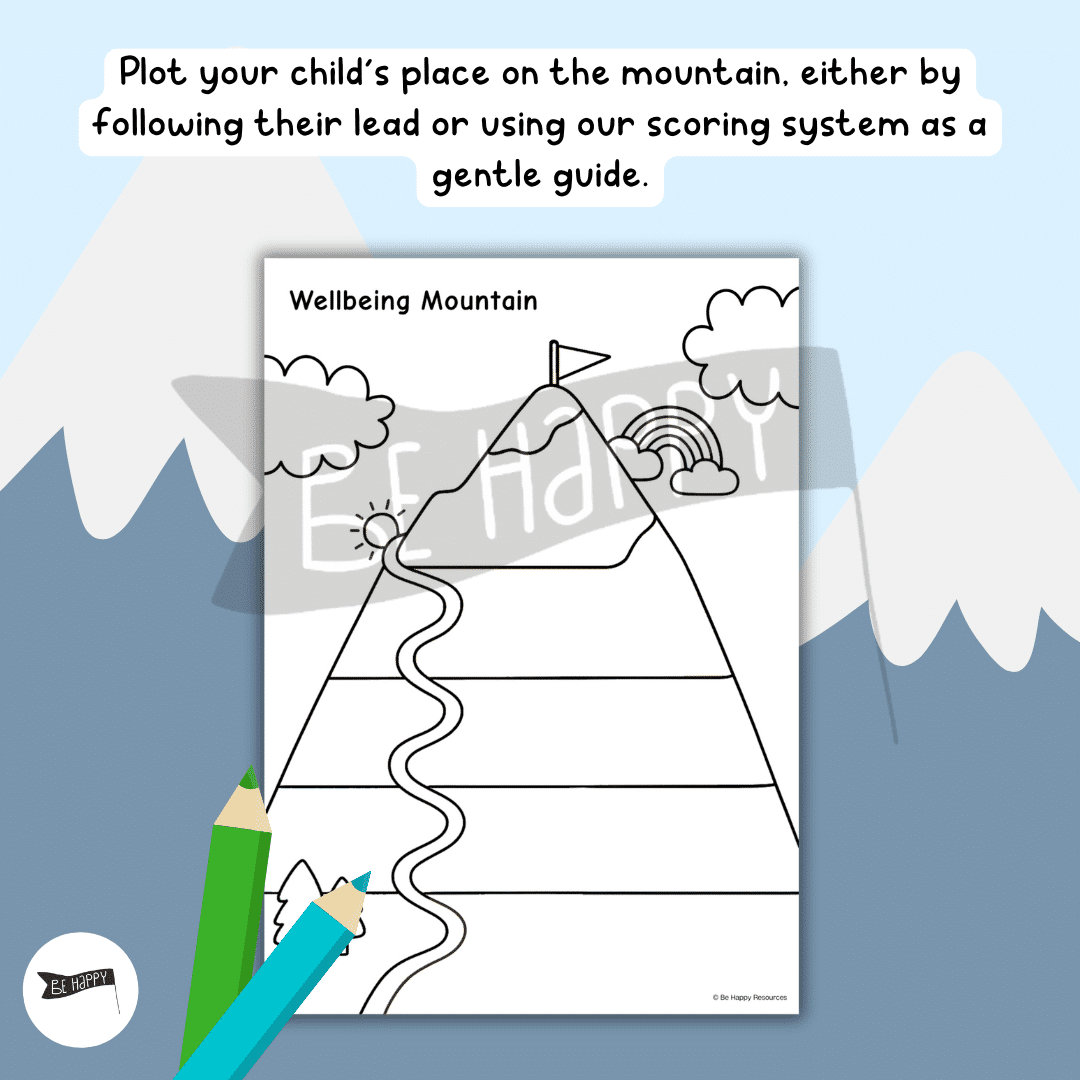
A fun, child-friendly metaphor showing that wellbeing is a journey with ups and downs. -
Optional scoring system (for professional use):
Allows educators, counsellors, and parents to record progress using a simple scoring guide to spot trends or changes. -
Safe, trauma-informed language:
Every prompt and section is written with emotional sensitivity to ensure children feel supported, not judged. -
Engaging and flexible:
Suitable therapeutic settings. Can be used individually or as part of a group wellbeing programme. -
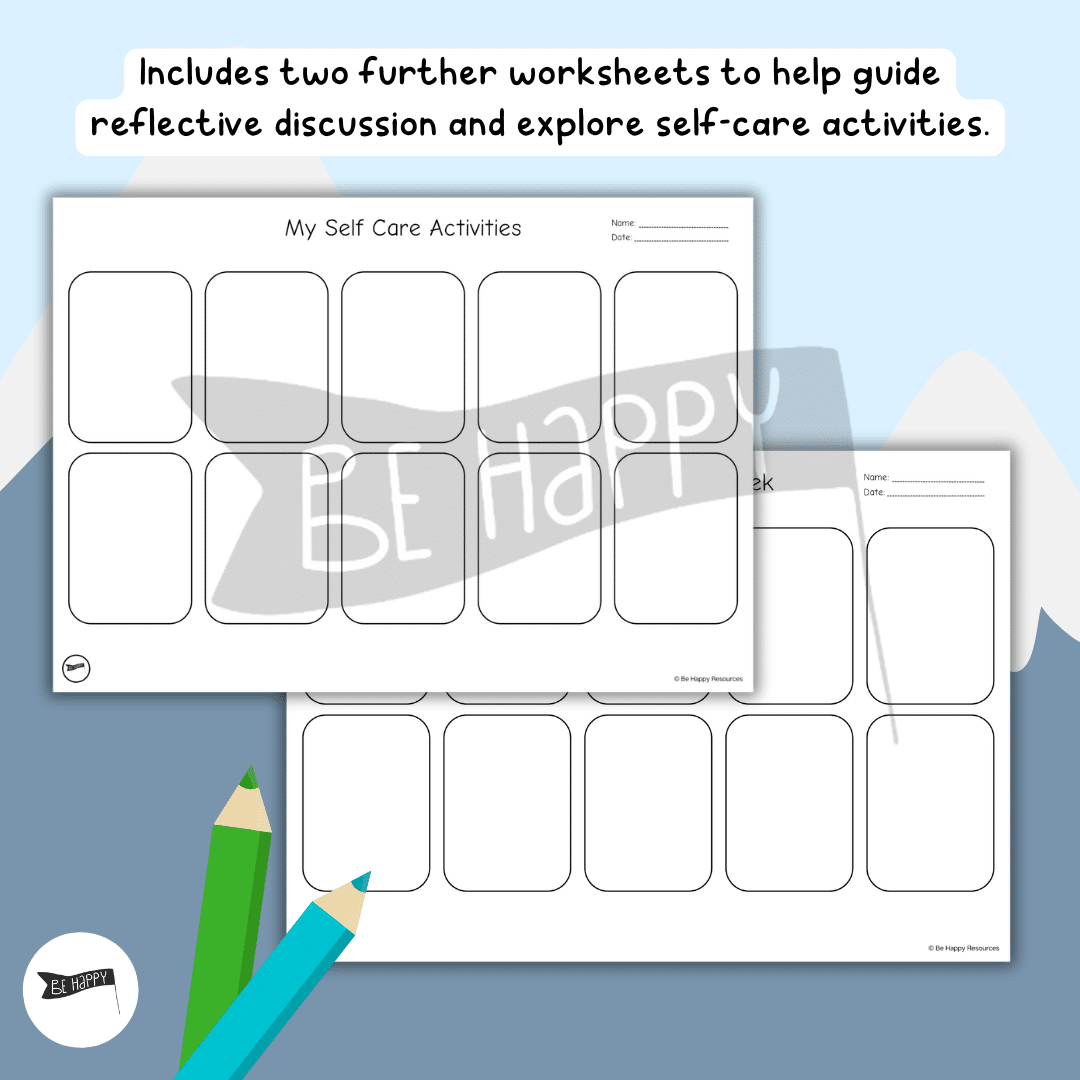
Two further optional worksheets:
To explore their own self-care strategies and coping tools, as well as reflect on what has helped them each week.
How to Use Safely
The Wellbeing Mountain should be used by or alongside a qualified professional. It is not a diagnostic or assessment tool, it is a reflective framework to help guide conversation and awareness around self-care and triggers.
When using the resource:
-
Keep discussions calm, supportive, and curiosity-led.
-
Avoid comparing weeks or focussing heavily on scores.
-
Use open-ended questions (“What helped you climb higher?” / “What made this week harder?”).
-
Always validate emotions, there are no right or wrong answers.
-
If a child becomes distressed or withdrawn, pause the activity and offer reassurance, then seek additional professional support if needed.
How to Use the Mountain as a Metaphor
The Wellbeing Mountain represents the journey of emotional wellbeing, full of climbs, rests, and changes in direction. It’s not about reaching the top quickly, but learning what helps along the way and that we may go up and down the mountain throughout different times in our lives.
You can help children make sense of their journey by saying things like:
“Some weeks our mountain feels steep, that’s okay. We can rest, use our tools, and try again next time.”
The mountain reminds children that:
-
Everyone’s journey looks different.
-
Ups and downs are normal.
-
Support and self-care are what help us keep moving forward.
This gentle metaphor turns self-reflection into something visual, engaging, and emotionally safe.
Using It to Monitor Your Child’s Wellbeing
Each week, the child completes their trackers to reflect on how they’ve been feeling and what self-care activities they’ve practised. They can colour their answers using a colour key and place themselves on the mountain where they feel they are that week.
Professionals can then use the optional scoring system (for observation only) to note changes and patterns over time. The scores provide a broad indication of progress, not a fixed measurement - mental health is not linear, and fluctuation is completely normal.
Tracking in this way helps:
-
Identify when extra support may be needed.
-
Reinforce self-care as a key protective factor.
-
Celebrate small steps of progress and resilience.
The system combines two parts:
-
The Wellbeing Tracker, which captures how the child has felt that week.
-
The Self-Care Tracker, which records how often they’ve practised healthy habits that support their mental health.
When viewed together, these scores help adults and children begin to see the link between self-care and emotional wellbeing. For example:
-
A child who practises more self-care over time may start to notice they feel calmer or happier.
-
A week with less self-care might correspond to feeling more tired or worried.
This reflection gently teaches that looking after ourselves can improve how we feel, a powerful lesson in emotional regulation and responsibility.
The Science Behind It
The Wellbeing Mountain is grounded in key psychological principles supported by research in child development and mental health. It combines two evidence-based constructs used in emotional wellbeing work with children:
-
Subjective wellbeing — how I feel, and
-
Protective behaviours / coping strategies — what I do to help myself feel better.
By separating and exploring these two areas, children begin to understand an important psychological truth:
“How I feel” and “What I do to help myself” aren’t always the same, but one can influence the other.
This simple idea forms the foundation of emotional literacy and resilience. When children can notice their feelings and recognise the actions that help them manage those feelings, they start to develop long-lasting skills in self-awareness, self-regulation, and agency.
Research consistently shows that:
-
Children who learn to identify and talk about their emotions show improved emotional regulation and lower stress levels (Durlak et al., 2011, Child Development).
-
Practising regular self-care and reflection promotes protective mental health behaviours that build long-term wellbeing (WHO, 2020; APA, 2021).
-
Tools that combine reflection, visual metaphors, and structured guidance - like the Wellbeing Mountain - improve both emotional insight and motivation to care for oneself (CASEL, 2022).
By helping children recognise the link between their actions and their emotional outcomes, this resource encourages them to take gentle, consistent ownership of their wellbeing, one small step (or climb) at a time.
Important Safety Note
-
The scoring system is for professional use only and should only be shown to or completed with the child at your discretion.
-
This resource is not a diagnostic or clinical assessment.
-
If a child shows distress or ongoing low wellbeing, please seek further support.
The Wellbeing Mountain is a supportive, reflective tool designed to help children understand and care for their mental wellbeing.
By combining gentle visual metaphors, self-care tracking, and safe conversation prompts, it empowers children to build awareness, confidence, and resilience, while giving professionals a simple way to observe change over time.
It’s not about reaching the top; it’s about learning, resting, and climbing at your own pace.
Help children explore their emotions, develop healthy habits, and build lifelong self-care skills. Download the Wellbeing Mountain today and start your journey toward calmer, happier minds.



Our
Members Include


