
Resources
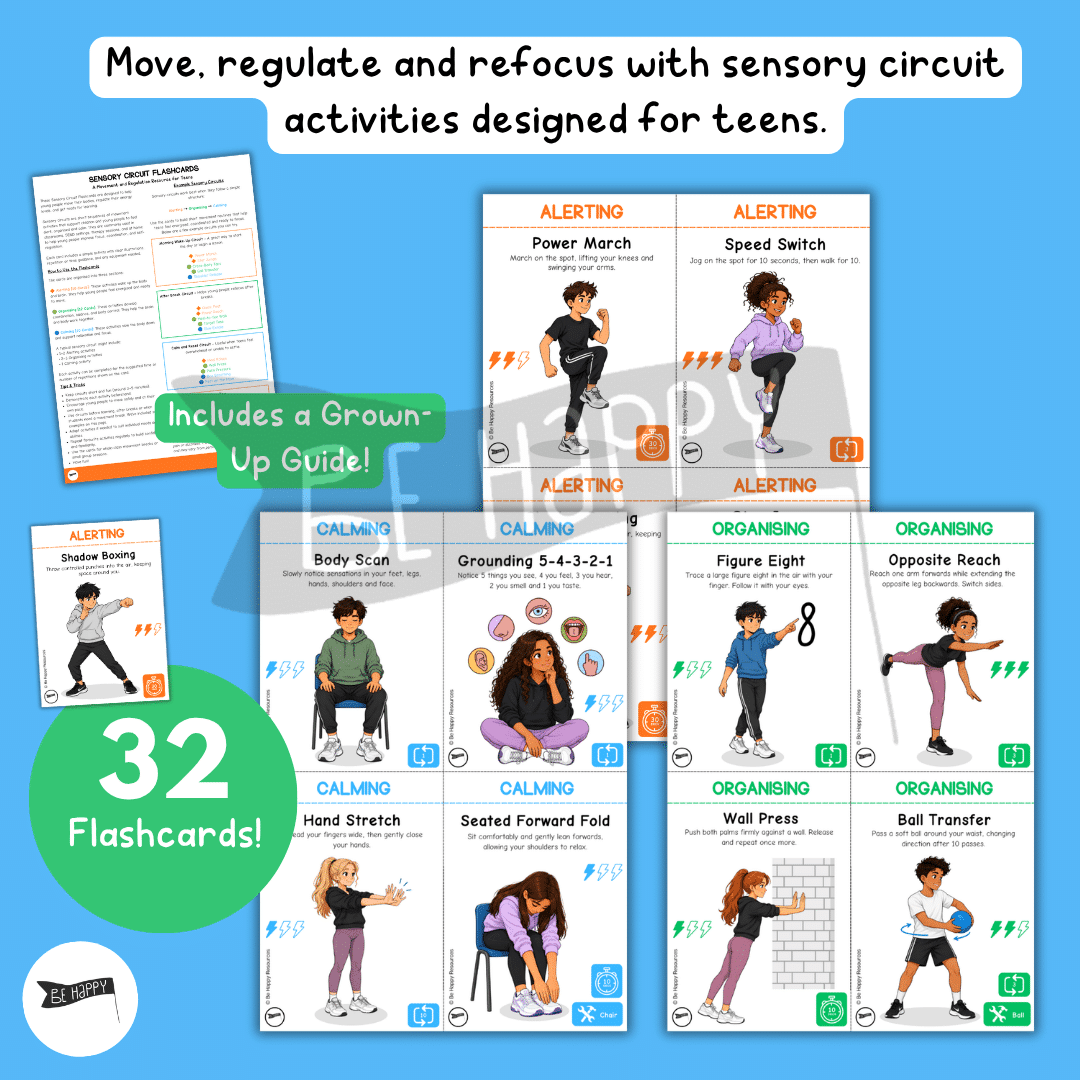


Sensory Circuit Flashcards for Teens – 32 Cards to Regulate and Focus
Help young people explore movement, manage their energy levels and develop sensory regulation skills with our Sensory Circuit Flashcards for Teens.
Designed specifically for older children and teenagers, this engaging resource includes 32 illustrated movement activities to support sensory regulation, coordination, body awareness and focus.
Sensory circuits are short, structured sequences of movement activities that follow three stages: Alerting, Organising and Calming. Each stage serves a different purpose, helping young people explore movements that can increase alertness, support coordination and encourage a calmer, more regulated state.
Perfect for secondary schools, SEND settings, sensory rooms, pastoral support and home use, these flashcards offer a practical and flexible way to introduce movement breaks throughout the day.
Member Account Includes
- Access over 800 downloadable mental health resources for children and teens
- Resource packs, activities, games, worksheets, teaching resources and more
- Seasonal themed resources
- Unlimited downloads
- Request your own resources
- Cancel anytime
Resource Info
Sensory Circuit Flashcards for Teens
Move, regulate and refocus with sensory circuit activities designed for teens!
Help teenagers explore movement, manage their energy levels and develop sensory regulation skills with our Sensory Circuit Flashcards for Teens.
Designed specifically for older children and teenagers, this engaging resource includes 32 illustrated movement activities to support sensory regulation, coordination, body awareness and focus.
Sensory circuits are short, structured sequences of movement activities that follow three stages: Alerting, Organising and Calming. Each stage serves a different purpose, helping young people explore movements that can increase alertness, support coordination and encourage a calmer, more regulated state.
Perfect for secondary schools, SEND settings, sensory rooms, pastoral support and home use, these flashcards offer a practical and flexible way to introduce movement breaks throughout the day.
What's Included?
The resource contains 32 sensory circuit flashcards, divided into three colour-coded categories:
- 10 Alerting Activities – Energising movements designed to increase alertness and wake up the body, including Power March, Star Jumps and Quick Feet.
- 12 Organising Activities – Controlled movements that support balance, coordination and body awareness, including Cross-Body Taps, Figure Eight and Heel-to-Toe Walk.
- 10 Calming Activities – Gentle movements and grounding techniques that encourage relaxation and support self-regulation, including Box Breathing, Body Scan and Shoulder Release.
Also included is an instruction and guidance sheet, featuring example sensory circuits, practical tips and an icon key.
Features & Benefits
- Teen-Friendly Illustrations: Clear, engaging illustrations featuring diverse teenagers demonstrating each activity.
- Supports Sensory Regulation: Provides opportunities for young people to explore movement and discover activities that help them regulate their energy levels.
- Encourages Body Awareness: Helps teenagers develop awareness of their movements, balance and coordination.
- Promotes Focus & Readiness to Learn: Offers structured movement breaks that may help students feel more alert, settled and ready to engage.
- Three-Stage Structure: Colour-coded Alerting, Organising and Calming activities make it easy to build personalised sensory circuits.
- Clear & Simple Instructions: Each flashcard includes easy-to-follow guidance, suggested timings or repetitions, and equipment information where needed.
- Difficulty Ratings: Lightning bolt ratings provide a simple guide to the physical effort and coordination involved.
- Flexible & Adaptable: Activities can be selected and adapted to suit individual sensory needs, abilities and preferences.
- Practical for Everyday Use: Ideal for classroom movement breaks, transitions, sensory regulation sessions and individual support.
How to Use
Choose activities from each of the three stages to create a short sensory circuit:
Alerting → Organising → Calming
Start with energising movements, move on to activities that encourage coordination and body control, and finish with calming exercises.
Circuits can be completed individually, in small groups or as part of a whole-class movement break. The included guidance sheet provides example circuits for different situations, including morning routines, after-break transitions and moments when students need to reset.
Encourage teenagers to explore different activities and identify which movements work best for them. Sensory needs are individual, and activities should always be adapted to suit each young person's comfort and abilities.
Suggestions for Use
- Morning Movement Routines: Start the school day with a short sensory circuit to help students feel alert, energised and ready to learn.
- Classroom Movement Breaks: Introduce quick movement activities between lessons or during longer periods of seated learning.
- After-Break Transitions: Use a structured sensory circuit to help students transition from break or lunchtime back into the classroom.
- Sensory Regulation Support: Encourage teenagers to explore different movements and identify activities that help them manage their individual sensory needs.
- Calm & Reset Breaks: Select gentle movements, breathing exercises and grounding activities when students feel overwhelmed, restless or overstimulated.
- Personalised Sensory Circuits: Allow students to choose their favourite activities from each category to create routines suited to their individual needs and preferences.
- SEND & Pastoral Support: Incorporate the cards into individual support sessions, sensory breaks or personalised regulation strategies.
- Small Group Activities: Use the cards in pairs or small groups to encourage participation, coordination and shared movement experiences.
- Before Challenging Tasks: Offer a short sensory circuit before activities that require sustained attention, concentration or transitions.
- Home & Homework Routines: Encourage families to use the cards as short movement breaks during homework or after a busy school day.


Our
Members Include


