What’s New This Week? – 24th September

We’re back in business and we’ve got some new, fun educational worksheets for you this week!
This month we had a little change of direction with the death of Queen Elizabeth II and decided to focus on bringing you free resources to help children process any thoughts and worries they had. But now we are now back on track with our upload schedule, bringing you seven new resources and activities. See what educational emotion resources we have for you this week below!
 
The Happy Llama – This feel-good activity encourages your child to think of all the things that make them happy, whether it’s people, places, food, hobbies – this task challenges them to think of everything that puts a smile on their face. How happy can they make our Llama? The more they write on the Llama’s neck, the happier he grows!
 
When I Make a Mistake I Can… – Part of facilitating a growth mindset and encouraging children to deal with unexpected challenges is helping them to realise that mistakes are part of life. Your child can use this checklist when they’ve made a mistake to help them think about their next steps and build their resilience. Remember, mistakes help the brain grow!
 
Create Your Own Emotion Chart – This blank emotion scale can be used in so many ways! Whether it’s having your child come up with their own scale that reflects the emotions they feel on a daily basis, or whether it’s a classroom activity to help children order their emotions from happy to angry and colour in accordingly.
 
My Glad, Sad and Mad Chart – What makes your child feel glad, sad and mad? Recognising triggers for our negative emotions can help us manage our thoughts and feelings more effectively. The chart scales up to red, with mad being the most intense emotion they can feel – it’s always helpful to think of ways to stay in the green!
 
Today I Feel… (Grief Focus) – This is a simple but effective grief resource to help grieving children track their emotions through each stage. Grief is a personal process and is different for everyone, this checklist can act as a way of bringing up and discussing any bothersome emotions or worries your child may have.
 
Describe the Monsters – Another fun emotion learning activity for young children. We want emotional learning and discussion to be a part of every day life, whether your child is learning colours or numbers, we love to think of ways that learning about emotions can easily slot into this learning process. This activity asks your child to describe the monsters using our given adjectives – which do they think is the smelly monster!?
 
Colouring Sheets for Older Children – We know that some older children think they’re ‘too old’ for colouring! But colouring is one of the most mindful activities you can do, and once you start, it’s easy to get into the swing of it! We have five new encouraging and positive statement colouring sheets to complete.
 
Hub Redesign
 
At the moment we are focusing on re-designing the Be Happy Hub and filtering our resources more effectively. This is to ensure that you continue to have the best, possible experience of finding and downloading resources to use as we grow. Please bear with us as we make changes, if there’s anything you’d like to know or ask – or any suggestions you may have – you can contact us on hello@behappyresources.co.uk.
 
New Resource Packs
 
We are still pressing ahead with our two new resource packs – our Confidence Pack and Trauma Pack – and these are due to launch in the next few weeks. We appreciate your patience as we continue to create and make resources.
 
Your Requests
 
With children back at school we’ve had a lot of requests over the last few weeks, we reply personally to each and every request and try to accommodate all requests in our upcoming upload plans. Please remember to feedback on our resources too, we love to know what you found the most fun, which resources worked best and of course, we love to see your stories and pictures!


How to Talk to Children About Death

No doubt over the next few days and weeks, children across the UK – and the world – may be asking and wondering about life, death and what it means now Queen Elizabeth II has died.
On the evening of Thursday 8th September, Buckingham Palace announced the death of Queen Elizabeth II after a historic 70 year reign. For children who have this year just celebrated the Platinum Jubilee, and who will be gaining more awareness about the world around them, it is natural to ask questions and be inquisitive about what this means, and the changes ahead.
 
It’s important to remember that during this time, children will pick up on what’s going on around them, whether it’s from overhearing things on the news, snippets of conversations between adults or talk in the playground – kids take in more than we realise, and when not addressed or explained, this can affect their emotional wellbeing.
 
Why do the deaths of prominent figures hit us hard?
 
Whether you’re a fan of the royal family or not, there is no denying that the death of Queen Elizabeth II will resound round the world. Logically, we know it doesn’t make a lot of sense to feel sad about the death of someone we didn’t really know on a personal level, but according to psychologists, the grief we feel is very real – and it’s all thanks to our memories.
 
Celebrities or public figures that have been prominent in our lives become a repeat figure in our minds – and this can often make them appear to be immortal. Queen Elizabeth II has been a huge part of all our lives, and for many of us, a prominent figure since we were born – when these prominent figures die, it can really hit us, and cause us to remember that death happens to everyone. It causes us to question our own immortality, and grieve as we would someone we knew in real life.
 
How might our children be feeling?
 
Depending on the age of your child and their understanding of death, there may be some confusion around what has happened. For a younger child, they may not understand why this is suddenly huge news that everybody is talking about or why things around them seem to be different.
 
For older children, it may bring about anxieties of death, bringing this topic to the forefront of their minds. They may think ‘well, if the Queen can die, who else might die?’ It is important to talk to children about what they have heard or seen and ask them how they’re feeling about what’s in the news.
 
How to talk to children about death
 
It’s a topic that no one likes talking about, but one that children will often wonder about and ask questions about. Over the next few weeks, it will be natural for your child to ask about what has happened to the Queen, what it means when we die or what will happen when we die.
 
Here are our tips on how to talk about death with children:
 
1. Ask them what they think and know first
 
Ask your child about what they’ve heard or what they know first, as this will help you build your answer. They may already know more than you realise.
 
2. Use simple, clear words
 
When we talk about death, it’s almost innate within us to use euphemisms such as ‘passed on’ or ‘gone away,’ but research shows that using realistic words helps children to come to terms with death much more easily. It’s ok to use words like ‘death’ or ‘died,’ as these are words that they will hear as they go through life.
 
3. Be comfortable saying ‘I don’t know.’
 
You don’t have to have all the answers, no one does. If your child asks something you’re not sure about, say you’re not sure but you’ll try to find out. Being honest is better than making something up.
 
4. Avoid the phrase ‘ gone to sleep.’
 
Avoid saying that someone ‘has gone to sleep,’ or ‘gone away,’ as this can make children fear going to sleep at night, or fear you leaving them.
 
5. Share discussions about emotions regularly
 
Death can be a confusing subject and can bring about a lot of anxiety for some children. During this period, or any period when someone you know dies, be sure to open the channels of communication regularly. Ask your child how they’re feeling and if there are any questions that they have about what is happening. It is best to do this when they are feeling relaxed and undisturbed.
 
If you would like to explore the subject of grief and loss with your child in more detail, you can download our free eGuide here:
 

The Winners Of Our 50 Schools Competition 2022

Congratulations to the 52 schools who have won two free annual log ins to our Hub!
We’ve had over 5,000 nominations in a giveaway worth over £2000, now, we are extremely excited to announce the 52 schools who have won two free annual memberships to the Be Happy Hub.
 
Our aim is to make mental health learning affordable and accessible, we believe that by helping children understand mental health and how to look after their wellbeing from an early age, we can build a mentally healthier generation. As part of this aim, we wanted to give 50 schools in the UK free access for a year to our Hub to help facilitate mental health learning in the classroom.
 
The results were extremely close, so we have chosen 52 schools due to a number of schools having the same number of votes.
 
And the winners are, in order of the most votes received:
 
1. Hillhead Primary School – 2 Kilmaurs Rd, Kilmarnock, KA3 1QJ
2. Trawden Forest Primary School – Dean Street, Trawden, Lancashire
3. Holy Family Catholic Primary – Lytham Rd, Warton, Preston PR4 1AH
4. Lordswood Primary School – Lords Wood Ln, Chatham ME5
5. Lee Chapel Primary School – The Knares, Basildon SS16
6. Nathaniel Newton Infant School – Victoria Rd, Hartshill, Nuneaton CV10
7. Woodmancote Primary School – Station Rd, Woodmancote, Cheltenham GL52
8. St George’s C Of E Primary school – London Rd, St George’s, Telford TF2 9LJ
9. Brooksward Primary School – Tower Dr, Neath Hill, Milton Keynes MK14 6JZ
10. Colne Park primary school – Rutland St, Colne BB8 0QJ
11. Peasedown St John Primary School – Bath Rd, Peasedown St John, Bath BA2 8DH
12. Church Gresley Infant and Nursery School – Pennine Way, Swadlincote DE11 9EY
13. Hayesdown First School – Wyville Rd, Frome BA11 2BN
14. Kirkham and Wesham Primary – Nelson St, Kirkham, Preston PR4 2JP
15. John Hunt Academy – London Rd, Balderton, Newark NG24
16. Croft Junior School – Northumberland Ave, Nuneaton CV10 8ER
17. Llanfoist Fawr Primary School – School Way, Llanfoist, Abergavenny NP7
18. Paulton Infants and Junior School – Plumptre Rd, Paulton, Bristol BS39
19. Wroxton C of E Primary School – Lampitts Grn, Wroxton, Banbury OX15
20. Wolverley Sebright Academy – Franche Rd, Wolverley, Kidderminster DY11 5TP
21. Bracken Leas Primary School – Magdalen Meadows, Brackley NN13
22. Washacre Primary School – Clough Ave, Westhoughton, Bolton BL5 2NJ
23. Callington Primary School – 24 Saltash Rd, Callington PL17 7EF
24. Thingwall Primary School – 559 Pensby Rd, Thingwall, Birkenhead, Wirral CH61 7UG
25. St Thomas Community Primary School – 80 Grenfell Park Rd, St Thomas, Swansea SA1 8EZ
26. Portfield School – Portfield, Haverfordwest SA61 1BS
27. Ashington C of E Primary School – Foster Ln, Ashington, Pulborough RH20
28. Crosshouse Primary and Communication Centre – Playingfield Rd, Crosshouse, Kilmarnock KA2
29. St Peters Primary School – Cherry Tree Cl, Bromyard HR7 4UY
30. John Henry Newman Academy – Grange Rd, Littlemore, Oxford OX4
31. Orchards C of E Academy – Cherry Rd, Wisbech PE13
32. Naunton Park Primary School – 73 Naunton Ln, Cheltenham GL53 7BJ
33. Kidgate Primary Academy – Kidgate, Louth LN11
34. Werneth Primary School – Coppice Street, Oldham OL8 4BL
35. Stanbridge Primary School – Stanbridge Rd, Bristol BS16 6AL
36. St Andrews Primary School – Station Rd, Congresbury, Bristol BS49
37. Mildmay Primary School – Robin Way, Chelmsford CM2 8AU
38. Bird’s Bush Primary School – Birds Bush Rd, Tamworth B77
39. St Winefreds Catholic Primary School – Whitford St, Holywell CH8 7NJ
40. Corpus Christi Catholic Primary – Gladys Ave, North End, Portsmouth PO2
41. St Margaret’s CE Primary School – Crossgate Peth, Durham DH1
42. Beechcroft Infants School – Beechcroft Rd, Upper Stratton, Swindon SN2 7QE
43. Ysgol Dewi Sant – Rhuddlan Rd, Rhyl LL18
44. John Cross C of E Primary School – Garstang Rd, Bilsborrow, Preston PR3 0RE
45. New Park Academy – Green Ln, Eccles, Manchester M30 0RW
46. London Meed Primary School – Chanctonbury Rd, Burgess Hill RH15
47. Malmesbury Park Primary School – Lowther Rd, Bournemouth BH8 8LU
48. Hazeldown Primary School – Maudlin Dr, Teignmouth TQ14
49. Lark Hill Community Primary School – Liverpool St, Salford
50. Water Meadows Primary School – Shaftesbury Rd, Hersden, Canterbury CT3 4HS
51. North Wheatley C of E Primary – Sturton Rd, South Wheatley, Retford DN22 9DH
52. Queensgate Foundation Primary School – Beatrice Ave, East Cowes PO32
 
How To Claim
Each winning school is entitled to two annual memberships to our Hub, all we need to set up your membership is an email address. To claim, we ask that a representative from each school email us at hello@behappyresources.co.uk citing your two preferred email addresses. Each email address will then receive an invitation to set up their free account. Please email us from your school address. You have two weeks to claim the prize, if the prize is not claimed within two weeks the prize will automatically go to the next school with the highest number of votes. We of course, will try to contact you if you have not contacted us before the two weeks is up.
 
Schools Get £20 Off This September!
 
If you haven’t won our competition, but still want to join – we are offering £20 off our Schools Plan this September! Our Schools Plan entitles you to five annual log ins to our Hub, which can be used simultaneously across your school. You can purchase this now for just £59.99 (usually £79.99) – meaning you get five log ins for less than the price of three! Please note that our free octopus is not included in this offer.
 

What’s New This Week? – 3rd September

It’s officially a new school year! And the beginning of what can be a scary – but exciting – time for children, with lots of change and new experiences. See what’s new this week by scrolling below.
 
Resources for Military Families
We recently received a request from a member to create resources for families where a main parent/carer may be away for long periods of time. Perhaps they work away for months of the year, or travel frequently. It can be quite hard for children to grasp why parents or loved ones have to go away, and the impact that this can have on their routines can affect their mental health too.
Each Day You’re Away – These countdown calendars are perfect for helping your children understand how long their parent or loved one may be gone. Use the monthly or weekly calendar to shade each day that passes. This helps them to realise that they will be coming home, and allows them to focus on their return.
A Note From the Heart, When We’re Apart – You may be communicating via video call or email regularly, or perhaps the time difference means staying in touch is a little harder. For days that seem harder than others, have your child fill in one of our Notes From the Heart. You can purchase or recycle a glass jar, decorate the jar, and place the notes inside for their parent/loved one to read on their return. This exercise allows children to feel like they are communicating with their loved one and helps them to write down everything that’s on their mind. Perhaps there is something extremely pressing that they can’t wait to tell them – they can write it down on our Note From The Heart!
 
‘Til Then, Penguin – Again this activity allows your child to focus on the date of return, reinstating the fact that their parent/loved one will come back soon. Have your child write the date of their parent’s return on our penguin’s belly, and colour in/decorate the penguin. The ‘Til Then Penguin can be used in two ways – by displaying it in your home it acts as a visual reminder that their parent/loved one will return, or your child can choose to send it away with their loved one to display whilst they’re apart! For extra fun, make sure you end your phone calls or emails by saying ”Til Then, Penguin!’
 
Resources for Back to School
Back to School Affirmations – This month’s affirmations cards focus on helping children feel confident and ready to learn! As usual, you can either download and cut out or swipe online.
 
School Colouring Sheet – Perfect for the classroom or to unwind at home – relax, colour in and enjoy this mindful activity.
 
The Calming Caterpillar – For those little ones starting school, or those in younger years heading back to school, we’ve come up with our Calming Caterpillar. Follow the fun and calming steps on the caterpillar to help ease anxieties, worries, defuse anger or panic attacks or just for a bit of fun. We also have a blank one so that your child can have a go with coming up with their own calming strategy or routine!
 
5 Finger Breathing – A super easy breathing technique that can be done anywhere! Have your child learn this breathing exercise by tracing the outline of their fingers as they breathe in and out. Learning this means they can use this at home, or at school, whenever they feel stressed or overwhelmed.
 
September Mood Tracker – Our mood trackers are incredibly popular at the moment so this is going to be a new monthly resource, each month we will have a different themed tracker for you! This is an excellent way to track your child’s emotions and moods throughout the month and will help to identify any patterns and see their most prominent mood. Over time, you will be able to see whether their mental health is worsening or improving.
 
Five Senses Sorting Activity – Lastly this week, we have our Five Senses Sorting Activity. This cut and stick exercise helps your child to engage and learn about their senses, which are important in grounding, mindfulness and wellbeing. It includes five mats and 25 sense cards.
 
Do you like this week’s resources? What is your favourite this week? Remember, you can always feedback to us in our Hub or leave us a review to let us know how we’re doing!
 

What’s New This Week? – 25th August

A new grounding activity, a fun craft and a free, new calming resource! Take a look what’s new to the Be Happy Hub this week.
We love a rainbow here at Be Happy and everything a rainbow symbolises. This week it was National Rainbow Baby Day, and it got us thinking of some new, rainbow-themed resources we could create for you.
 
Across many cultures, a rainbow is a symbol of hope and a promise of better times to come. Rainbows often appear during a rainstorm, which is possibly where their symbolic history stems from – signifying the end of a bad period, and welcoming a new chapter.
 
Here are our two new, rainbow themed mental health activities for kids:
Rainbow Colouring – Whether you’re learning about pride, mental health or just wish to spread some positivity and hope – we have eight rainbow colouring designs to choose from.
 
The Grounding Rainbow – What do you get when you add a popular breathing technique with a colourful grounding technique? – The Grounding Rainbow! For times of high emotions, panic, frustration or distress – our Grounding Rainbow can help your child focus on their breathing and refocus their mind. This two-in-one technique firstly asks your child to focus on breathing in and out as they trace each line of the rainbow, then, it asks them to find things of the colours of our rainbow within their immediate environment.
 
Identifying My Triggers – A new anger resource, our Triggers Checklist encourages your child to take control of their anger by identifying its root cause. Once they become more aware of the situations that cause them to ‘explode,’ you can work with them to limit and control these scenarios and their responses.
 
Happy Thoughts Hat – We love a good craft and this one is for our littlest minds! The rule is you can only have happy thoughts when wearing the Happy Thoughts Hat, deal?! What happy things can they think of?
 
I Can Control My Reaction – Help children to explore how they react to certain scenarios – whether it’s something that makes them anxious or angry – exploring their behaviour responses can help them learn to control future situations.
 
September Calm Calendar – NEW & FREE! – A new year, new teachers, new classes – and maybe even a new school – September can be a stressful and nerve-wracking month for even the most confident children! Help them to learn simple, every day calming techniques by having them complete a calming task each day of the month with our Calm Calendar. Download it here.
 
Do you like this week’s uploads? What shall we create next time? Remember, all members can request their own resources at no extra cost!
 
Sign up to the Be Happy Hub to access these resources.


Keep Calm This September With Our New Free Download!

We’ve brought you a new free download to help your children as they head back to school.
A new year, new teachers, new classes – and maybe even a new school – September can be a stressful and nerve-wracking month for even the most confident children!
 
Help them to learn simple, every day calming techniques by having them complete a calming task each day of September! From enjoying nature, to crafting with things from around the house, we’ve tried to make our Calming Calendar as cheap as possible for you to complete.
 
 
Our Calming Calendar helps your child to focus on their body processes and engage their senses with the world around them. And of course, if you enjoy our Calm Calendar, you can sign up to access more calming resources and activities by joining the Be Happy Hub!
 
Download our September Calm Calendar and help your kids ‘Keep Calm!’ this September:


What’s New This Week? – 17th August

Lots of new activities this week including three new adult resources.
We’ve got 17 new resources this week all about increasing emotional awareness and inspiring positive thinking. Not only do we have our usual unique mental health resources for kids, but we’ve also got three new resources for adults.
 
Take a look below to see what’s new!
Happy Robot, Sad Robot – a very simple but effective activity for our youngest minds. Have them draw a happy face and sad face on our robot – this is great for emotional awareness and thinking about what parts of the face express emotions. Bonus points for colouring in!
 
Weekly Gratitude Diary – We all know the amazing benefits of practising gratitude. Writing down what we’re grateful for on a regular basis has been shown to improve our mood and even our sleep quality. Help your children to think about all the amazing things in their lives by writing down one thing they are thankful for each day.
 
I’m Sorry Cards – Guilt can be a bit of a complex emotion so we’ve been working on some new apologising resources to help your children not only think about how guilt makes them feel, but also how our actions affect others. If you’re a teacher – why not keep these on your desk for children to pick up and fill out when they need to apologise?
 
5,4,3,2,1 Poster – for adults and children – one of our favourite and one of the most universal grounding techniques is the 5,4,3,2,1 technique which uses your senses to engage your mind with your surroundings. This technique can help when you feel overwhelmed, anxious or during a panic attack by focusing your mind on your immediate environment. Display this poster where you can see it for times of need.
 
Today I Feel Jars – Another little activity to help children engage with how they’re feeling and build emotional awareness. Simply ask them to colour in the jar that best describes how they’re currently feeling.
 
Emotion Faces Activity – It wouldn’t be upload day without a cut and stick activity – cut out the shapes and ask your child to assemble them on the circle to create a face that best represents how they’re feeling. The shapes can be used and assorted many different times and ways to create new emotions each time.
 
Adult Breathing Exercises – You’ll find these over in our new Mum and Baby section! Trace the lines with your finger as you take deep breaths in and out – these are great exercises to do when emotions feel heightened, having your brain focus on the lines, instead of any pressing thoughts or worries that may be escalating.
 
Breathing Exercise Posters – Perfect to display in any classroom! We have one poster with all our favourite techniques on or one for each technique depending on which one you fancy. Why not change them around each term?
 
Needs Vs Wants – Help children to identify what things they need and which things they want. We’ve provided some examples that they can cut and paste, but can they think of some of their own too? Focusing on what we need, and not what we want, can help to increase our mood, and some have stated, is the key to happiness!
 
How I Feel During the Day – This activity can help children identify any patterns in their emotions during the day – do they feel the same way at the same time each day? Are they often happy and excited at night time when it’s time to go to bed? Or perhaps they’re moody and tired in the mornings? Explore how their current lifestyle impacts on their emotions and find ways to limit any negative patterns.
 
Break It Down – Adults and 9-11 years – This Break It Down activity allows you or your child to get a recurring negative or anxious thought and pick it apart. When you break this thought down and really look into what is causing this thought, you are better able to manage it. Sometimes, when negative thoughts enter our heads, we’re quick to push them to the back of our minds. But, if we hold onto that thought, write it down and assess that thought – this means it’s much less likely to continue to bother us.
 
How to Feel Happy – A worksheet all about happiness! Feel-good vibes guaranteed.
 
Summer Reflection – We love a reflection activity, thinking of happy memories is an instant mood lifter. Have your child think of two of their favourite memories from this summer and draw them in the glasses.
 
First Day of School Handprints – We couldn’t resist another starting school momento, as we know just how exciting and pivotal this step is for young children! Cover your child’s hands in paint and print them on each side of the book for a cute reminder of their first day.
 
10 Minute Brain Break – A round of four quick fire questions to challenge children to write down what’s on their mind. Make sure to time them – they only have 10 minutes to full in each box!
 
Thought Changer – Lastly, you’ll find this activity in our older kids section (9-11). Help them to change negative thoughts into positive ones, by writing down the negative, or unhelpful thought on one side, and thinking of a more positive statement on the other.
 
Do you like this week’s uploads? Which one is your favourite? Comment below and don’t forget to tag us in your pictures!

How to Emotionally Prepare your Child for Going Back to School

Our top tips to help your child feel emotionally ready for a new school year!
It doesn’t seem like two minutes have passed since they broke up, now we’re talking about getting them ready to go back – here are our tips to help your child feel excited, prepared and confident to start a new year.
 
Why get your child ready for school now?
Preparing your child early on helps them to manage and process how they’re feeling about returning, allows them to build up their confidence and also helps you to address any anxieties or worries they may have. We would suggest starting to prepare them around two weeks before the start of the new term.
 
1. Get them back into routine
If you’ve been letting your child stay up later than usual or having lazier mornings, around two weeks before the start of the school year, start getting them to bed and up at the times they would during term time. Try and mimic the school routine as best you can, by waking up, getting dressed and getting ready for the day as you would during the school term.
 
2. Arrange play dates with school friends
Depending on your child’s friendship groups, try setting up play dates with other children from their class that they might not see as much to get them used to being around their peers. If your child is worried about starting a new class – reach out to parents (if you can) and see if they would be up for arranging a get together before the start of term.
 
3. Get them used to doing school work again
We all make promises with ourselves to continue the learning at home during the holidays but between working, childcare and summer plans, the best laid plans always go astray! If you’ve been a bit lax on the reading front over the summer start getting them into the routine of reading every day and preparing them for things they’ll be learning at school. You can use some of our resources, or pop down to your local Home Bargains and invest in some low cost workbooks – these are great to have them complete at home.
 
4. Set goals for the new school year
You can help get your child get excited for a new year by having them think about all the things they achieved last year and all the things they want to achieve this year. Setting goals is extremely beneficial for our wellbeing, helping us feel prepared and motivated.
 
5. Take them shopping for supplies
Whether it’s for new shoes, a new school bag or water bottle, get them excited by picking out their own things for school. Take them shopping when you plan to pick up uniform and stationery too! You can download our School Supplies Shopping list from the Hub as part of our Back to School pack and have them tick off each item as you go.
 
6. Do the school run
If your school is local and weather permitting, try and head out for a walk to school and back. Get them familiarised with the building again and used to travelling the route to school every day. If your child is starting a new school, practise the school run a few times and explore the grounds around the school to help them build some familiarity and ease any first day nerves.
 
7. Validate and explore their feelings
Ask them how they’re feeling about returning to school and what they’re excited for/worried about. Make time to engage in conversation when there are no distractions – such as when they are winding down for bed and feel relaxed. Reassure them all feelings are normal. You can even use some of our resources too!
 
8. Download our back to school pack
If you’re a Be Happy Hub Member, you can download our Back to School Mindful Journal to help your child get ready for school at no extra cost. This activity pack has over 30 activities and worksheets to help prepare your child for returning to school and reflect on their first day.
 

What’s New This Week? – 4th August

It’s been a record week for uploads as we launched our new Mum & Baby section! Take a look below to see what’s new.
The launch of our new Mum & Baby section means we are now catering from bump to teens! We hope to launch our pregnancy section around mid-August, followed by our teens section later in the year. This means that we will soon be the only wellbeing resource centre supporting your child from the womb to adulthood.
 
Each week we work hard to bring you new resources to help with your child’s mental health, and now if you’re a new mum – we want to support you too.
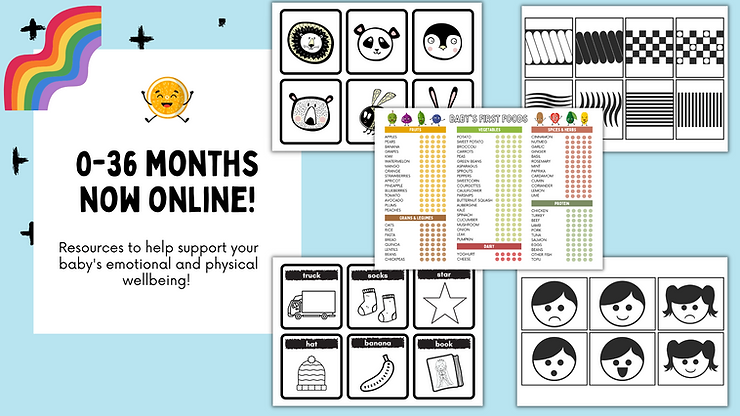
0-36 months – our Baby section is all about brain stimulation and development, plus printable resources to help support your baby’s physical and emotional wellbeing. From weaning trackers to milestone trackers, flashcards and much more.
 
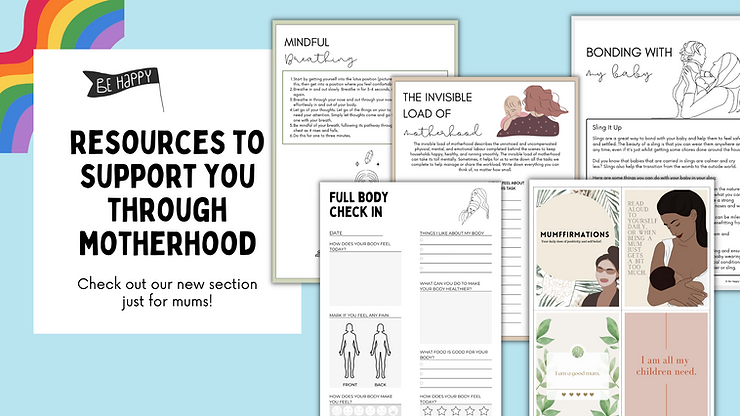
Resources for Motherhood – Our children learn from us, so we think it’s important to practise what we preach! If you’re using our resources with your child, why not use them for yourself too? From financial planners, to mindful exercises, bonding tips and more – we’ve even uploaded our popular Mumffirmations for you to print at home!
 
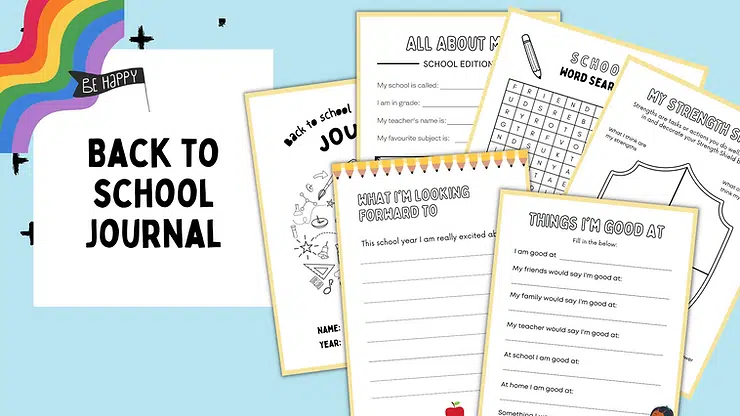
Back to School Journal – It feels like they’ve only just broken up and now we’re getting them ready for going back! – Our Back to School pack features 33 pages of activities and prompts to help them build their confidence for a brand new school year.
 
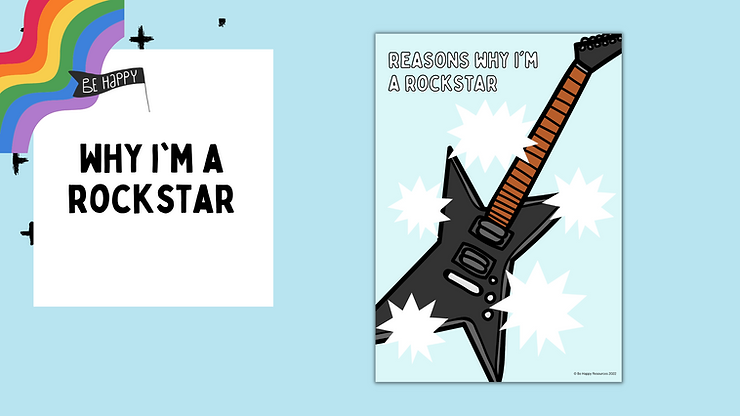
Why I’m a Rockstar – We’ve had a few requests recently for confidence boosting activities for kids. If you’re looking to increase your little one’s self esteem, then we have two new exercises this month! Reasons Why I’m a Rockstar is the perfect activity for any budding musician or music lover, have them write in the stars all the things that make them amazing!
 
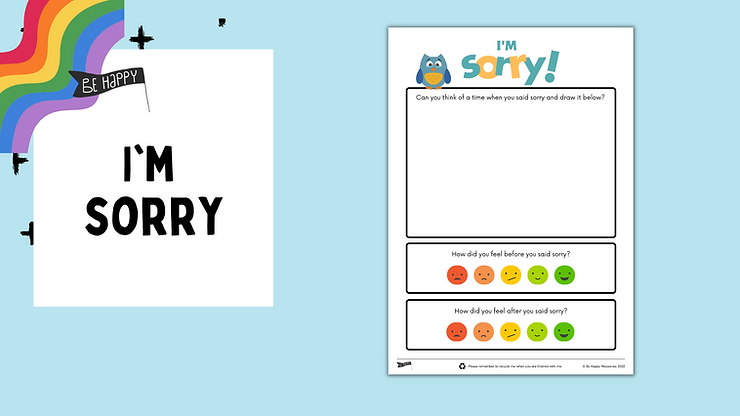
How I Feel When I Say Sorry – A new resource around apologising, helping children to learn why saying sorry is good for us and helps us feel better. This exercise asks them to think of a time they said sorry and how it made them feel.
 
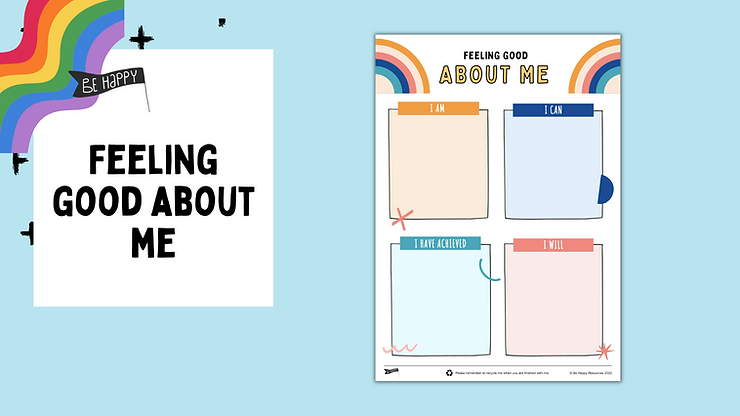
Feeling Good About Me – Our second self esteem activity this month gets your child thinking about all the things they can do and have achieved. Plus, have them think about new goals and things they want to do next.
 
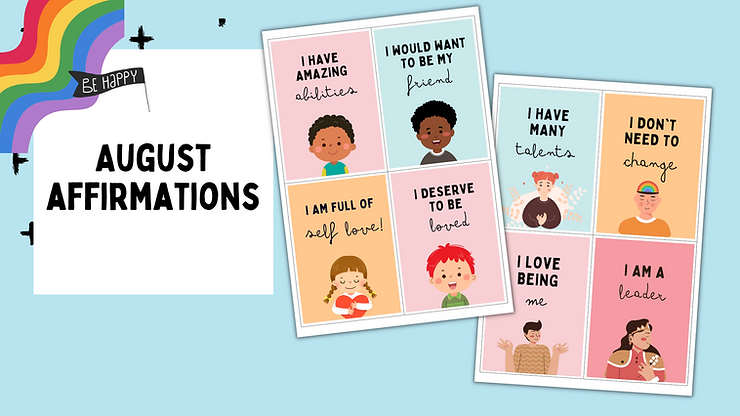
August Affirmations – This month our affirmations for kids are all about self love! Help your child fall in love with themselves this summer by reciting these or displaying them where they can see them. As with all our affirmations, you can choose to download these as a printable and cut them out, or you can swipe through them online. We have two versions – one for younger kids and one for older kids.
 
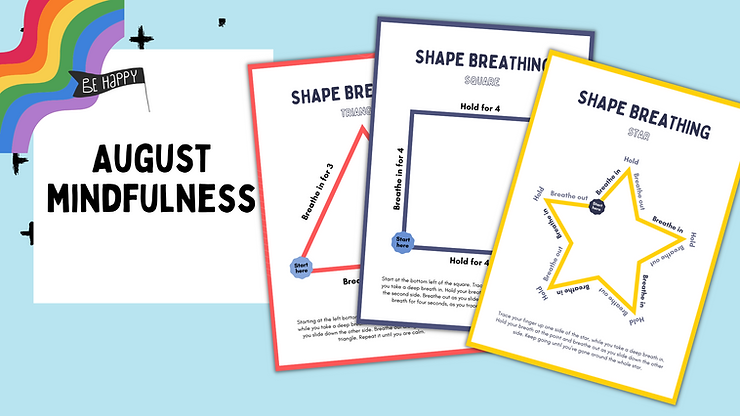
August Mindfulness – This month’s mindfulness is all about breathing in that fresh summer air! Our Shape Breathing exercises are really simple and effective breathing techniques for kids, we’ve adapted them slightly for younger children so there are two options to choose from.
 
Do you like this week’s resources? Due to the amount of uploads this week, we will be taking a week of respite next week and our next upload day will be Wednesday 17th August.
 
What’s coming next? We will soon be launching our pregnancy section, we are also working on two new resource packs including our trauma pack and a new confidence building activity pack.
 

Starting School Pack: Help Your Child Get Ready for School!

 
Is your child starting school this year? Then you need this mindful journal! Full of activities to help prepare them for the biggest change in their lives to date.
Help your four or five year old get ready for their first day of school with our new comprehensive resource pack. Here, we’ll take a look inside the pack and show you some of the 30 educational and calming activities designed to help them feel more confident for this exciting new chapter.
 
This starting school resource for young children is completely downloadable and printable for use at home! You can print as many times as you wish – which can be particularly handy for our tracing sections. If you don’t have a printer at home, remember that we have our Print & Post option to send resources to your door starting from just £3! (Members only).
 
Why have we created this pack?
 
Experts and teachers have stated that children age four to five are the age group most affected by the pandemic. We’ve created this pack to help your child face this transition and feel calm about their first day.
 
This pack contains over 30 activities including:
• Feelings trackers and charts
• Letter tracing and scissor practise
• My First Day poster template
• My First Day picture frame
• Reflection activities to help them process their first day
• Conversation starters
• Mindful colouring
• School flashcards
• Two breathing techniques
• Plus more!
 
Let’s take a look at some of them…
School Days – Our journal starts by asking all about your child before going into the more educational activities. We have letter tracing, number tracing and shape tracing. You can also help your child learn the days of the week, and which days they’ll be at school, to help them feel more prepared. It can be reassuring for children to know what their new routine will look like.
 
Design a Thinking Cap – Get them ready for all that learning they’re about to do! Can they design a fun thinking cap to engage their brain? If they ever get stuck at school – you can tell them to imagine putting their thinking cap on!
 
Mark their First Day – We’ve provided two prints to help mark their first day. The first one is our First Day poster which you can fill out and have them hold up for a photo. Then, you can have them stick in their photo in our First Day frame below!
 
These activities are all about savouring and cementing the happy memories and excitement of the day.
 
Reflection Activities – Our pack not only gets your child ready for their first day, but also provides activities for after their first day, helping them to reflect and process the day’s events. This includes feeling trackers like the one above.
 
First Day Self Reflection – This activity gets your child thinking about how they were feeling at different parts of their school day, this is also a great discussion opportunity. Which parts were exciting? Which parts were scary? Which parts didn’t they like? How can they change this tomorrow?
 
Bedtime Babble Cards – We’re a big fan of winding down at bed time and processing the day, this gets your child ready for the day ahead and helps them to sleep better, by discussing anything that’s on their mind or working through any big emotions they’ve felt.
 
Rainbow Breathing Craft – We’ve provided two breathing techniques in our school pack, including this mindful craft. Use our template to create a rainbow wall hanger, then, whenever your child feels anxious or overwhelmed, have them trace the stripes of the rainbow with their finger whilst they breathe in and out.
 
School Flashcards – At the back of this pack you’ll find some printable flashcards to cut out and use, these will show your child all the things that can be found in and around school and helps them to prepare for the things they’ll see and learn!
 
Ready to download this pack and help your child get ready for their first day of school? Download it from the Be Happy Hub now!
 
Not a member? You can sign up here for just £1.99 a month.

Our

Members Include

Get 50% off this toolkit now!

* indicates required

    Leaving so soon?

    Before you go, can you give us a reason for your cancellation?

    Fields marked with an * are required.

    For more details on how we handle your data, please view our Privacy Policy.

      Contact me regarding... What’s New This Week? – 24th September

      Fields marked with an * are required.

      For more details on how we handle your data, please view our Privacy Policy.

        Contact Us Today

        Fields marked with an * are required.

        For more details on how we handle your data, please view our Privacy Policy.