Monday 14th November marks the start of Anti-Bullying Week. A week dedicated to raising awareness of bullying and the preventative measures we can all take. Check out 10 of our favourite Anti-Bullying Week resources for kids – perfect to prompt discussions in your primary school or at home.
From resources about kindness, to thinking about how bullying makes us feel, we have even more anti-bullying resources over on the Hub, so make sure you’re a member! Sign up here.
The Kindness Wheel – Cut out and create our Kindness Wheel, then spin the wheel to reveal a random act of kindness!
The Kindness Wheel – Blank – We thought perhaps your child might want to create their own Kindness Wheel, so we’ve included a blank one for them to fill in with their own acts of kindness. They can colour in and decorate the wheel too!
The Anti-Bullying Rainbow – Have your child think of three ways they can stop bullying – perhaps it’s by showing kindness or telling a teacher or adult when they see bullying. There are lots of things we can all do! This is a great classroom activity to prompt discussions on the little things we can all do that make a difference. When the rainbow is filled in, decorate, cut out and display!
Anti-Bullying Paper Chain – Create a paper chain with anti-bullying messages for all to see! Write your pledges or ideas on how to stamp out bullying and create a paper chain to hang up to always remember to be mindful of how we treat others.
Anti-Bullying Pledge – Sign our Anti-Bullying Pledge this Anti-Bullying Week! You could sign it as a class or individually at home.
Helping Hand – This activity helps children to realise the importance of telling an adult when they spot bullying or are being bullied. Have your child write down the names of five people they can talk to about bullying on each finger.
Buddy or Bully? – This activity is a fun way to think about how bullies treat others. What’s the difference between a bully and a friend? We’ve written down some statements – ask your child which action is that of a bully, or a buddy.
Bullying Makes Me Feel – Get children thinking about how bullying makes them feel by drawing their emotions in the blank faces. From scared to sad, angry or frustrated – what emotions do they think they’d feel? Another great resource to discuss how bullying impacts us and those around us.
Bully-Free Zone Posters – Make your school or premises a bully-free zone with these posters! We’ve included one that they can colour in too – if you want your children to become more involved in making life bully-free!
The Kindness Garden – The Kindness Garden gets children thinking of the ways they can show kindness to others. What makes a person kind? What traits show kindness? Are they practising all these qualities every day?
Looking for fun mental health resources for kids? Then take a look at this week’s uploads – a tooting good train activity, a new classroom display and we give a popular video game a mental health makeover.
We have seven new activities for you this week, including some new resources for our youngest minds. Keep reading to see what’s new – then head over to the Hub to download!
Affirmation Station Worksheet – All aboard the positivity train! This week we bring you our Affirmation Station resource for any train mad little ones out there. Have your child write positive statements about themselves in the circles.
Affirmation Station Display – As well as the Affirmation Station worksheet we bring you a new display resource for a positivity inspired classroom. This download consists of 18 pages to cut and stick together to make our Affirmation Station display. Have the children in your classroom write down their own affirmations in the circles, then stick to the tracks. You could even have your class say the affirmations each morning – a great and feel-good way to start the day.
Destroy This Page – Looking for ways to help older children channel big and overwhelming emotions such as anxiety, frustration or anger? This 16 page resource is for you! Each page must be destroyed – follow the prompts listed to wreck each page, fun guaranteed. Whether it’s by scribbling, colouring outside the lines or tearing. Let them be as imaginative as they can!
Minecraft Emotion Regulation Pack – Is your child obsessed with Minecraft? Or perhaps there is a child in your classroom struggling with their emotions who loves to play this popular video game at home? In this pack you will find four activities and worksheets to help children learn to identify their emotions, think about their emotional responses and what helps them to feel calm. Activities include a feelings/behaviour scale (based on the 5 Point Scale), Zones of Regulation, a calming cut and paste activity and a feelings exploration worksheet.
Brian the Brain Matching Puzzles – Meet Brian the Brain! He’s here to help our littlest minds learn about mental health. You’ll find this fun cut and match activity in our 24-36 month category. Watch our for more Brian the Brain in future – he’ll be sticking around!
My Needs – Help children to think about what they need to feel their best selves by filling in this worksheet. Do they have everything they need? If not, how can they ensure their needs are met? This is all about helping children feeling more in control of their mental health.
Circle the Emotion – We have three circle the emotion activities for our younger minds this week – can they circle the scared animals, the happy bugs and the sad shapes? This is a fun activity to help children learn to identify emotions and expressions.
You can download all these activities now by entering the Be Happy Hub. Click ‘Enter the Hub’ above and you can download them straight from the homepage!
Is there a resource your child particularly enjoyed or that worked really well? Don’t forget to let us know via our Feedback Form in the Hub. Knowing what works well and even what doesn’t helps us to create more engaging resources that you love!
It’s officially November and wow, the weeks are flying by! This week we’ve brought you 10 new resources, including a new autumn-themed activity, a new mum and mini resource and one that’s giving off a bit of a whiff… Carry on reading to find out more.
Every week we bring you new mental health resources all around helping your children talk about things that are on their mind and learn more about managing their thoughts and emotions. This week, we’re looking at how food affects our mood and focusing on feeling grateful as we near the Christmas period. Let’s have a look at what’s new…
My Mental Health Menu – This is a fun new activity to help your children think about how what we eat affects our mental health. Can they come up with a mentally healthy menu? What foods do they think help our brains? There is so much you can do with this resource and the discussions about healthy eating are endless! You could also use this as a daily menu in your home by laminating and writing on a daily meal plan with a whiteboard marker.
Rainbow Infinity Breathing – Another breathing exercise this week that combines two of our favourites – infinity breathing and rainbow breathing! Starting at the star, trace the infinity loop, following the prompts to breathe in and out. Do this for each colour of the infinity rainbow.
Down in the Dumps – This resource is sure to kick up a stink! Help your child to send their bothersome thoughts to the tip! Those unhelpful thoughts don’t belong in our heads – so let’s put them out with the rubbish instead. Ask your child to visualise their unhelpful thoughts being taken out to the dump and left where they belong.
My Bravery Chart – This chart is all about rewarding positive steps – when your child does something out of their comfort zone or faces something they’re afraid of, stick it on the chart and ask them to fill in the prompts. In the circles, they can either draw an emotion face or colour how they feel. Optional – why not add a reward for completing the chart? This may spur them on to keep trying new things and push themselves further out of their home comforts!
Can We Talk Cards – We want children to grow up knowing that it’s ok to be open and honest about our feelings, and that when something is bothering us, it’s always best to talk about it. However, we also know how difficult it can be to just open up about something and start a conversation. These cards can be kept on the side at home, or in the classroom, ready to be picked up and used when needed.
Autumn Alphabet – Our November Mindfulness activity is a scavenger hunt with a difference – can your child fill in our alphabet with all the things of autumn? What can they see outside during their autumnal walks? What can they hear, taste or touch? They can either gather their finds or simply write them down.
Adult Mood Tracker – We have two new adult resources this week including this annual mood tracker – ready for you to make your New Year’s Resolution to become more mindful and aware of your own feelings! Create your own colour key and shade each day with how you’re feeling, each month you’ll be able to track your progress and make changes based on your tracker’s results.
Feeling Pants?… – This pun-intended distraction activity helps to calm children and take their mind away from worrisome or upsetting thoughts by having them focus on designing and colouring in the different pants. Mindfulness guaranteed!
Gratitude Sun – New Mum and Mini Activity – You’ve asked for more joint activities so this week we bring you our feel-good Gratitude Sun! What things are you grateful for this month? Write them around our sun and discuss with your little one.
COMING UP!
We know that a lot of you have been waiting for our new Trauma Pack – ‘Working Through Big Feelings’ and we are excited to let you know that it is now in its last stage of review and will be launched later this month. This 40 page activity-based workbook will help to support children who are recovering from trauma, signed off and approved by our Clinical Psychologist. Did you know that all our resource packs are FREE for members?
We have six new resources for you this week, including a new display resource!
This week we bring you six new mental health resources for children as we reach the end of the half term holidays. Halloween is just a stones throw away and children will be settling back into their routines. With darker evenings looming, moods may dip and some children may seem more tired than usual. See what we have below to brighten up your home or classroom!
Rainbow Breathing Display – We’re excited to bring you our first display resource and this one was a request. This prints out as 14 A4 pages which you can cut out and easily piece together somewhere visible. Children can place their fingers on the resource if it is somewhere reachable to practise deep breathing, starting at each star and following the colours of our rainbow, breathing in and out. But this display isn’t just limited to classrooms, you can display it at home, on wards, in play centres – anywhere where children may need access to a fun calming technique!
The Cup of Calm – This is one of our favourite new resources, the Cup of Calm features fun calming techniques children can do to quickly calm down. We’ve also included a blank Cup of Calm, so that they can draw or write their favourite techniques in their own cup to keep.
My Trigger Scale – Learning about what triggers our emotions is one of the best things we can do – identifying what make us feel angry, calm, sad or worried can help us to manage our environment and responses better. Have your children think about what provokes each emotion on this 5 Point Scale.
Explore a Feeling – Does your little one fancy themselves as a bit of an explorer? Then they can explore this resource! This is a fun check-in activity which helps your child to assess how they feel and become more mindful of how they are feeling. Asking them to pick a colour that represents the feeling, how big the feeling is and where they feel it on their body.
My Anxiety Prep – We’ve had a few requests for social anxiety resources recently so we’ve come up with our Anxiety Prep – but it doesn’t just have to be for social situations, this worksheet can be completed about anything your child may be worrying about. This activity gets them to think about how they can prepare themselves before the event or situation they are worrying about and what they can do during if they feel their anxiety levels begin to increase.
My Anxiety Prep – Adults – Our Adults Anxiety Prep, similar to the above, is new to our Motherhood section. A lot of anxiety stems from being unable to control certain situations or fearing the unknown, with this worksheet, you can feel more prepared about what’s to come and focus on what you can control in the moment.
Updated! – Hot Chocolate Breathing – Hot Chocolate Breathing was part of our 12 Days of Mindful Christmas last year and was incredibly popular, so we’ve given this a little update ready for the colder months. Decorate the hot chocolate, then imagine cooling the hot chocolate down with big deep breaths.
That’s all our new resources this week! If you’re a member, you can find these on the Hub now.
If you’re not a member, you can sign up from just £1.99 here.
Deep breathing can help children bring their focus to something they can control – their breath – instead of thoughts and fears that can provoke anxiety. Not only this, but deep breathing has many benefits for both mental and physical wellness. Read on to see how to teach your child deep breathing and our six favourite resources.
Lots of adults don’t know how to breathe properly, never mind children! Ever noticed yourself constantly breathing shallow breaths? Or perhaps you’re a mouth breather? When was the last time you took a good deep breath? Breathing is so subconscious, it’s something we rarely ever think about, but it’s also directly linked to many mental and physical benefits.
Newborn babies are incredible breathers – they have the natural instinct to breathe properly using their diaphragm (muscle under their lungs) – if you watch them for a short period of time, you’ll see their bellies expand and chest rise and fall as it fills with air.
As we get older, we can lose this instinctive breathing, and for many adults, we can become shallow breathers who have a tendency to pull air though our mouths. Breathing patterns can change as we age too, due to things such as our environment, anxiety, stress, pollution, temperature and more.
Did you know that if you’re a mouth breather you’re more prone to sleep disorders such as sleep apnea? Or that by constantly taking shorter breaths and not letting your lungs fill, this can lead to an impaired immune system, increased heart rate and high blood pressure? (Have we made you take a big deep breath yet!?)
Most of us don’t know the true benefits of deep breathing, it’s not something that we were taught when we were younger. But we believe that by helping your child to take good, deep breaths and practising regular breathing exercises from a young age, they will grow up actively using and knowing one of the best coping mechanisms out there.
Benefits of deep breathing
Learning to deal with feelings of frustration, anger, hurt, or disappointment can be a really big job for a child who isn’t able to articulate their thoughts and feelings very well —but learning how to manage big feelings is important if they wish to become an adult who can cope with and manage the ups and downs of life.
Deep breathing has many benefits, including:
Decreasing stress
Feeling calm
Relieving pain
Detoxifying the body
Improving immunity
Increasing energy
Lowering blood pressure
Improving digestion
Supporting correct posture.
How to help your child learn deep breathing
We’re not going to lie, it can be hard for a very young child to grasp how to take a deep breath at first – as it’s something they’ve probably never thought about! Plus, for children who like to be active, it can be difficult to get them to focus and sit still long enough! Some children can take to it straight away, whereas for others, it may take a few times for them to really get to grips and see the benefits.
Keep trying
We would always recommend introducing deep breathing to your child when they are calm and ready to learn. Tell them that this can be a useful tool for when they get upset, angry or overwhelmed. Let them know that by becoming more mindful of our breathing, this can actually make us healthier! Take their lead – if they’re bored or don’t like it, forget about it and try again another time.
Use bubbles
Bubbles are a great way of teaching your child how to take a deep breath, the way they draw their breath in and push it out to blow the bubbles through the air. You can show them that by inhaling slowly through their nose, this will help them to take in more air to blow the bubble even further!
Use the flower method
“Breathe in like you are sniffing a flower, breathe out like you are blowing a leaf.” You can practise this at the park using real flowers and leaves – what do the flowers smell like, how far can they blow the leaves?
Make it fun
Kids are very visual and like to see images and engaging techniques can work well. You can use some of our interactive breathing resources to help with this, we’ve listed some of our favourites below!
Our six favourite breathing exercises
Nature Breathing Cards
Is there anything more calming than nature? Our nature breathing cards bring the outside in – directing your child’s finger round the nature inspired shapes, teaching them when to inhale, pause and exhale. You could even try these outside by finding them in nature and using the same techniques – although we would suggest you forego the sun and rainbow breathing in that case!
Mindful Finger Tracing
Mindful Finger Tracing is one of the most effective ways to help children and adults calm down fast by having them focus on controlling their breath and finger. We have these fun Mindful Finger Tracing cards which are shaped like animals, and we also have our Halloween Pumpkin Tracing which is new this week to the Hub!
Rainbow Breathing
We have a few different rainbow breathing activities on the Hub including our Grounding Rainbow (a two in one breathing and grounding technique) and our Rainbow Breathing Craft (pictured). We also have rainbow breathing activities in our Nature Breathing Cards and some of our resource packs! Lots and lots of positivity inspired rainbows!
Shape Breathing
We have two versions of our Shape Breathing – one for younger children which is simpler and one for older children which involves counting breaths and pausing for longer. We would recommend you choose which is best suited to your child depending on age and their capability with deep breathing.
5 Finger Breathing
This is one of our most popular breathing activities and one of the most simple – this can be done from anywhere simply by using your own fingers. Teach children to trace around the outline of our hand – or their hand – breathing in and out.
Bug Breathing
We know that a lot of younger children LOVE bugs with a passion (whilst others find them icky!) – so we created our Bug Breathing cards just for them. Similar to other breathing techniques, have your child trace their finger round the bugs following the prompts to breathe in, pause and breathe out.
We have adult breathing exercises too!
Did you know that we have adult breathing resources too? Including our Adult Finger Tracing below? You have access to all our adult resources as part of your membership!
Try our free Mindful Monsters eGuide…
If you’re not a member, you can try our free Mindful Monsters eGuide which details some fun breathing exercises to try at home or in the classroom. You can view it here.
Sign up to access our Breathing Resources
If you fancy signing up to access any of our breathing resources above, you can do so here.
Halloween, harvest and happy thoughts! We’re nearly at the end of the month and for some schools, half term is here. See what we’ve got to keep your kids busy – and feeling good – this week…
We have some more Halloween themed resources, including Pumpkin Breaths, a social anxiety worksheet and a ghoul-ish activity for you! Continue reading below.
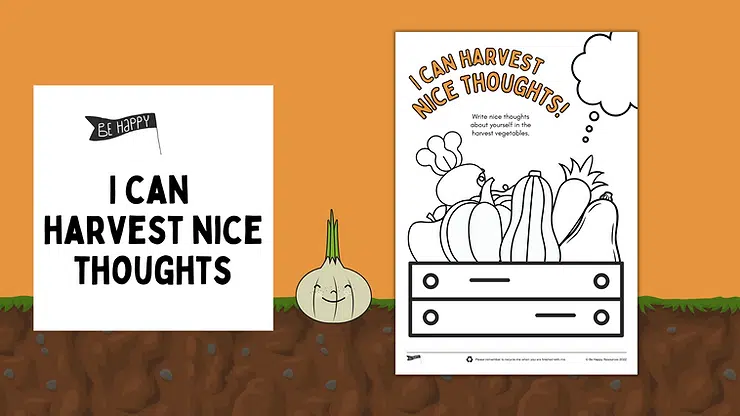
I Can Harvest Nice Thoughts – October is a time for harvest and being thankful for the food we eat. This is a nice little activity to fit into your day. Use this seasonal resource to encourage children to think about what they like about themselves – and relish in all those warm and fuzzy thoughts!
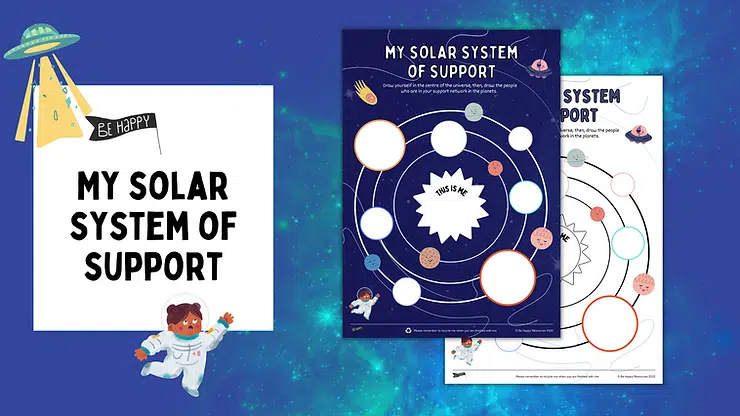
My Solar System of Support – Help children to realise who is in their ‘Solar System of Support’ by having them draw or write the names of those in their support network around them. Draw themselves in the middle and have them look at all the people they can talk to and trust – this is their very own Solar System of Support!
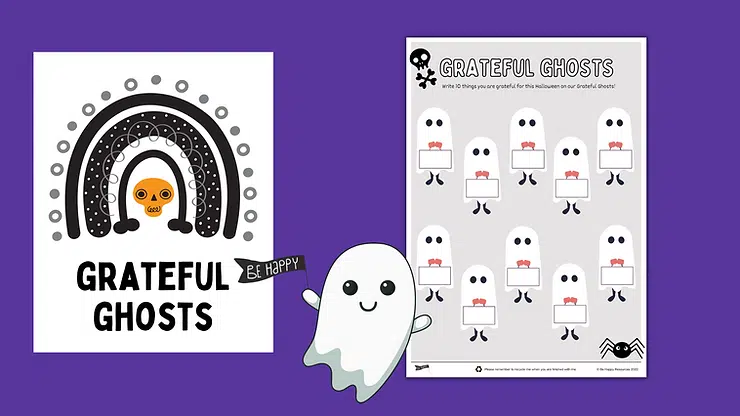
Grateful Ghosts – Gratefulness is one of the best things we can practise for positive mental health. This ghoul-ish activity asks your child to list all the things they are thankful for this Halloween – and there are NO wrong answers! Perhaps it’s sweets, costumes, food, parties, friends – there are lots of things to be thankful for this month.
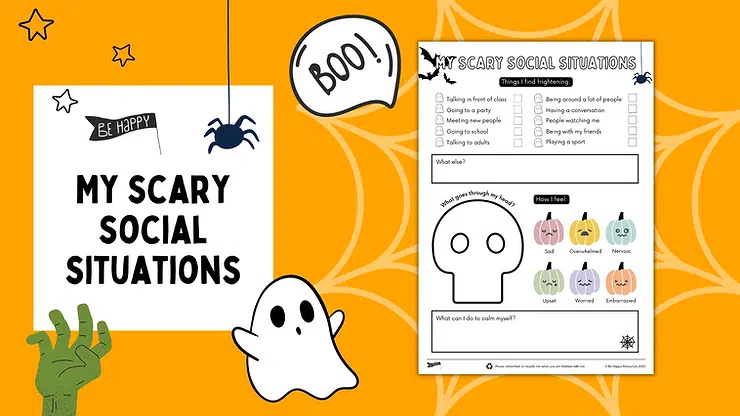
My Scary Social Situations – We’re quickly approaching the party season, Christmas gatherings, bonfires and Halloween parties loom – but lots of children can struggle with being around people, even people they know. This activity helps them to realise what situations they struggle with the most and think about what works to calm them when they start to get upset or anxious.
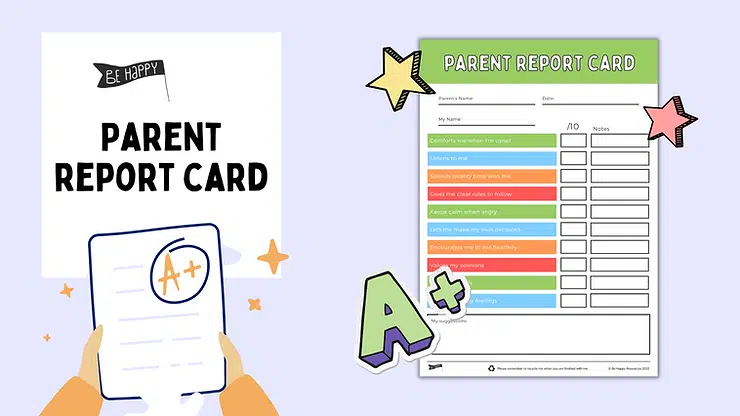
Parent Report Card – We’re always giving our children feedback – but rarely do we ask for it in return! Have them fill in this report card to see what areas they think you can improve in. It’s not an activity to criticise, but one that helps you to become closer and ensure you’re always meeting their emotional needs.
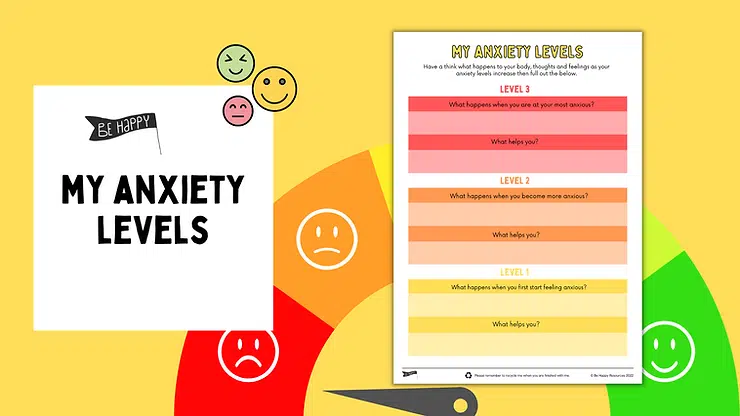
My Anxiety Levels – In this worksheet we’ve categorised anxiety into three levels – helping children to think about their body responses, thoughts and feelings at each stage as their anxiety levels increase. It then asks what can help them at each stage – the more awareness they have around their anxiety response, the better they can manage it.
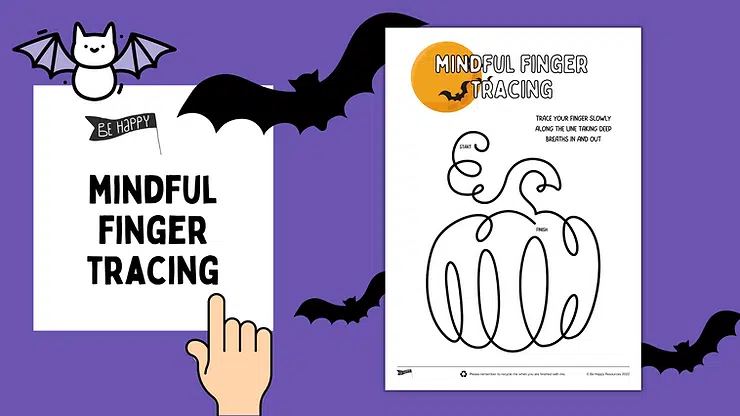
Mindful Finger Tracing – We’re a big fan of finger tracing if you haven’t noticed and children love it too! This is a wonderful grounding activity that helps children to refocus on what’s in front of them and what they can touch and control, rather than any escalating thoughts and feelings. If you want to help your child calm down fast, this Halloween themed activity is definitely worth a try!
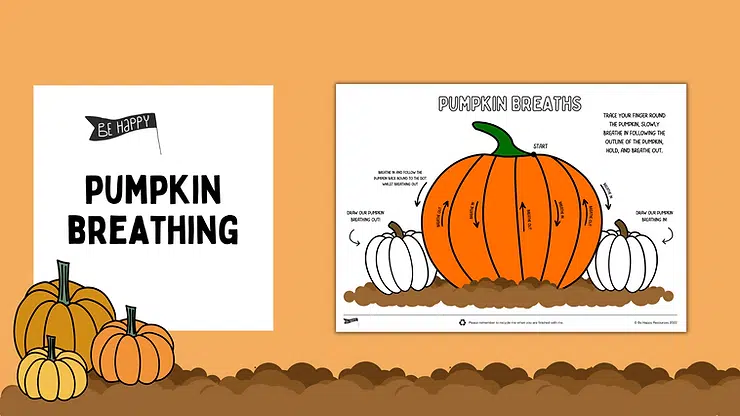
Pumpkin Breaths – There’s always a way to bring deep breathing into your day, event or season! Pumpkin Breaths helps children to take deep breaths in and out, focusing on tracing their finger around the Pumpkin following the prompts. We’ve also included a bonus exercise on this worksheet – can they draw a face on our pumpkins to make it look like they are breathing in and out?
That’s all for this week! Which is your favourite this week? Remember, you have to be a member to use these resources – you can sign up here.
What would you like to see on our Hub? Don’t forget that as a member you can request your own resources at no extra cost! Find our Request a Resource form in our Hub and we’ll get back to you with timescales!
We have 12 new resources for you this week, including some more mindful Halloween fun and a join activity for mums and minis.
On Monday we celebrated World Mental Health Day, and what a day – we smashed our daily sign up record by 10am and released a brand new activity, which was downloaded by over 500 of you in just 24 hours. You can find out more about this activity at the bottom of this page.
But we want to continue the momentum and get our techniques and activities to become a part of every day life. So this week we have brought you some new mood trackers, thought management techniques and even a glimpse into the future. Find out what fun, new mental health resources and activities we have for you below!
My Thought Control – Imagine a world where you could pause or skip your thoughts? Now you can help children visualise stopping unhelpful thoughts with our Thought Control activity. What buttons would they like on their control? Perhaps a volume button to turn down their thoughts? – And increase those more helpful ones? They can use their control to temporarily stop their bothersome thoughts until they are more equipped to deal with them or can find someone they trust to talk to.
The Calming Wave – The Calming Wave is a well known mindful activity that helps to calm big emotions – where you imagine a wave washing over your body from your head to your toes. We’ve adapted this slightly for children, giving them their own Calming Wave to colour in and decorate, helping them to more vividly visualise the wave as it washes over them, taking away their worries and woes.
Positivity Potion (Adult and Kids resources) – Hocus Pocus 2 has got us in the mood for spell casting and potion planning. You can find our Positivity Potion activity for mum and mini online now! This is a feel-good activity for you to do with your little ones, prompting
discussions about what helps us think more positively and what positive thoughts are.
My Crystal Ball – A child who struggles with their mental health may struggle to see a positive future. Help them to think about what nice things they want in their future with our Crystal Ball. The key question here is ‘what do they want?’ not ‘what do they see?’
Pumpkin Emotions – A fun and simple emotion activity! Draw some emotion faces on our pumpkins and label the emotions below. Who can do the best scared face!? It is Halloween after all…
Belief-O-Meter – Hypothetical worries and critical thoughts can often take hold and become hard to shake. Have your child put bothersome thoughts against our Belief-O-Meter! How true is the thought? How true do they believe the thought to be? Often just seeing a thought written down can be enough to see that it is not true. Have your child write their thoughts in our thought bubbles, then for each thought, draw an arrow on the Belief-O-Meter to show how much they really believe it.
Halloween Mood Colouring – This colouring activity gets children thinking about what colours can reflect our moods. Ask them to choose four colours they think defines the mood they’re feeling today – if they’re feeling happy, it could be yellows and bright colours, if they’re feeling angry, it could be red or fiery oranges. Once they’ve finished, you should be able to get a sense of how they’re currently feeling.
Weekly Mood Tracker – We love mood trackers at BHR. It’s such a simple activity to help children become more mindful of their emotions, track patterns and manage day to day feelings. This weekly tracker can be used to track a range of day to day feelings, as we know that during the day, we can go through many different emotions and moods.
Halloween Doodling – “When you feel scared, sad or stressed, pick up a pencil and put your doodling to the test! Continue the line, swirl or draw, keep doodling until your worries are no more.”
Inspired by the guy who covered his mansion in doodles – did you see that in the news? – it made our head hurt a little! It got us thinking about how therapeutic and mindful doodling is. Not only this, but did you know that you can get a sense of what is going through someone’s mind just by looking at their doodles? Encourage your children to get creative and put their mind to paper with these doodle sheets!
Breathe Colouring – Our colouring sheets are incredibly popular and are one of the most simple mindful activities you can do. You can download our ‘Breathe’ colouring sheet from the Hub now.
New for World Mental Health Day – Looking After My Mental Health – We brought you this new activity last weekend and know that so many of you downloaded this to use with your classrooms and children. This activity isn’t just for WMHD and can be used at any time to discuss ways to promote positive mental health and look after our wellbeing.
Update on our Trauma Pack
We know that a lot of you are waiting for our new 35 page Trauma Pack. This is currently with our clinical psychologist for review. If you’d like to know when this is ready, make sure you’re signed up to our mailing list.
Anger resources for children age 9+ and some seasonal mindful colouring. Take a look at what’s new below
This week we have some more fun emotional learning activities as we approach World Mental Health Day, as well as some new anger resources – plus activities for Diwali and Black History Month.
Emotions in the Ocean – A fun activity for World Mental Health Day to get children talking and thinking about different emotions. Can they think of a time they felt each emotion?
Before I Explode I Will… – Helping children to visualise their anger like a volcano is a great way of learning to spot internal signs – can they think of how they feel before they ‘explode?’ In this activity, help them to think of things that they can do when they feel the heat rising.
The Anger Iceberg – This is a popular, tried and tested method that helps us to realise what thoughts and feelings are leading to anger. Anger is much like an iceberg, on the surface we are only showing a small amount of what is really going on. Anger is often the accumulation of many different emotions. This activity encourages children to think about what is leading to their anger ‘beneath the surface’ – this can be thoughts, emotions or situations, then it asks them to think about how they show this on the outside.
Exploring My Anger – Helping children to understand their triggers and emotions is one small step in helping them control their anger. This worksheet helps them to reflect on emotional outbursts by thinking about what led to the anger and what they can do differently next time. Have them rate their anger on the anger thermometer, and track the level of each outburst.
Diwali Mindfulness – The business of celebrations is the perfect time to sit down and focus on your senses. This grounding activity can help children to feel calm when the excitement and festivities build up around them. Focusing on what they can see, hear, smell, touch and taste is a fun way to add some mindfulness to this year’s festival.
Diwali Colouring Sheets – We have created lots of fun, mindful colouring sheets for Diwali. Our Diwali colouring pages are a fun way for kids of all ages to develop creativity and focus, improve motor skills and feel calm during celebrations.
Black History Month Colouring Pages – October marks Black History Month, the annual commemoration of the history, achievements and contributions of black people in the UK. Our colouring pages are a mindful way to celebrate black history and culture and help children to feel inspired.
My Gratitude Tree – All the autumn feels with this feel-good activity! – Have your child write down one thing they are grateful for in each leaf. You may be surprised what they think of!
Emotions Word Search – Bring emotional learning into your every day with this mindful word search. Bonus points for acting out each emotion when they find it!
You can download all these activities now by signing up to. the Be Happy Hub!
Halloween is scary, terrifying, exciting – and for many children – overstimulating. Our resources can help your child keep their sense of calm throughout the spooky season.
Halloween can be an overwhelming sensory experience for many children, and when coupled with the sugar from the annual sweet drive, it can leave many kids feeling out of sorts.
Here are six resources you can download right now to have a calmer Halloween:
Spider Web Breathing – A fun and simple breathing exercise which helps your child to practise some deep breathing to regular their breaths and emotions. Have them trace their finger around the web, breathing in and out, until they reach the spider.
Halloween Scavenger Hunt – Trick or treating can be scary and exciting, why not take along this Halloween Scavenger Hunt this year and help your child become more in tune and mindful of their surroundings? They can tick off the things they see and hear as they make their way round, helping them to remain grounded and focused on their environment.
Build a Skeleton – Have fun creating your own Halloween decoration with our spooky skeleton! Sitting down to create your own decorations is a great mindful experience, having children cutting, glueing and crafting can help them to feel calm and focused and give them a sense of accomplishment. Optional – use split pins to make a skeleton that moves!
Face Your Fears – Let’s get thinking about the things that scare us and what make them so scary. Perhaps it’s spiders or monsters – the trick here is to draw them so that they become less scary. Perhaps it’s a spider with a silly face and a party hat or a skeleton with a funny moustache? Make those fears seem less fearful and have a great laugh with this activity! Your child can also do this for their teacher’s and friend’s fears to prompt discussions around phobias and why we feel scared.
Halloween Colouring – We have lots of mindful colouring sheets online now including sheets for our younger minds (we promise these are cute and not scary!) plus our spider web intricate colouring sheet for older children. This one has been extremely popular – and with unlimited downloads – you can print and colour as many times as you want!
Pumpkin Emotions – A simple and fun emotion activity, children can either draw the two emotions they feel at that moment or during Halloween, or maybe they just want to design two silly pumpkin faces. Anything goes in this activity!
We have lots more activities coming throughout October for Halloween and the approaching half term, including more resources for older children age 9-11.
Keep your eyes peeled or sign up to our mailing list to see what’s added and when.
Seasonal Affective Disorder doesn’t just affect adults – here we’ll explain how SAD can affect your child’s behaviour and emotions.
Colder weather and darker evenings can bring about a shift in our mental health. Whilst some people relish the changes a new season brings, for others, it can be a trigger. SAD can be mildly affective for some, but crippling for others – with many of the world’s population reporting a change in mood and energy when the shorter days and lower temperatures roll in.
What is Seasonal Affective Disorder (SAD?)
SAD is a type of depression that has a seasonal pattern. The episodes of depression tend to occur at the same time each year, usually during the winter. The exact cause of SAD is not fully understood, but it is thought to be linked to reduced exposure to sunlight during the shorter days of the year.
“In terms of symptoms, seasonal affective disorder and depression are one and the same,” says Heather Bernstein, PsyD, a clinicalpsychologist at the Child Mind Institute. “Seasonal affective disorder is essentially major depressive disorder that occurs during specific months of the year.”
How does SAD affect children?
Children can find it hard to put how they’re feeling into words, so often their behaviour can become their method of communication.
Changes in mood
A child with SAD can feel sad or teary during the winter months, they may become more irritable and angry. It may feel like the smallest thing can cause them to become upset or overreact.
Low self esteem
Changes in your child’s mood can cause them to become more critical of themselves or more likely to take things to heart. This can cause them to develop lower self esteem during the winter months.
Changes in appetite
Children with SAD may crave more comfort or sugary foods during the winter, they may have the tendency to overeat, or they may not feel like eating at all.
Lack of interest
Your child may show a lack of interest in things, toys or games they normally enjoy. They may not want to play with friends or take part in extracurricular activities they usually love.
Difficulty concentrating
SAD can cause children to lack their usual motivation, which can affect school work and performance during the winter. Have you noticed a change in your child’s school grades during these months? Or perhaps you’ve noticed they feel more motivated to complete their school work in the summer.
Outbursts or tantrums
Children struggle to communicate their emotions and this can come out in outbursts of anger or tantrums. If your child is regularly displaying outbursts or feel like they lose control in certain situations, it’s important to work with them to get to the root cause.
Tiredness or difficulty sleeping
Children with SAD may experience unusual tiredness or unexplained fatigue. As a result, they may sleep a lot more than usual. This can make it really difficult to get up for school in the morning, stay awake during school or even complete their normal activities. Equally, you may find that a child with SAD may have trouble going to sleep or staying asleep.
Clinginess
SAD can often experience bouts of separation anxiety during winter, especially when children have to leave the comforts of their caregiver.
It’s important to remember that lots of us experience changes in our mood during seasonal changes, but this doesn’t necessarily mean we have SAD. If you think you or your child have SAD, the best thing to do is make an appointment to discuss your symptoms with your GP.