It’s officially the summer holidays and if you’re looking for fun and low-cost ways to keep children busy and engaged then join the Be Happy Summer Camp! Read more about our new wellbeing challenge below.
The main challenge for every parent over the summer holidays is how to keep children busy for a whole six weeks! Whilst many of us may be off on holiday or planning some fun day trips, we may also be wishing for some fun, mindful and low-cost activities to balance out those hectic days. We bring you – the Be Happy Summer Camp!
The Be Happy Summer Camp isn’t just for parents – it’s perfect for holiday clubs, campsites, child minders and more!
What is the Be Happy Summer Camp?
The Be Happy Summer Camp is a wellbeing challenge that will bring you fun, weekly activities to help your children feel calm and happy over the summer holidays. Each week, we’ll upload two activities to complete and earn our camp badges – at the end of the summer, when your child has completed their badge sheet, you will be able to download a certificate and graduation cap to graduate from camp Be Happy!
How does it work?
Activities will be live on the Hub page every Sunday starting 30th July.
All activities will be printable but you may need to supply crayons, paint, glue or scissors or visit parks and open spaces.
You can complete an activity whenever you wish, in your own time, if you don’t have time to do both activities in a week, you can save them and complete them at your child’s leisure.
Once you’ve completed an activity, cut out the badge and stick it to the badge sheet – there are 10 to collect!
The last two activities will be posted on 27th August, after this, you will be able to download our certificate and graduation hat craft!
How can I take part?
The Be Happy Summer Camp is free for all members of the Be Happy Hub. If you’re not a member, you can sign up for £1.99 here. Each week we will post the activities into the Summer Camp area of the Hub which is accessible from the Hub homepage.
What kind of activities will there be?
Our activities will be fun, calming and educational. Think scavenger hunts, crafts and more. There will be a total of 10 activities centred around the theme of each of our badges:
Explorer Badge
Kindness Badge
Self Care Badge
Sailing Badge
Camping Badge
Photography Badge
Crafting Badge
Positivity Badge
Fire Safety Badge
Nature Badge
Activities are kept a secret until the week before – all our activities are focused on helping your child to feel calm and promoting the ways to wellbeing. Your child will learn about how to look after their mental health and build vital self-regulation skills.
Is your child or a child you know going into hospital? Are you looking for ways to help children feel calm and prepared for an operation? Then take a look inside our printable hospital toolkit for kids – featuring over 20 activities to help children learn about their bodies, hospitals and some mindful fun too!
Preparing your child for an operation can seem scary and daunting – especially if they have never been into hospital before. They may have lots of worries and questions. Our printable hospital toolkit can be used with children who have never been into hospital and also children who have had operations previously.
Let’s have a look inside at some of the activities!
I’m Having an Operation – Our Printable Booklet for Children Going into Hospital
This toolkit features over 20 calming, educational and mindful activities to help children explore their worries and emotions about going into hospital and some fun resources and games to keep them busy whilst they are there. Plus – every page of our toolkit is colourable! So grab the crayons, download and print – you can sign up from just £1.99 to access this toolkit now. But first, let’s have a look at some of the activities:
Activities to prepare your child for visiting hospital
The ‘I’m Having an Operation’ toolkit features lots of activities to help your children learn about hospitals, what they might see and who they might meet. Our ‘Operation Road Map’ helps your child understand more about their operation, what will happen during their operation and how this will help them.
Explore worries and emotions
Our toolkit also features activities to help your child explore how they are feeling and communicate any worries or fears they have about going into hospital. They can also create their own First Aid Kit, helping your child to identify things that help them when they feel unhelpful emotions around their hospital visit.
Help children feel brave and fearless
Help children feel brave and as though they can do anything with activities such as ‘My Courage Cape’ which also doubles as a visualisation technique during times of need. Can your child design an amazing courage cape, and imagine wearing their cape as they head into the operating room? We also have hospital wristbands for your child to wear during their stay to remind themselves just how amazing and brave they are! Other activities include creating their own ID badge to help communicate with doctors and nurses and our Bravery Certificate which they can colour in after their operation.
Patch up Patch the Bear!
One of our favourite activities in this pack is Patch Up Patch – if your child fancies themselves as a doctor or nurse then grab the scissors and glue and have fun patching up our clumsy bear. He’ll need plasters, X-rays and some flea spray too!
Activities to calm and ground
To help your child self-regulate during those times of big emotions, we have our fun plaster breathing exercise which includes pushing the dots as they breathe in and out. We also have our Pocket Calm Plan, which is a wonderful foldable booklet your child can fill in and take with them.
Mindful and fun hospital games to do from their bed
Fancy some fun hospital games and worksheets to do once there? We have Rate my Hospital Plate, a word search and Hospital I Spy, helping to keep little minds busy and calm as they recover.
Affirmation colouring pages to help build a positive mindset
Lastly, our toolkit features some affirmation colouring sheets to help your child feel calm and build a positive mindset. These feel-good colouring sheets can be coloured in before, during or after their hospital stay.
The countdown to summer is on and with just over a week to go, children will be feeling all sorts of emotions and facing routine disruptions. We bring you six resources to prepare for a successful summer transition and some helpful tips. Check out our other resources too!
The last week of school is always one of the most challenging for parents and teachers. It brings about behavioural and emotional changes in children as the exhaustion from the school year sets in and the excitement of the summer holidays builds.
The end of the school year can be harder on children than you think, most often we talk about the transition between school years – but the transition from school to summer can be a difficult one too.
This time of year comes with many changes, events and pressures, from school parties, summer fairs, awards ceremonies, performances and assemblies and disruptions to the school day. Children face changing routines and have to re-find their feet as summer begins.
Plus we haven’t even mentioned the tiredness that kicks in around this time of year – we know from personal experience just how much of an effect this can have on children. School is hard work – and after 11 months most children are ready for a break!
All of these changes, tiredness and mixed emotions can cause some children to feel anxious or out of sorts. This may result in outbursts or tantrums, moments of hyperactivity or regression into old habits and struggles. Here we give you some tips to help you prepare for a successful summer.
Tips for a Successful Summer Transition
Establish a Routine – and Stick to it!
One of the major impacts on children’s emotions and behaviours are disruptions to routine and change. Whether your child is attending a holiday club or staying at home, be sure to set a routine early on – and make them aware of it. Talk them through the changes ahead and help them establish a clear idea of their summer schedule. You could use our Summer Routine resource and display this somewhere visible in your home (more on this below!)
Talk and Reaffirm Schedules
Be sure to regularly let your child know what their schedule looks like, where they will be and what they will be doing. Get them involved in creating their own schedules – if you’re planning lots of fun trips, grab a big calendar and pop them in together. Each week, sit down and go through the week ahead and what they will be doing and when. If there are any changes, try and prepare your child for these as much as you can.
Find Time to Slow Down
The summer holidays can be all go, go, go with new social pressures to arrange fun trips and days out. Find the solace in staying at home and having duvet days or self care days, and take time to wind down and do something mindful and relaxing. Whenever you book a trip or fun day out, be sure to balance it out with something calming and mindful. Help children find the pleasure in peace and the mental health benefits will follow.
Take Their Lead
Children lack a lot of control in their lives and are always being dragged about here, there and everywhere! This lack of control can contribute to things like anxiety, anger and outbursts. Help children regain some control over their summer break, perhaps you could sit down together and create a summer bucket list of all the things they want to do? Get them involved as much as you can in their own schedules, and introduce simple ‘control regaining’ activities such as letting your child pick their own clothes each morning or ask for their help with meal planning. Giving back small areas of control can give a boost to your child’s confidence and overall wellbeing.
Open Communication Channels
Take time out to sit down and talk – perhaps it’s over dinner or when they’re in bed and feeling calm. Ask how your child is feeling about summer and finishing school. They may answer your questions with one word answers such as ‘fine’ or ‘good’ so try asking more open ended questions. For example, ‘What three words would you use to describe how you feel right now,’ or ‘what is one thing you are looking forward to doing this summer?’ – let them ask the questions too. Facilitating regular discussions also lets your child know they can come to you if they are feeling upset or anxious.
5 Resources That Can Help
1. Last Day of School Interview
This Last Day of School Interview is all about helping your children process the school year so that they feel ready to start their summer break. With fun prompts and questions, plus an option to rate their year – this also doubles as a helpful communication tool for you.
2. Last Day of School Colouring Sheet
Take time to slow down by colouring in our Last Day of School Mindful Colouring Sheet! The last day of school is an exciting and busy day – full of fun and games but also goodbyes to friends and teachers – help children to switch off, relax and disconnect from the day’s stresses and activities.
3. My End of Year Journal
Our End of Year Journal (updated for 2023!) is the perfect way to help children reflect on the school year and start the summer holidays, with over 20 mindful activities such as creating a summer bucket list and filling a memory jar. Activities in this journal have been specially designed to support your child’s emotions as they finish school and prepare them for the summer break.
4. My Summer Routine
My Summer Routine is a weekly visual chart that helps your children feel prepared for the week ahead. Following on from our tips above, establishing a weekly routine can help children feel confident and calm. Write down their morning, afternoon and evening activities and each week and be sure to give them a few reward stars for completing their busy summer schedules!
5. School Transition Toolkit
Our School Transition Toolkit is designed to support children as they embark on their journey from primary school to secondary school. Featuring 21 invaluable resources and engaging activities, our transition toolkit isn’t just for the transition to a new school, but also includes lots of activities to help children process and reflect on their current year and feel ready for summer.
6. End of Year Class Activity – My Best Piece of Advice
My Best Piece of Advice is a fun classroom activity that helps this year’s children reflect on their current year whilst settling in next year’s students. What advice would your current class give to the next class? Fill out, make your class banner and display for next year’s students!
Looking for a last minute, low cost teacher gift? Then don’t go anywhere, because we have something special for you!
We know that most teachers (if not all!) prefer those little homemade gifts with a personal touch – so if you’re yet to hit the shops and fancy something a little more unique check out our new free printable.
Thank You Teacher Chocolate Bar Wrapper
We think all teaching staff deserve a huge thank you and some recognition for the amazing work that goes into shaping little minds, but we also know that for many money is extremely tight. We picked up three of these 180g bars from Home Bargains for £1.35 each.
Our free Thank You Teacher Chocolate Bar Printable fits perfectly onto a standard 180g bar of chocolate – if you want to gift something a little smaller or larger, you could even adjust your printer settings and it will still fit!
There is space for your child to personalise their wrapper, write a thank you message and draw a picture. You can use glue or sticky tape to secure the wrapper in place. Check out our video and download it below.
Watch our video for instructions:
Download it now for free by clicking the PDF below!
Our Teacher Printable Activity is a great way for your child to show appreciation for their teacher and add a personal touch.
No1 Teacher Trophy
Download, print and fill in our Teacher Trophy for a number one teacher! You can even cut out and back on card ready for your child’s teacher to proudly display in their classroom.
Rainbow Thank You Card
This card is all about feeling grateful and helping your children to practise the wonderful art of gratitude – whilst making a wonderful homemade card for their teacher. Write down all the things they are thankful for about their teacher this year, colour in and decorate, write a message and gift to an amazing teacher.
My End of Year Printable Journal for Kids
Our End of Year Journal (updated for 2023!) is the perfect way to help children reflect on the school year and start the summer holidays, with over 20 mindful activities such as creating a summer bucket list and filling a memory jar. Activities in this journal have been specially designed to support your child’s emotions as they finish school and prepare them for the summer break.
Take a peak inside our new School Transition Toolkit and find out more about our new magical resources for wizards in training and then browse the rest of our resources.
Looking for school transition resources for your year 6 class or is your child about to take the leap to secondary school? Our School Transition Toolkit is full of fun activities to help children feel prepared and confident about this next step in their lives.
About Our School Transition Toolkit
Our School Transition Toolkit is designed to support children as they embark on their journey from primary school to secondary school. Featuring 21 invaluable resources and engaging activities, our transition resources are designed to help your child navigate change and encourage a smooth transition.
Moving up to secondary school can be an exciting yet daunting time for children. Our School Transition Toolkit has been created to address their specific needs during this time, with each activity designed to target key areas. From reflecting on their time at primary school to navigating new pressures and building new friendships, our school transition activities will help your child feel confident and prepared about moving up.
Help children get to know their new school
Our school transition worksheets encourage your children to explore their new school – what is their new journey like? What will they learn? Will they join any clubs? What rules do they think their new school has? What will their uniform look like? Perhaps they can ask siblings or family members who may already attend to help them, or maybe they could browse the school’s website to find out more? Helping children know what to expect on their first day can help them feel calm and confident.
Reflect on their time at primary school
Our resources can help your children to reflect on their happy memories and write down the things they wish to remember, such as in our Memory Jar activity. Think of the memory jar like a time capsule that will keep those memories safe forever! Our End of Year Interview also helps children to process their final year, helping them to self reflect and feel ready to move on.
Explore emotions and worries
Going to secondary school can come with many mixed emotions and some fears and worries too. Your child may feel excited about this new chapter in their lives, perhaps it comes with more independence and responsibility – but they may also feel worried, scared or apprehensive. We have created activities to help children write down and release their thoughts and worries and communicate any emotions they may be feeling about this new chapter in their lives.
Prepare for new pressures
Secondary school comes with lots of new pressures – peer pressure, making friends and school work can all have an impact on our mental health. Our school transition activities can help your child to know just what to do when they are faced with these new pressures and feel confident in exploring new friendships.
Look forward to the future
Let’s not forget that this is an exciting step and there is lots to look forward to! Help children to think positively about their new school and create new goals. Perhaps your child’s new school comes with a club they’ve always wanted to join or a subject they’ve always wanted to learn, help them realise what amazing things are coming their way.
New to the Be Happy Hub: Our Harry Potter Themed Resources!
We all need a bit of magic in our lives and our new Harry Potter resources are perfect for any wannabe wizards out there – designed to help children with anxiety, grief and self esteem.
Harry Potter and the Worry Wand
Explore worries with Harry and his Worry Wand and banish those worries with a simple word! This fun visualisation activity encourages your children to ‘release’ their worries with a bit of magic.
Directions: Colour in the worry wand then have your child write their worry in the cloud, then wave their imaginary wand and shout WORRYARMUS! Once your child has completed this activity, they can imagine waving their Worry Wand anywhere – visualising the worry temporarily disappearing until they are able to talk to someone they trust.
Harry Potter and the Goblet of Grief
Harry lost a lot of people he loved throughout his battles with Voldemort – how do we think he managed afterwards? With the Goblet of Grief of course! This three part mindful and explorative resource will help children process their grief with Harry.
Harry Potter and the Cabinet of Confidence
Let’s make a confidence potion! What ingredients do we need? Write them in the bottles and then imagine mixing it up and taking a sip. This is another fun visualisation technique children can do from anywhere when they need a dose of self esteem!
Updated for 2023: Our End of Year Printable Journal!
Our End of Year Journal – the perfect way to reflect on the school year and start the summer holidays, with over 20 mindful activities to help your children destress and process the school year. You can download this from the Be Happy Hub now!
This week’s *FRIDAY FREEBIE!* – For Mailing List subscribers only
TRY Again!
The saying goes that if at first you don’t succeed, try, try again! This resource is all about helping children overcome failure.
Rugby is a great game to teach the concept of trying again, as opponents battle on the field to score against each other with tries or goals – sometimes they win, sometimes they lose – but they always try again! In this fun resource, we’re using the rugby ‘try’ to help children learn the importance of trying again.
Directions: Have your child think about a time they had to try again, can they write or draw it in our rugby ball? What did they realise after trying again? This is also a great discussion resource – you can ask children how they felt before and after they failed and had to try again.
Join our mailing list to receive our future Friday Freebies – just scroll to the bottom of any page and input your email.
Here, we bring you 8 fun resources perfect for Father’s Day, including a resource for those missing dads this year. Plus we’ll bring you more information on what’s new to the Be Happy Hub. Keep reading to find out more!
Father’s Day is fast approaching and it’s the perfect day to make dad’s and kids feel good. We have 8 resources to help your children celebrate their father figures, all with a wellbeing focus – and a resource for children who may be mourning a loss this Father’s Day.
Father’s Day Resources for Schools, Parents, Professionals and Community Groups
Father’s Day Thank You Card
This resource is our record-breaking Friday Freebie! Our most downloaded free resource in a 24 hour period.
Our Father’s Day Thank You Card printable is for role models everywhere, helping your children to express what they are thankful for. Gratitude has amazing benefits for mental health and this activity is all about helping your child feel thankful for a special person in our lives – whether that’s Dad, Grandad, Uncle or someone else.
Directions: Ask your child to choose their special person and write all the things they are thankful for in the stripes of our rainbow. Don’t forget to have them draw a picture of themselves and their special person in the medal! Then colour it in, fold and write a special message inside ready to gift to their loved one.
If you’re on our mailing list, you should have received this resource for FREE! If you missed this resource, you can download it from the Be Happy Hub now. (Paying members only). Sign up to receive future Friday Freebies by scrolling to the bottom of this page.
Design a Tie
Get those creative juices flowing and design a tie for Father’s Day, cut out and add some string and gift it to a loved one! This mindful activity requires supervision.
Happy Socks
This Father’s Day why not ask your children to design dad some socks with all the things that make him happy? Bonus points if they can make a fun pattern. Mindful, calming and full of happy vibes!
Dad Jokes
This hilarious resource is all about making children laugh! Can they find out their dad’s favourite joke? They can score it on our Laugh-O-Meter and then make up a joke themselves.
My Favourite Memory
Have your children draw their favourite memory with dad – or any special person in their lives – on our watch.
I App-reciate You!
Another gratitude themed resource for you this Father’s Day, ask your child to write down all the things they are grateful for about their dad or father figure in our apps.
No1 Dad Tie Craft
Have your children fill in the prompts on our tie, cut out and gift to their dads!
My Missing You Plan – Resource for children missing father’s and loved ones this Father’s Day
This resource is for any child missing their dad this Father’s Day. Bonus – this resource is non-specific and can be used for any occasion, event or loved one. This worksheet encourages your child to come up with a plan for a difficult day so that they feel prepared and are able to cope with grief.
My Pocket Worries is all about helping children to notice, write down and explore their worries.
Directions: This two part activity helps children to explore their worries by first asking them to sort their worries into three pockets – their big, medium and small worries. This gets children thinking about which worries are bothering them the most – so that you know which ones to tackle first. When they have a worry, they can imagine putting it in their pocket until they are able to find someone to talk to about it.
OR – and now for the second part of our resource – they can use our Worry Pockets! Cut out and keep these lying around your house or classroom for children to fill in and pop in their pocket ready to talk about. We know that worries can come at unexpected times and there may not always be an adult present who they feel comfortable talking to, our Worry Pockets allow them to feel temporary relief from the worry by putting it in their pocket until they are able to talk to someone they trust.
Stress Busters
Stress Busters gives your children (and you!) some things to do when you’re feeling stressed. Plus we included a blank template for your child to explore their own stress management techniques
Flip the Thought
Challenge unhelpful, critical or intrusive thoughts with this fun CBT-themed resource and thought reframing activity. Using the visual element of flipping a pancake, this gets your children thinking about how they can flip a thought from unhelpful to helpful.
I’m Bored!
Boredom is actually good for children – it inspires creativity and develops imaginations, but for us adults, keeping little minds occupied can be hard work! Next time your children say they’re bored, why not give them this worksheet to do?
My Capacity Cone
While you might be familiar with the capacity cup, we believe that ice cream brings a more enjoyable summer-themed twist! The Capacity Cone is designed to help your child feel in control of stress – helping them to recognise when their stress is becoming unmanageable and when they need a bit of help.
Invite your child to jot down all their stressors in the cone. As the cone starts to fill up, it serves as a reminder that it’s time to employ some stress management techniques.
You can combine this with our new Stress Busters resource to introduce some fun stress management techniques and use the worksheet to explore some of their own.
The Worry Warrior
The Worry Warrior loves to fight your child’s worries! This activity is all about helping children manage worry by thinking of three ways to ‘fight’ the worry when it appears. This can also work as a fun visualisation technique where children can imagine their Worry Warrior coming to fight their worry away.
Anxiety Armour
Help children and young people to recognise their anxiety triggers and how anxiety affects them in this new resource. Just like armour was used to protect warriors in battle, we want your children to use our armour resource to protect them when they feel anxious. This resource works by exploring anxiety triggers and the body’s response to anxiety, helping children to become more self aware.
This resource also asks your child to write down things that help them when they feel anxious and things that don’t, so that they know what to do when their symptoms start appearing.
Bonus activity: When your child feels anxious, they can close their eyes and imagine their anxiety armour wrapping around them, bringing instant relief and calm. Their anxiety armour helps them feel safe and as though they can accomplish anything!
Summer Mindfulness
Using our senses to explore the world around us is a great way to feel calm and grounded. Connecting to the environment and feeling present in the moment in this way can give a huge boost to your child’s wellbeing. Plus it gives you a fun activity to enjoy outside during the wonderful Summer weather!
Mario Mushroom Emotions
You loved our Super Mario Affirmation Colouring Sheets so we thought we’d bring you some more gaming themed resources! Our Mushroom Emotions check in is all about helping your child explore their emotions and communicate how they feel.
Mindful Gaming Resources
We know from personal experience that children feel all sorts of emotions whilst gaming – a lot of them unhelpful! Help children manage their emotions whilst gaming and explore and learn about their emotions using our Mario-themed gaming sheets.
See what’s new to the Hub this week – including our new toolkit to help children experiencing parent separation and divorce.
Did you know that nearly half (42%) of all marriages in the UK end in divorce? And that this report here states that half of children in the UK come from separated households?
Whilst every child’s experience with their changing family will be unique, it can sometimes cause emotional distress. Studies also show that children whose parents have separated are more likely to develop emotional and behavioural problems, although, we know there can be lots of other factors too.
Why does divorce impact children’s mental health?
Children can experience many emotions when parents and caregivers split up and can be faced with big changes ahead. They may have lots of questions and the future may seem uncertain – who will they live with? How will their time be split? Who will take them to school? Even if children feel relieved at a family break-up – for example, where violence or abuse is present – most children will still go through some loss and grief.
Take a look at our new toolkit the help children with Parent Separation
Our coping with divorce toolkit has over 15 activities to help children cope with change, manage their emotions and communicate their thoughts and feelings. We’ll go through some of these activities with you below.
Resources to help children cope with change – Children thrive on routine and when families break up this can be a huge change to the routine they are used to. Some break ups may require a change of school or some family members may move further away. Children may also have to deal with not seeing either caregiver as much. It can be hard to cope with unknown change – our activities can help children to explore what is changing and how they feel about it.
Resources to help children manage unhelpful thoughts and worries – Studies show that children who experience parent separation can feel more insecure and have more self-critical thoughts. In our coping toolkit, we also have activities to help children explore what’s on their mind and help them communicate their worries and unhelpful thoughts with an adult that they trust.
Resources to facilitate open communication and questions – As with all of our resources, our divorce resources for kids have a huge emphasis on helping your child communicate their emotions, thoughts and needs with you. You’ll find resources to help them to explore their own thoughts and questions and write down things they want to ask/explore with you. We would always recommend finding time to sit with your child to go through any questions they have.
Children who are part of changing family dynamics will no doubt have lots and lots of questions. Some will have easy answers and some may not have answers at all. Particularly, children in emotional distress may have many ‘why’ questions – ‘why is this happening to me?’ for example. Even though we can’t provide clear answers to these questions, we can help to alleviate some of the worry through discussion and coping tools.
Resources to explore emotions and coping tools – This moves us naturally on to the next part of our toolkit, where we explore the complex emotions of grief and change. Plus we have lots of activities to help your children learn vital coping skills that they can take with them throughout life’s ups and downs, such as breathing exercises and more.
Encourage positive thinking and daily self care practises – Finally our toolkit finishes with helping children explore ways to look after themselves whilst your family finds a new routine. From introducing self care concepts to helping children to find the positives in each week.
These feel-good sheets combine some very well-known Disney characters with some much-needed positive vibes! We have 10 Disney colouring sheets to choose from – or you can use them all. From Belle to Moana – these are great for children of all ages!
Super Mario Affirmation Colouring Sheets
Not a fan of princesses or Disney? Then we have another gaming-themed option for you! Also new to the Hub this week are our Super Mario themed affirmation colouring sheets for kids – featuring popular characters such as Luigi, Toadette and Princess Peach! You can download these from the Be Happy Hub now.
My Doodle Hearts
My Heart Doodles is a fun, calming resource with a twist – you can keep your child’s doodles forever! We have collaborated with our friends over at Olive & Pip to bring you an inspiring and calming new activity. My Heart Doodles is all about doodling for calm – with fun prompts to help your children write feel-good messages and sketch inspiring illustrations.
Directions: Doodling is a great way to help us feel calm, express anger and process emotions – just by putting pen to paper. But it can be hard sometimes to know what to draw. Our poem of prompts will help your child express what’s on their mind, helping them to draw things that make them happy and write inspiring messages to themselves and others. Simply print and doodle away!
If your child has written a message or drawn something you’d like to keep, you can then head over to www.oliveandpip.co.uk and use our template (provided you have used black felt tip!) to get it printed on a sew on or iron on patch
We know just how many children these heart patches have helped – from easing separation anxiety to providing fun daily reminders (or secret messages!), they also make great gifts for family, friends and teachers.
Barbie Emotions Worksheet
We’re always trying to find new ways to help your children feel in tune with their emotions by creating fun resources around the things they love! With the news that Barbie has designed a new diverse range, including a doll with Down’s Syndrome, and with the release of the movie on the horizon, we wanted to bring you some fun Barbie-themed emotional literacy resources to celebrate! This worksheet helps your children to explore three basic emotions – happy, sad and angry. Optional: Can your child act out some scenarios featuring these emotions with their dolls?
Design a Doll
How often do you ask your child how they’re feeling and they say ‘fine’ or ‘good’? Children find it hard to vocalise their thoughts and emotions, that’s why our activities are designed to support your child’s mental health and help them communicate what’s on their mind, including our new Design a Doll activity.
Design a Doll helps your child to engage their imagination – with the release of Barbie’s new diverse doll range – we want your children to think of what Barbie they would design if they could. Would she be a scientist? An astronaut? Or perhaps she – or he – would be just like them! Then, our worksheet will ask core questions to help your child think about what makes their doll unique and how she feels.
This week’s *FRIDAY FREEBIE!* – For Mailing List subscribers only
CHARGE YOUR BATTERY!
On our mailing list? Then you should have received our weekly freebie! This week we’re looking at charging our batteries. How can we make sure we stay in the green level and feel fully charged?
Directions: Have your child think about the emotions in our battery levels. Can they think of and write down some things to do when they are in each level to help them move up? When they’ve filled in their battery, ask them which level best describes how they feel – what do they need to do to feel fully charged and ready to go? Place this resource where they can see it and use regularly to help with self regulation.
Join our mailing list to receive our future Friday Freebies – just scroll to the bottom of any page and input your email.
There are many reasons why a child may not live with loved ones such as parents and caregivers. Perhaps you’re a military family, recently separated or you have moved abroad away from close family members. Our new toolkit, When We Live Apart, is a small resource pack of 10 activities to help children explore and communicate their feelings around their separation. We also have three more new resources for you. Keep reading to find out more!
We recently had a message from a Be Happy Hub member who was supporting a child whose mum lives abroad. The child lives in the UK with her aunt, but due to time differences, the child doesn’t get to speak to her mother as much as she would like. Whilst we had a few resources that could help, we wanted to make something more specific as we know that this could help lots of other children too. Take a look inside our new activity pack below.
When We’re Apart – A Resource Pack For Children Who Live Away from Parents, Caregivers and Loved Ones
Our resource pack includes 10 activities to help your child explore their emotions around their separation and feel happy and calm. Let’s run through the activities below!
Explore your different locations
The first activities in our toolkit are all about helping your child explore the similarities and differences between where they live and their loved one lives. If it’s in another country, this is a great opportunity for your child to explore the difference in cultures. If it’s a different city or place in the UK, they can have fun asking their loved one all about it to write about in their journal. Can they do their own research too and impress their loved one next time they speak? This activity is all about keeping minds busy and focused, being able to picture where their loved one lives in their mind can bring comfort.
Look forward to when they next speak
One of the hardest parts about being away from people we love is wanting to tell them everything that happens as it happens! We have built activities all around helping your child to process the things they want to say – writing down things they want to tell or ask their loved one can help them to feel calm and prepared. This also helps if phone calls or video calls are time sensitive, as it helps your child know what they want to say before the call.
Look back and forward to happier times
This resource pack also has activities designed to help your children explore positive emotions, by thinking back and ahead to happy times. In Our Happiest Moment – can your child think back to and draw their happiest moment with their loved one? And don’t forget to fill in our When We’re Next Together Bucket List so they can think about all the fun things they want to do when they are reunited!
Explore emotions and think of ways to feel calm
Lastly, this resource pack also includes activities to help children explore their separation anxiety and how they feel when apart from their loved ones. We ask children to come up with things they can do when they are missing their loved one – it could be doing an activity from our toolkit, talking to someone they trust or doing something calming and distracting. Our last activity, ‘My Needs’ gets your children thinking about what they need to feel their best selves when living apart from their loved one – how can they ensure they get their needs met? Who can help them?
Wishing well, wishing well, I have three wishes for you!
A wish for happiness, and for love too,
And finally a wish I hope will come true!
My Wishing Well is all about helping your child explore what they need to feel happy and loved, can they make a wish for love and happiness? They also get another wish for free – here they can wish for anything they want! Don’t forget to read out our poem aloud to help those wishes come true.
Why this activity helps you as the caregiver or professional – This activity can help you tend to your child’s needs by seeing what they wish for to feel happy and loved. It could be something like, ‘for mum and dad to stop arguing’ – which means that you can work to put positive changes into place. Of course, we know that not all wishes can come true, such as asking for an expensive gift or to fly! This activity is all about putting the child in control in exploring and communicating their needs.
This week’s *FRIDAY FREEBIE!* – For Mailing List subscribers only
I AM A VIP!
This week we want everyone to feel like a VIP! This activity gets your children thinking about the word important, why are they important? When do they feel important? What can they do when they don’t feel important?
Directions: Have your children fill in their very own VIP pass by filling in our prompts. This is best completed as a discussion activity, you could talk about what the word important means, reaffirming that even though we are all different and unique, we all matter.
Missed this resource? Paying members can access all our Friday Freebies at any time in the Hub.
Join our mailing list to receive our future Friday Freebies – just scroll to the bottom of any page and input your email.
The UK is about to go Coronation crazy as most of us witness our first ever crowning of a monarch. If you’re looking for fun, educational resources, activities and crafts to use in primary schools or at home with your children, then keep reading! As always, we bring a mindful and emotional aspect into all our resources.
We know that not everyone is a fan of the royal family, but we love learning about history and see the Coronation as a great way to teach children about past King and Queens and the long traditions our country has held. We also know that lots of families and schools will be looking for ways they can bring a bit of Coronation fun into the classroom over the next few weeks.
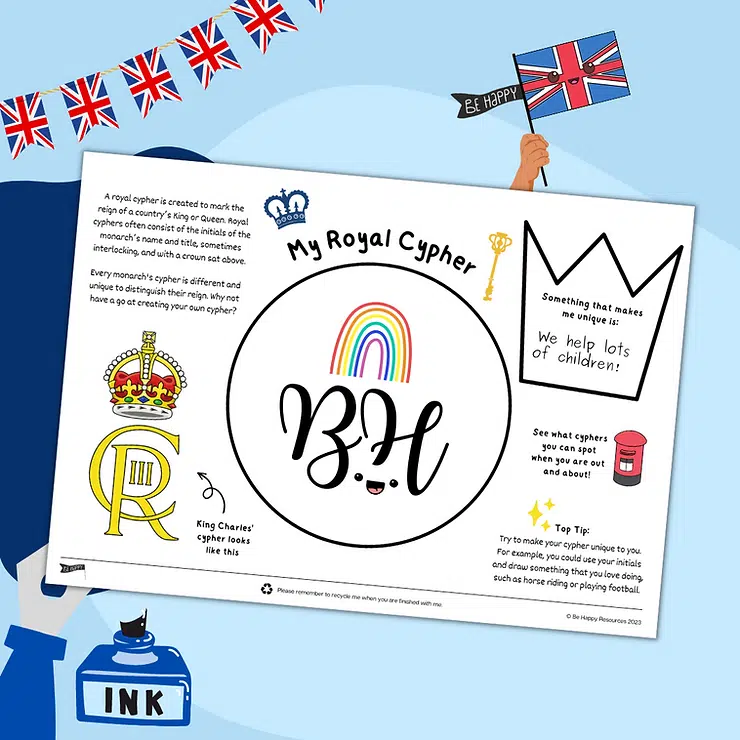
My Royal Cypher
This royal-themed resource is all about creating our own identity and thinking about what makes us unique. Our worksheet explains what a royal cypher is and how they are used to identify and mark the reign of each monarch. Can your children create their own cypher all about them? Will they use their name or initials? Can they draw something they love or which makes them unique? Remember, a cypher is something that is unique to us and distinguishes us from everyone else. Don’t forget to make sure they fill in what makes them unique too!
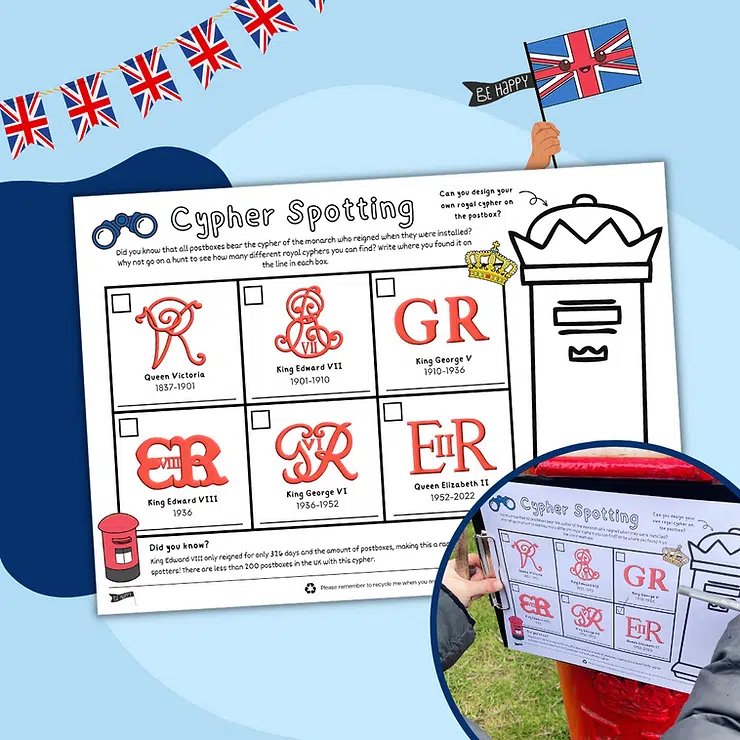
Cypher Spotting
Cypher Spotting is a fun scavenger hunt with a difference. Let’s head outside, breathe in the fresh air and get walking with this mindful worksheet, plus, learn all about the past history of some of our recent Kings and Queens.
Did you know that every postbox in the UK bears the cypher of the monarch that reigned during the time it was installed? Why not go on a hunt in your local town to see how many different cyphers you can see? Some postbox cyphers are very rare, such as the ones that bear the cypher of King Edward VIII who reigned for less than a year, whilst 60% of the UK’s postboxes have the cypher of Queen Elizabeth II. Your child can create their own cypher on our postbox too.
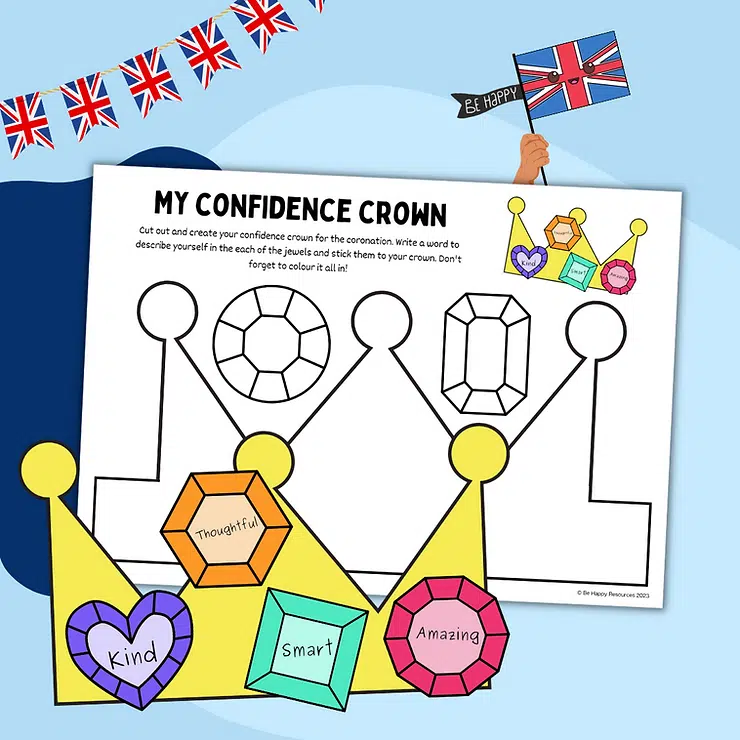
Create a Confidence Crown this Coronation! Kings and Queens always appear very confident don’t they? But we reckon they get nervous too! Help children boost their self esteem with this royal activity – Create your crown using our template and directions, then, have your child write a word that describes them in each of our 6 jewels. Stick the jewels to the crown and wear with pride!
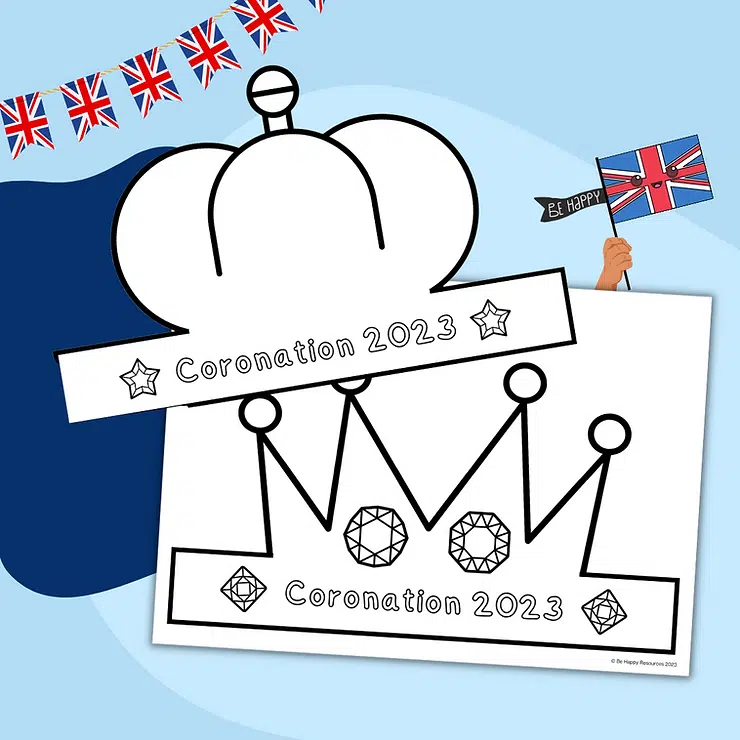
Coronation Crown 2023
It isn’t a Coronation without a crown – but we think that everyone should have their own! Our Coronation 2023 crown templates are easily printed and crafted at home or in the classroom. Directions: Choose your favourite crown template, colour in and decorate, then cut out. Using the extra strips, place around your head and use glue or tape to secure.
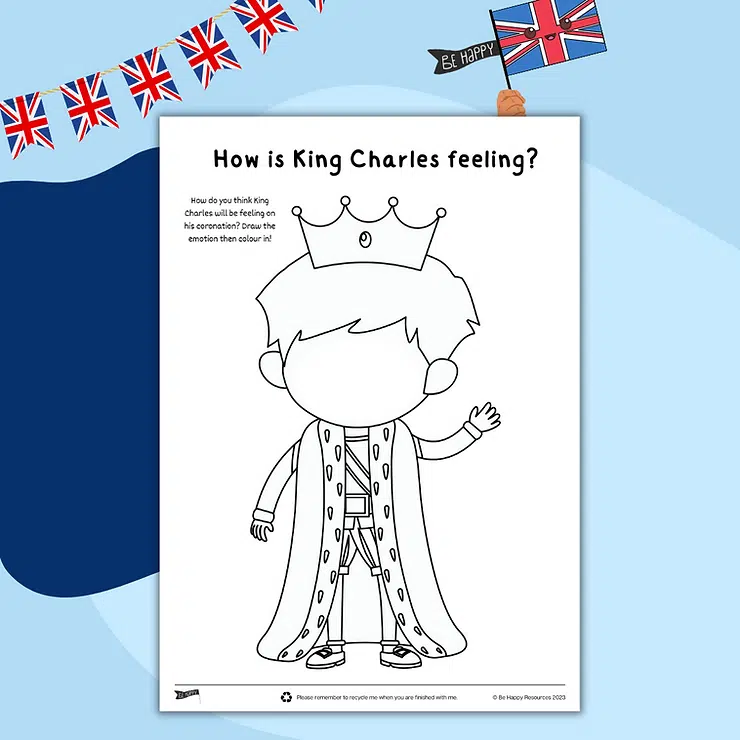
How is the King Feeling?
This is a great activity to help children learn how to put themselves in other peoples’ shoes and explore emotions. How do they think King Charles is feeling on Coronation day? How would they feel? Excited, happy, nervous, scared? Draw the emotion face on our King and then colour in!
FREE Coronation Colouring Sheets and DIY Coronation Bunting – available to all!
We also have some FREE new resources for you this week with our King Charles III free colouring pages and our free colour-your-own bunting! Simply print and enjoy the mindful art of colouring. If you’re having a Coronation party at home, you could use these activities to keep children busy, if you’re having a classroom party, why not have your class create the decorations? You can download these now below:
FREE Coronation Colouring Sheets 2023
.pdf
Download PDF • 3.78MB
FREE Coronation DIY Bunting 2023
.
Download • 1.82MB
What else is new?
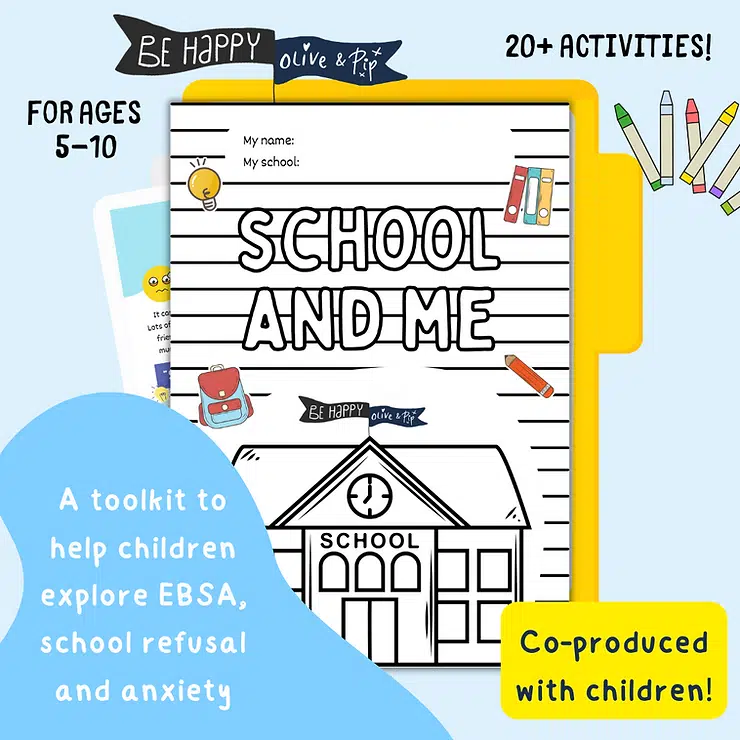
School and Me – A Helpful Toolkit to Help Children Explore EBSA and School Anxiety
Our Emotionally Based School Avoidance (EBSA) and school anxiety toolkit has been designed to help children explore the reasons surrounding their school avoidance and learn how to identify and communicate their worries with their caregivers and professionals. This toolkit features 21 specially designed EBSA resources to support children to explore, communicate and manage their worries. From helping children to learn about where they might feel worry to exploring calming techniques and coping tools they can use at school. Co-produced with children experiencing EBSA and school anxiety.
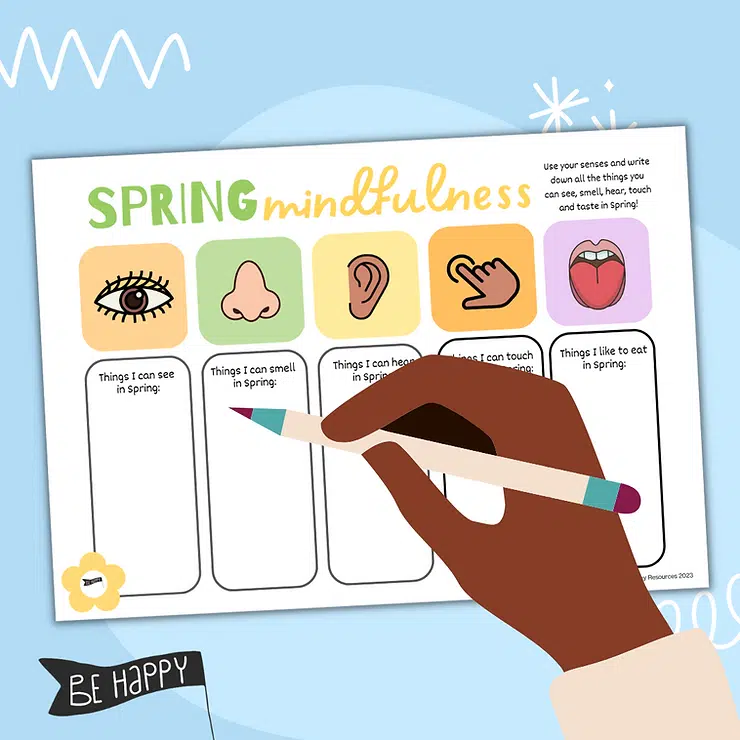
Spring Mindfulness Worksheet
Spring has officially sprung and we want your children to explore the changing season with their senses! Being mindful and using our senses to connect with our environment is a great way to feel calm and grounded. Practising mindfulness regularly can help us to feel safe and happy. You can let your child know that this activity is great for their mental health, they can do it just for fun, or whenever they need to feel calm.
Directions: Your child can complete this at home, in the classroom or outside! Bonus mindfulness points for heading outside and making the most of the wonderful Spring weather! Ask your children to use their senses and fill in our worksheet. What can they see, smell, hear, feel and taste in Spring?
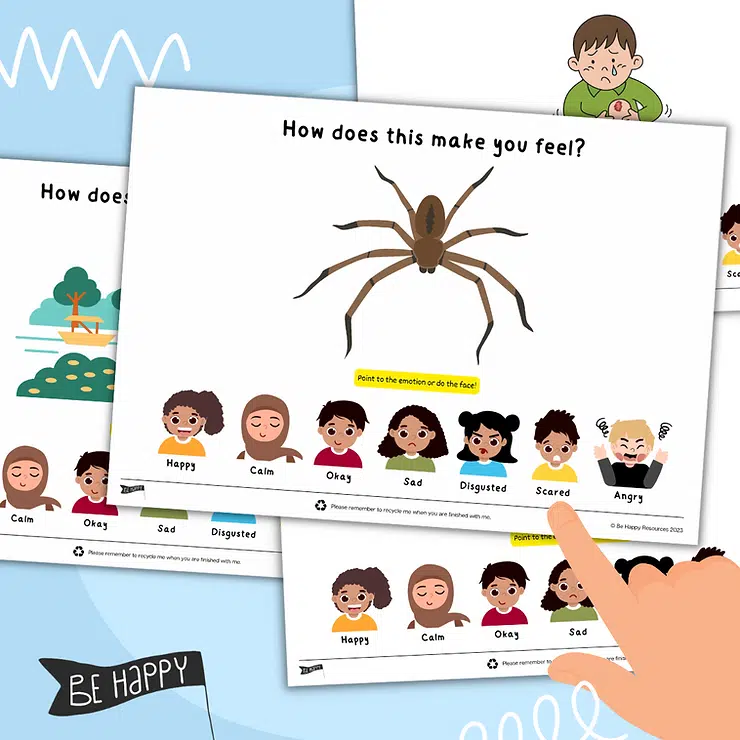
How Does This Make You Feel?
This resource is perfect for discussing emotions with pre-school and early years children. We have 15 sheets with different images to help your children explore a range of emotions and how each image makes them feel! Can they point to the feeling – or maybe they can show you the emotion themselves? We’ve also included a blank sheet for you to laminate and add your own images.
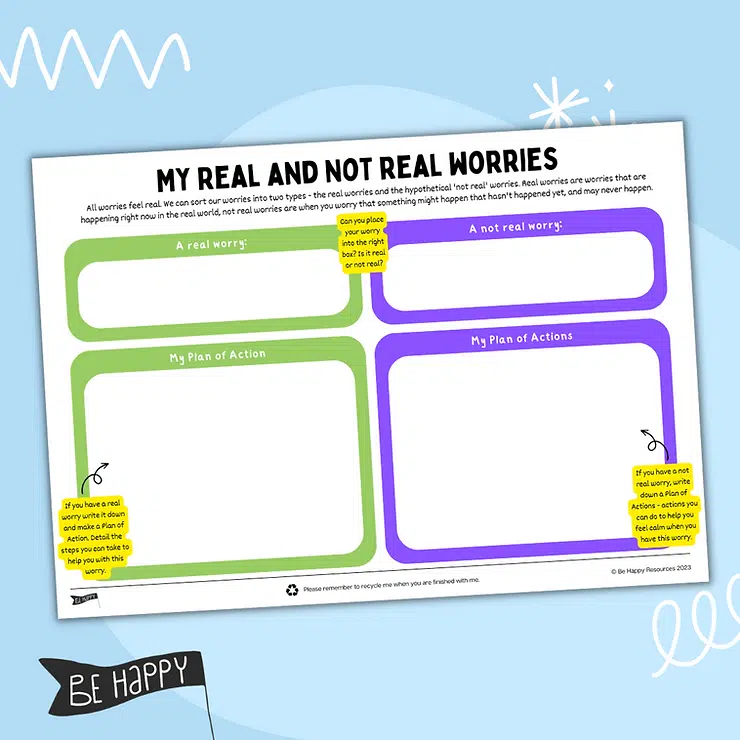
My Real and Not Real Worries
We know that all worries feel real, but not all worries are real. This worksheet is all about working out which worries are real-life and real-time worries – those worries happening in our lives right now – and hypothetical worries or ‘not real’ worries – those worries that haven’t happened and may never happen. Work through each of these worries with your child and explore ways to manage them. If your child has a real worry, they can make a plan of action – things they can do about the worry. If your child has a not real worry, they can make a ‘plan of actions’ – things they can do, think or say when this worry appears to help them feel calm.
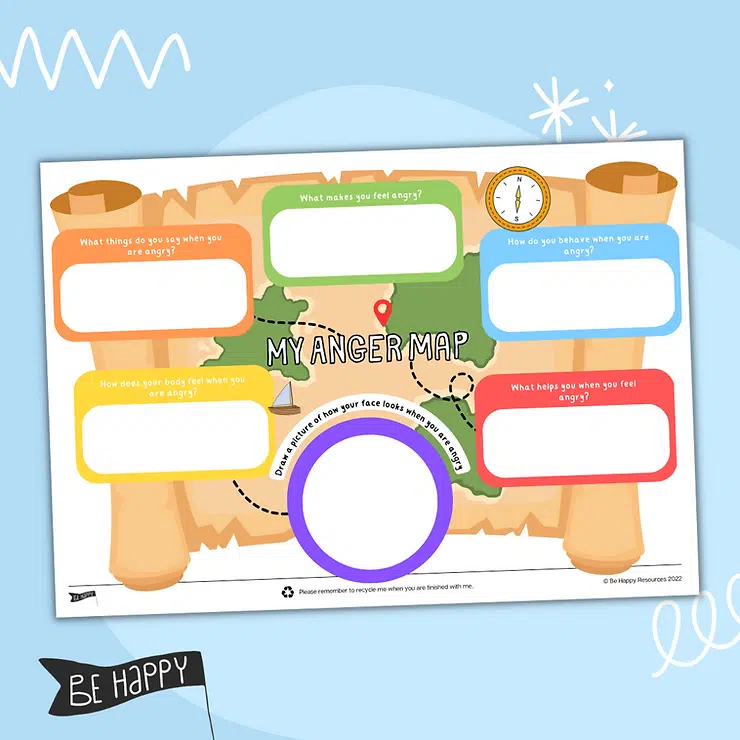
My Anger Map
This anger worksheet for kids helps children to explore their triggers and responses to anger. Help your child to ‘map’ their anger by filling in our prompts, this can help them to reduce their own exposure to certain triggers and learn how to manage their emotions by thinking about what helps them when they feel angry.
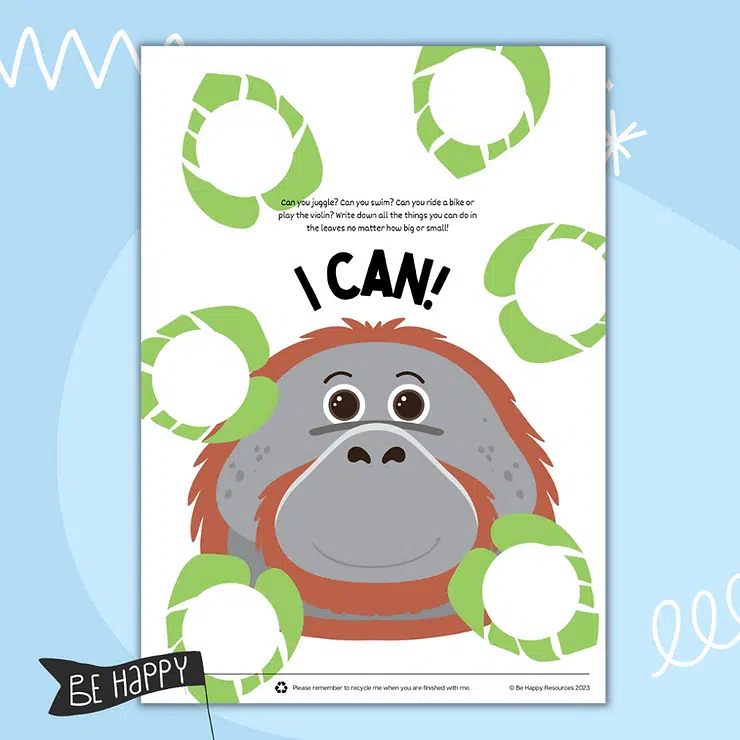
I Can Orangutan
I Can Orangutan is part of our popular Orangutan Can series of resources, which are on the Hub now. The Orangutan Can is all about helping children say ‘I Can’ instead of ‘I Can’t!’ In this latest worksheet, we want your children to tell the orangutan all the things they can do. Can they swim, ride a bike, tie shoelaces? Can they count or do hard sums? Help children to boost their confidence and list six things they CAN do! And remember, the orangutan never says he can’t…
Recent statistics reported by the Guardian show an overwhelming amount of children being denied mental health treatment in the UK. On average, a third of children being referred to mental health services are being turned away, this figure is up to 60% in some areas. Some experts state that the pandemic has caused an insurgence in referrals, causing mental health services to tighten thresholds.
As part of this we are also seeing an increase in children experiencing Emotionally Based School Avoidance (EBSA) – sometimes referred to as school refusal, or school avoidance. In a system that pushes 100% school attendance, EBSA can have a huge affect not just on the child, but the whole family.
What is Emotionally Based School Avoidance (EBSA?)
EBSA is a term referring to reduced or nonattendance at school by a child or young person. We prefer the term EBSA, rather school refusal or school avoidance. This is because EBSA recognises that the reasons the child doesn’t want to attend school are due to emotional or mental health issues. EBSA can have a drastic affect mentally on the whole family and network of support around the child – particularly when letters and threats of fines or prosecution rear.
We believe that supporting children and exploring their anxieties and reasons for avoidance is the best way to get children back into classrooms. Often, a teacher may have no idea that a child is experiencing EBSA or school-related anxiety, children can mask their emotions and thoughts at school, leaving caregivers to suffer the emotional outbursts and distressing consequences.
A lot of caregivers and even teaching professionals may not fully understand the emotional and mental affects of EBSA and how to explore these confidently with children. This is where we can help.
Causes and Symptoms
EBSA can be an accumulation of many different causes or reasons all interlinked together. These can be complex and interwoven and can relate to the school itself, a child’s own anxieties and fears or their home environment.
It’s important to remember that a child will have no control over the emotional issues affecting their absences. Therefore, schools and parents should seek to understand and support, rather than force or threaten.
Reasons a child may not want to attend school can include things like, social anxiety, bullying, social pressures, academic demands or separation anxiety. Often, the child is seeking to avoid things that make them anxious or stressed.
There can be many physical and emotional symptoms of EBSA, which typically worsen the nights and mornings before school, and can almost become entirely absent during school holidays and weekends.
Symptoms can include:
Anxiety symptoms such as racing heart, shaking, sweating, panic attacks, tummy aches, nausea or pins and needles
A child may often complain of being ill despite no signs of physical illness
Fearfulness, tantrums, outbursts of anger or frustration and panic when faced with attending school
Symptoms of low mood such as not wanting to take part in their usual activities, being more quiet than usual, expressing negative feelings and changes in appetite.
How can you support a child experiencing EBSA?
Be supportive and understanding
Acknowledge your child’s fears and feelings and facilitate open communication around thoughts and emotions – whether at home or in the classroom. Try not to be forceful – don’t tell them they must go to school or you will get fined for example. Be sensitive and reassuring and allow them to explore their worries with you. Get to know your child’s support network and who they trust to speak to – is it you or someone else? It can be extremely stressful being a parent and feeling like you have to force your child to go to school – our advice is to do what is best for yours and their mental health.
Ask them what you can do to help
Ask your child to think of or list some things you can do to help. It could be something as simple as walking them into the classroom or asking their teacher if they can have a time out during the school day. Some ideas may not be feasible, but try to accommodate the ones that are by talking to your child’s school. Try to get them to really think, instead of just saying, ‘not going to school,’ as this can give them a sense of control over something they feel they have no control over.
Arrange a meeting
Whether you’re a teacher or parent, a meeting with all caregivers and professionals in the child’s life is the easiest way to find out how best to support them. Together, you can come up with a list of changes to help the child return to the classroom – for example, would it help the child if they could arrive 10 minutes early with a parent to settle them into class? Could a buddy or mentor be assigned to them to help them during the school day? Or could the school allow more flexible start and finish times?
Create a safe space
A safe space can be created anywhere – at school or at home – or both. If the child has one at school, they can sit here before class or during break times. Fill their safe space with all the things they find comforting and calming. Sensory toys, teddies and calming worksheets and activities work well.
Encourage them to do things that help them relax
Help children to learn coping techniques and calming mechanisms that can help them feel relaxed inside and outside of school. Perhaps it is a taking a deep breath every time they pick up a pen or pencil or reading a book when they come home from school – ask your child what helps them to feel relaxed and build it into their daily routine.
Create and stick to routines
All childrenthrive from routine, but for children with anxiety, having a fixed routine can help them feel calm and prepared. Create a relaxing morning routine before school, try to avoid rushing or running around and try to do the same things in the same order each day. This can also reduce stress for you as the parent too.
Recognise small achievements
Recognise those small wins – is it getting out of bed on time? Getting dressed themselves? Doing their school work or improving in a subject? Be sure to give children praise and encouragement no matter how big or small.
Use our toolkit
Our EBSA and school anxiety toolkit has been designed to help children explore the reasons surrounding their school avoidance and learn how to identify and communicate their worries with their caregivers and professionals. Take a look at some of our activities below.
About the Activities
This toolkit features 21 specially designed EBSA resources to support children to explore, communicate and manage their worries. From helping children to learn about where they might feel worry, to exploring calming techniques and coping tools they can use at school.
Where I Feel Worry – The aim of this activity is to help children explore their physical responses to anxiety. Perhaps they may get a tummy ache before school, or their legs may feel like jelly. This activity helps children to realise that anxiety can cause lots of different physical symptoms and how to recognise these.
My School of Worries – When we are worried about something, it’s always better to talk about it! But it might be hard to find out what we’re worrying about or what is worrying us the most. This activity helps your children to get down all the thoughts out of their head onto paper. Then, it asks them to think about which worries are affecting them the most. Maybe they only have one worry, or maybe they have a few – this activity is all about exploring how each worry makes us feel. Once they have identified which worries are upsetting them the most, they can complete our Rate Your Worry activity.
Rate Your Worry – This activity is all about managing those worries and thoughts that are affecting your child. If it is a real worry – this is a worry that is happening right now, such as bullying – make a plan of action to do something about this worry. If it’s a hypothetical worry – a worry that hasn’t happened yet and may never happen – make a ‘plan of actions’ – things they can do when they feel this worry. For example, they could talk to a grown up and take some deep breaths.
Things That Make Me Feel Safe – This activity is about helping your child realise what things at school can comfort them if they are feeling anxious or upset. It also helps children to think of school as a safe and comforting place.
My Safe Place – Some children with EBSA may have a dedicated safe place at school, such as a calm corner or comfort area. If your child has one of these, this activity asks them to write and draw their safe place. This is a mindful activity, reinforcing the comfort this safe place gives them by using their senses.
My Weekly Top 3 – This activity is all about helping your child think positively about school and the good things that happen. We understand that for children with anxiety, it can be hard to think of positive things, your child may say for example that nothing good has happened. This can be a natural reaction. You can help your child realise their own positives – they don’t have to be huge accomplishments, but small weekly wins that made them feel good.
Conversation Cards – Our Conversation Cards are fun ways to learn about your child’s day. Have you ever picked your child up from school and instantly asked them if they had a nice day and they just say ‘yeh’ or ‘can’t remember?’ When children finish school they are still processing the day’s events, and for children with EBSA they may have spent the day masking. We would recommend you use our Conversation Cards when they have settled at home – they are designed to get your child thinking about the good things that happened in their day. Our Conversation Cards work both ways – it’s much more fun when they get to ask the questions too!
My Coping Pencil Case – This fun craft activity is all about helping your child to learn about ways that help them feel calm when they are experiencing distress or panic. Have them cut out and create their Coping Pencil Case! We have suggested some tools and techniques in our toolkit to help your child learn about ways to feel calm.
Fun Things To Do On The Way to School – All our activities have been suggested from our expert contributors! But we know that your child may also have games they like to play – so we’ve included some blank cards for them to create their own. These can be used as a distraction technique to keep minds busy on the way to school.
My After School Bucket List – We’re sticking with the theme of things to look forward to in this activity and helping your child through the school day. What’s on their after school bucket list? Is it watching their favourite programme, making a fun craft or maybe it’s having their favourite evening meal? Don’t forget to have them tick each activity off as they do it!
Breathing Exercises – Deep breathing can help children bring their focus to something they can control – their breath – instead of thoughts and fears that can exasperate anxiety. Not only this, but deep breathing has many benefits for both mental and physical wellness. We’ve included two fun breathing exercises, combined with some mindful tracing in this toolkit.
Guide for Caregivers – We’ve provided a helpful guide for parents and caregivers at the back which guides you through each activity and helps you feel confident in supporting your child. We’ve also explained how each activity is designed to support your child’s emotional and mental wellbeing.
To read more about EBSA, school avoidance or school anxiety and seek support we have provided some helpful websites below, and take a look at our other resources as well. If you are viewing this toolkit on a computer you can click the links that are underlined.
Your local government will most likely have a page about EBSA – simply search EBSA and the name of your local council.
You can also talk to your child’s school and your GP.
Disclaimer: This toolkit is not a replacement for professional support. It may help your child in exploring and communicating how they are feeling and things that may be troubling them. We would recommend you share this toolkit with your child’s teacher or any professionals in your child’s life. If you have any concerns about your child’s mental health, or you feel that their mental health may be worsening, please visit your GP or contact a mental health professional.
Our
Members Include
Join our mailing list to stay updated!
Sign up to our mailing list to receive a Friday Freebie! Each week we send a free resource to all our subscribers - sign up to get yours!