What’s New? – Magical New Fairytale Themed Emotional Literacy Resources!

This week, we’re all about fairytales! From Disney to folklore, we’re using the power of fairytale magic to get your children thinking and talking about their mental health.
We’re coming to the end of Children’s Mental Health Week 2023 and we want to inspire a bit of magic, we’re here to show that mental health and emotional learning can be fun! So we’ve given our emotional literacy resources and mental health resources a fairytale makeover. Fairytales are a place where anything is possible and allow us to use and inspire our imaginations…
 
Zones of Regulation – Fairytale Edition
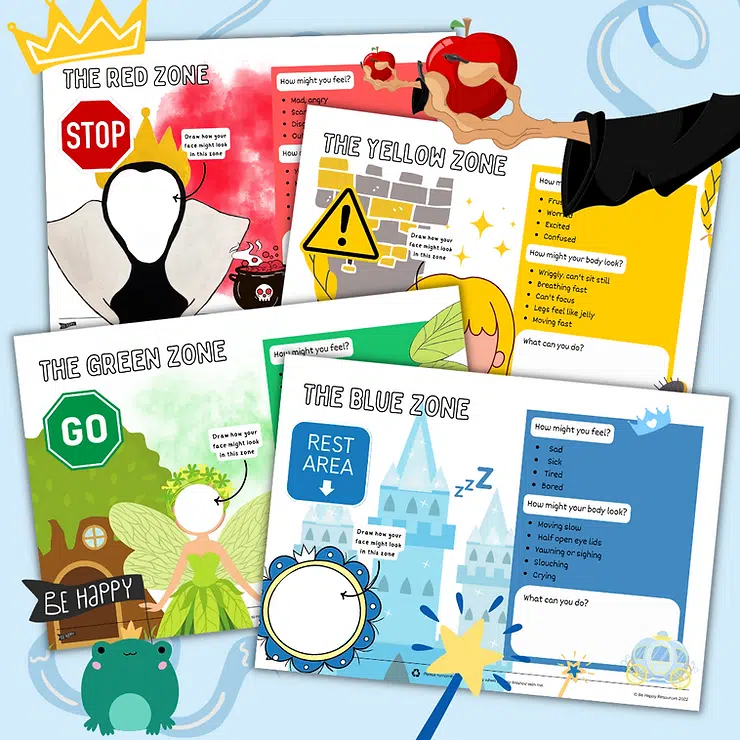
We’ve given the Zones of Regulation a magical makeover, bringing fairytales to the zones. The Zones of Regulation is a curriculum used in many schools and youth groups, based around the use of four colours to help children self-identify how they’re feeling and learn how to self regulate. These four worksheets are full of information to help your children identify and manage their feelings, each sheet provides space to write about what they can do should they find themselves in any particular zone.
 
Frozen How Do You Feel Today Worksheet/Play-dough Mat
This Elsa emotion activity can be used in a variety of different ways – you can ask your child to draw Elsa’s facial expression to show how they are feeling, or you could laminate and use with a marker pen or play-dough. A fun way to ask any Frozen-lover how they feel!
 
Princess Emotion Matching Game
Princesses, just like us, have many different emotions – can your child match the picture card to the word card? Optional – can your child think of a story for why our princess is feeling each emotion?
Mirror, Mirror On The Wall…
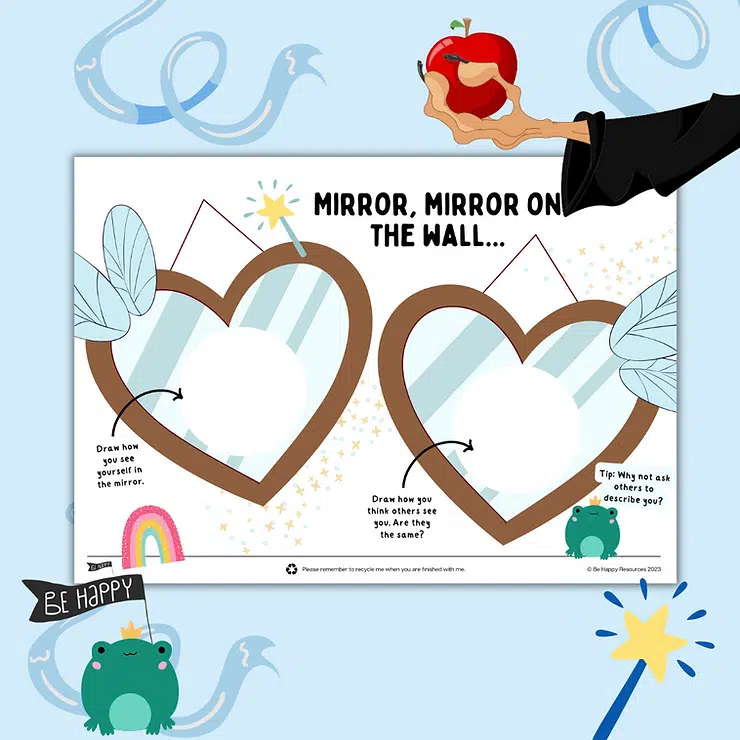
We all know the story of the mirror on the wall that shows the fairest of them all, but in this activity, we’re challenging your child to think about how they see themselves versus how others see them. Ask your child to draw themselves in the first mirror, then have them ask someone they love to describe them and draw themselves again in the mirror on the right. Has the image changed?
 
In My Castle
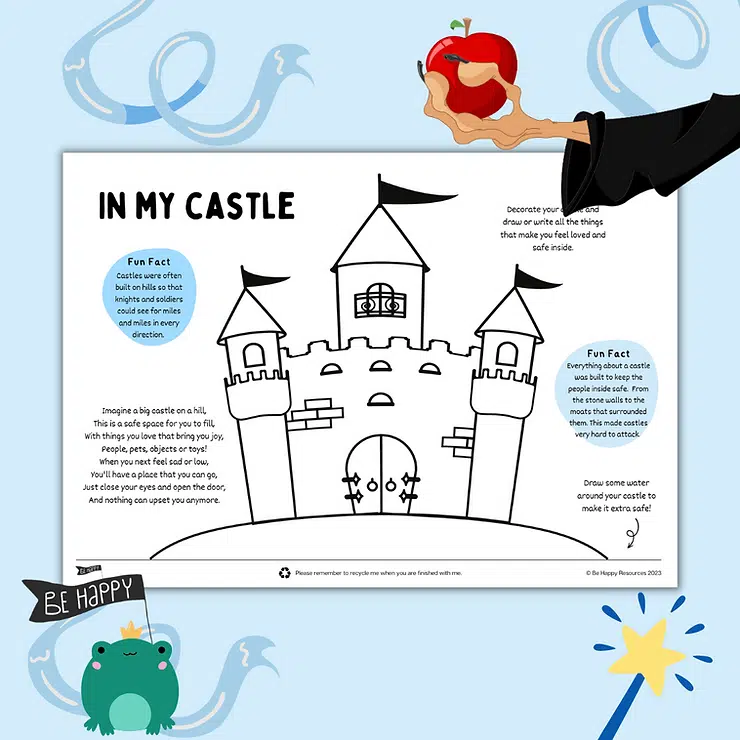
Imagine a big castle on a hill,
This is a safe space for you to fill,
With things you love that bring you joy,
People, pets, objects or toys!
When you next feel sad or low,
You’ll have a place that you can go,
Just close your eyes and open the door,
And nothing can upset you anymore.
 
In My Castle is a wonderful activity to help children imagine a place to escape. This castle is filled with all the things that they love and helps them to feel safe. Plus we’ve included some fun facts about how castles kept their inhabitants safe from attack. When life gets a bit too much, they can close their eyes and imagine retreating to the safety of their very own castle.
 
This week’s FREE resource! – For Mailing List subscribers only
This is my Happily Ever After
We’ve stuck with the fairytale theme for this week’s free resource – we want your children to think about what happiness is and what their happily ever after looks like.
 
Directions: What does happiness mean to your child? We all have our own different versions of what happiness is. Have your child think about this for a moment and write down their thoughts. Then, using this, ask them to write their very own happily ever after. In this exercise, there are no limits, let your child dream and use their imagination – this is a fairytale after all, and anything goes!
 
If you’d like to receive a free resource each week, make sure you’re signed up to our mailing list! You can sign up at the bottom of any page.
 
What else is new?
 
Pack Away My Worries
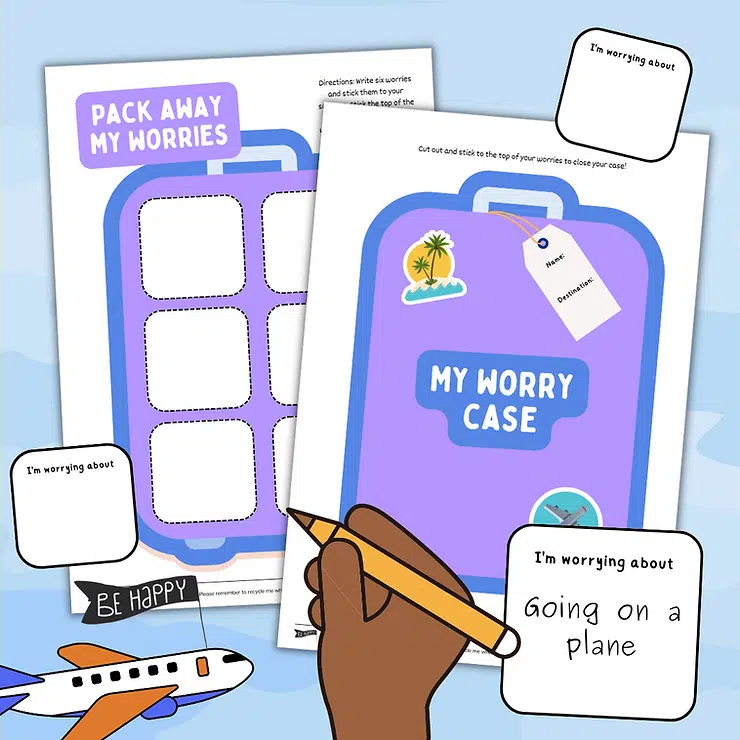
Pack up those worries and send them far, far away in this new activity. Have your child write their worries and pop them in their worry case! Fill in the tag and send the worry case on its way.
Things That Make Me Smile
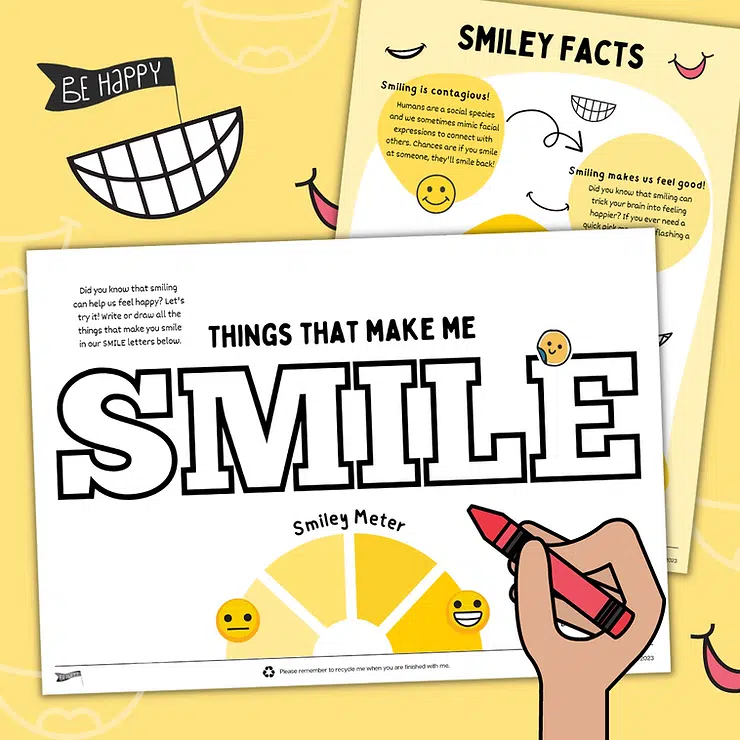
This activity is sure to make you smile! Did you know that smiling can trick the brain into feeling happy? Try it when you next feel low and it may bring some temporary relief from any overwhelming emotions.
 
In this resource we want your children to write or draw all the things that make them smile! Once they’ve done this, they can track their smile on the Smiley Meter – how big are they smiling? We’ve also included a Smiley Factsheet full of wonderful facts all about smiling and how it helps us, from boosting our immune system to connecting with others, smiling is great for our mental health!
 
Self Love Meter
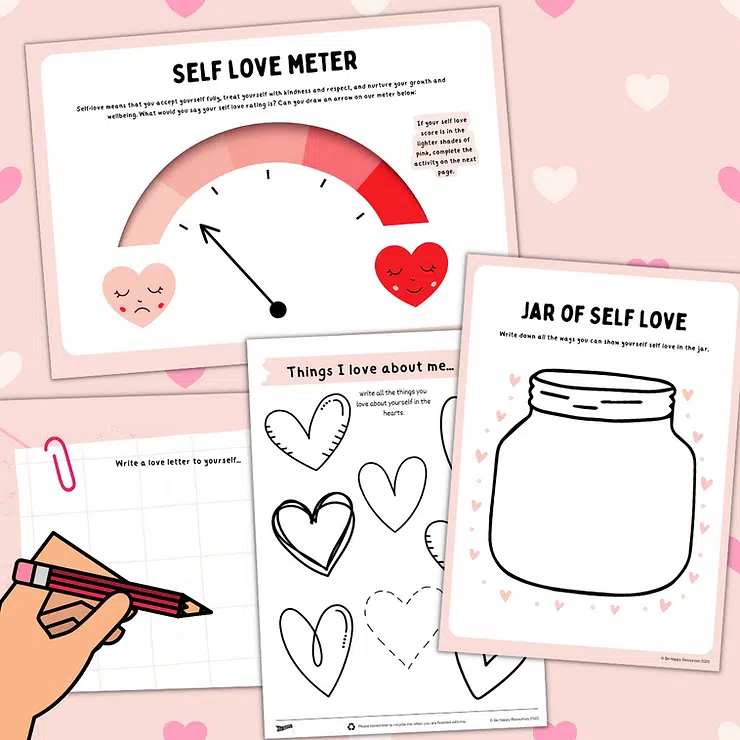
This confidence-based activity is perfect for Valentine’s Day. Have your child track their self-love on our meter, if their arrow is towards the lighter pink end of the spectrum, have them complete the activities. Afterwards, ask them to re-draw their arrow on the self love meter – has their confidence improved?
 
Brain Emotion Flashcards
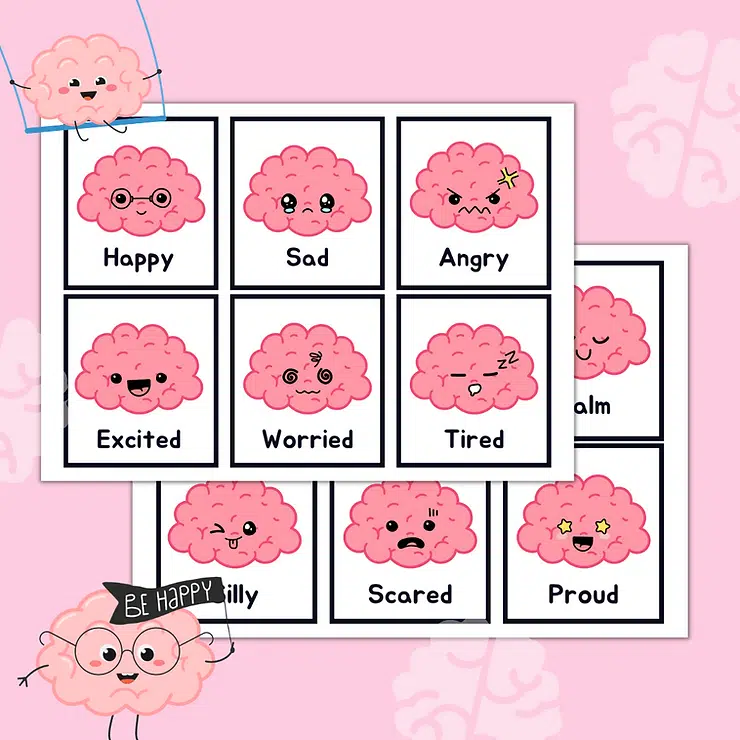
Also new for our younger minds are our brain emotions flashcards – bringing learning about one of our most important organs to the front of their minds! These cards remind young children that are brains are responsible for our all our feelings – aren’t brains amazing!?
 
Self-Love Hearts
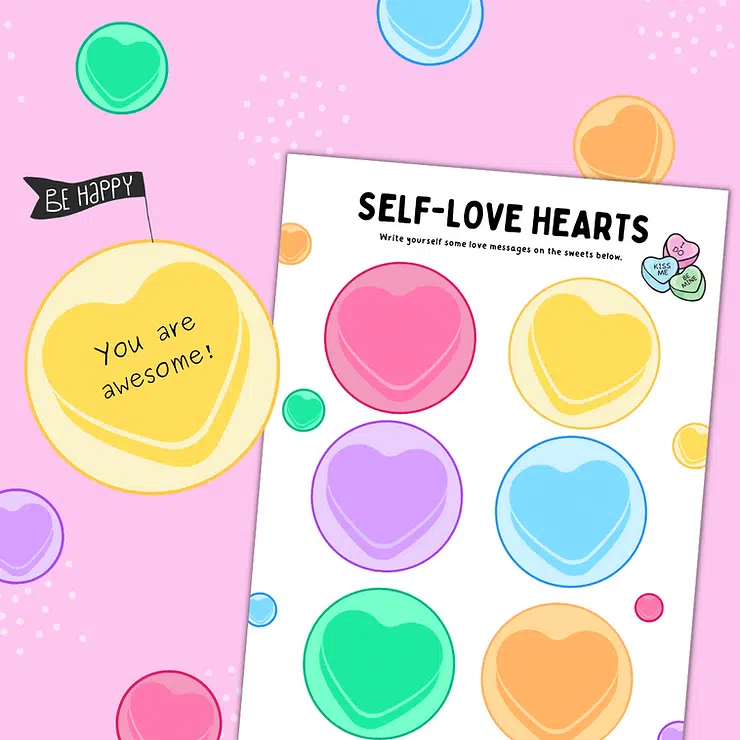
This new resource focuses on the most important love of all; self-love. Ask your child to write some love-hearts to themselves! You could even cut them out and display them in their room or in your classroom.
 
If you’re a paying member you can access all the above activities now in the Be Happy Hub. Now a member, you can sign up from just £1.99 here.

Youth Suicide: Facts, Information and Free Resources

It’s a topic that still receives a lot of stigma in adults, nevermind children. But as stats show an increase in children and young people under the age of 19 taking their own lives since the pandemic, we thought we’d get it out in the open.
Suicide is one of the leading causes of death in children and young people.
 
More than 200 children die by suicide every year in the UK, but this may underrepresent the true number of deaths due to a high burden of proof required by coroners. Not only this, but as some inquests can take a number of years, it’s likely we will see a further increase over the next few years as the true toll from the pandemic comes to light.
 
It’s important to remember that suicide represents the extreme endpoint of mental ill health, many more children and young people experience suicidal thoughts and a huge number self harm. {Sources below}
 
The Facts
  • Since 2013, suicide rates have risen among younger males aged 10-14, and among females across all ages.
  • In England, a quarter of 11-16 year olds, and nearly half of 17-19 year olds (46.8%), with a mental disorder reported that they have self harmed or attempted suicide at some point in their lives.
  • Around 7% of all children under 17 have attempted suicide.
  • Waiting lists for professional support are up to three years in some areas.
  • Children are waiting more than 12 months for an assessment
  • The suicide rate for young people aged between 15-19 increased by 35% from 2020 to 2021 alone.
  • A quarter of teenagers are now suffering from anxiety or depression.
  • More children than ever are on antidepressants.
  • Children as young as six have died by suicide.
Most deaths by suicide are preventable, but not all.
 
The Why
 
Suicide is linked to many factors, including: poor mental health; self-harm; academic pressures or worries; bullying; social isolation; family environment and bereavement; relationship problems; social media; substance misuse; or neglect.
 
We are yet to see the true repercussions from the pandemic. We know that feeling safe is one of the biggest protective factors for young minds, yet for a year or two, we effectively told children that the world wasn’t safe and we were to stay inside. We lost connections and physical contact, which we know is important for good mental health and children were unable to socialise with each other.
 
In fact, primary school teachers have said that the current generation entering schools are the most impacted emotionally, and regular discussions on teacher groups show a huge decline in the lack of emotional regulation in young children.
 
There are many reasons why children may decide to end their lives, however, suicide is not usually a snap decision and there is usually a journey to reach this destination. We believe that early education and prompt support are key.
 
Myths
 
Myth 1: Talking about suicide can give young people ideas
Most experts and professionals agree that not talking about suicide is more harmful than talking about it. In fact, people who are struggling or have felt suicidal will often say what a huge relief it was to be able to talk about what they were experiencing.
 
Evidence shows asking someone if they’re suicidal can protect them. They feel listened to, and hopefully less trapped. Their feelings are validated, and they know that somebody cares about them. Reaching out can save a life.” Says Rory O’Connor, Professor of Health Psychology at Glasgow University.
 
If somebody is having thoughts of self harm or suicide, it is unlikely that you will give them ideas. Talking about suicide provides the opportunity for communication for anyone who is having these thoughts but doesn’t know how to bring up the topic of conversation.
 
When talking about suicide with young people, you could open up the channels of communication by first saying that this is not a taboo topic and you are open to listening to them about how they’re feeling whenever they need, especially if they ever have thoughts of harming themselves.
 
Myth 2: People who are suicidal want to die
Most people who have suicidal thoughts do not want to die; they just want the situation they are in to change or the way they are feeling to stop. This distinction is extremely important, because this means that there are ways to help.
 
Myth 3: Suicide is selfish
Suicide isn’t selfish. People who are suicidal often believe they are a burden to their loved ones and that they would be better off without them.
 
“Suicide is at the end of a long probable chain of thoughts and it is rarely, if ever, done for selfish reasons. It is ultimate despair.” Says Prof Paul Fearon, medical director at St Patrick’s Mental Health Services.
 
Myth 4: People who threaten suicidal are attention seeking
People who say they want to end their lives should always be taken seriously. In fact, it could have taken a lot of courage for someone to say they are feeling suicidal and every threat should be treated as though the person has intent to die.
 
Myth 5: There are no signs if someone is feeling suicidal
If someone is feeling suicidal there can often be signs, but it is important to remember that everyone copes differently. There are some signs that can show someone is going through a difficult time or having difficult thoughts. These may include:
  • The recent suicide, or death by other means, of a friend or relative.
  • Previous suicide attempts.
  • Preoccupation with themes of death or expressing suicidal thoughts.
  • Depression, conduct disorder and problems with adjustment such as substance abuse, particularly when two or more of these are present.
  • Giving away prized possessions/appearing to make final arrangements.
  • Major changes in sleep patterns – too much or too little.
  • Sudden and extreme changes in eating habits such as losing or gaining weight.
  • Withdrawal from friends and family or other major behavioural changes.
  • Dropping out of group activities or losing interest in things.
  • Personality changes such as nervousness, outbursts of anger, impulsive or reckless behaviour, or apathy about appearance or health.
  • Frequent irritability or unexplained crying.
  • Lingering expressions of unworthiness or failure.
  • Lack of interest in the future.
  • A sudden lifting of spirits, when there have been other indicators, may point to a decision to end the pain of life through suicide.
Myth 6: Marked and sudden improvement in mental state signifies the suicide risk is over
Sometimes people who are feeling suicidal may experience an uplift in spirits before a suicide attempt, this is because a person with suicidal thoughts may feel that the end of their pain is near and they will not have to live with it for any longer.
 
Myth 7: Every death is preventable
In an ideal world, every suicidal death could be preventable, but no matter how well intentioned, alert and diligent our efforts may be, there is no way of preventing all suicides from occurring.
 
Myth 8: You can only call Samaritans if you’re suicidal
Samaritans are available for anyone who has conflicting thoughts and feelings and want someone to talk to. You can call them free, day or night on 116 123 or email jo@samaritans.org.
 
Myth 9: The only effective intervention for suicide comes from professionals
Whilst people with suicidal thoughts will need the help and support of a trained mental health professional, anyone has the ability to talk to and support a young person in distress. All people who interact with adolescents in crisis can help them by way of emotional support and encouragement. Having a good support network is a huge factor in recovery from suicidal ideation.
 
Free Resources
The resources below will be free until April 2023 when they will go on to form a part of our new Teen section of our Hub. You can download these to help any pre-teen, teen or young person who is experiencing suicidal thoughts or who is self harming.
 
Disclaimer: Please remember that our resources do not replace professional support and should you or someone you know be in crisis please refer to our urgent support page here.
 
My Safety Plan
A Safety Plan is exactly that – a plan to keep yourself safe. For any teen or young person experiencing suicidal thoughts, it is important they fill out a safety plan so that they know what to do, who to talk to and what resources to use to help them when they are experiencing thoughts of self harm or suicide intention.
 
My Bad Day Support Plan
We all have bad days, for some of us, those bad days can come around a lot more frequently. Have your teen or young person fill out a plan to help cope with those tougher times.
 
My Circle of Support
For teens and young people experiencing mental ill health, it’s important that they know who to trust and who they can talk to. Having a support network is a huge protective factor in mental health and a major part of recovery.
 
Self Harm Tracker
Use our weekly self harm tracker to track self harm urges, this tracker will be able to tell you whether you need to explore further help and support.
 
Things I Can Do When I Feel Like Self Harming
Fill in this self harm distraction plan to cope with the urge to self harm and learn about what works for you.
 
 
Sources/Further reading

10 Tips for Talking to Children About Mental Health

With Children’s Mental Health Week 2023 on the horizon, we thought we’d give you some tips for talking to your children about mental health. You may be concerned that you don’t know enough or may say the wrong thing – but be rest assured that talking about our emotions is better than not talking about them at all!
Here, we’ll give you some tips to start exploring mental health conversations at home and introduce the importance of taking care of our mental wellbeing.
 
1. Use our Free Guides
Our free guides can help you to introduce the topic of mental health to young children and will help explain how our brains work. Our free mental health guides for children also help children understand certain topics and disorders, this can be especially helpful if they are experiencing things like panic attacks, loss or separation anxiety. All our guides are regualrly approved and recommended by our Clinical Psychologist.
 
2. Do something creative – but make sure you’re both feeling relaxed
For some children sitting still can be a difficult task! Break out some mindful colouring or get out a drawing pad and do some doodling together. Whilst you are drawing, ask questions such as how they’re feeling, if they’re feeling calm and how their day has been. Another good time to connect with your child is just before bed, when they are calm and relaxed you can ask a few reflective questions about their day, for example, ‘what was the best part of your day?’ and ‘what can you do differently tomorrow?’
 
3. Offer a bit of your day first
When sharing conversations about emotions start by offering information on your day and how you feel first. This reaffirms that talking about our mental health is normal and acceptable and helps your child feel they are able to open up. Make time regularly to do this and build an environment that is supportive and open – this will mean that your child is more likely to come to you when they feel upset, worried or overwhelmed.
 
4. Ask open ended questions
Instead of asking ‘are you feeling ok?’ ask open questions about how they are feeling. If you find that asking something like ‘how are you feeling today,’ doesn’t prompt an open response, try rephrasing the question – for example, ‘what is one thing that is worrying you right now?’ or ‘what was the worst part of your day and why?’ Talking about our feelings doesn’t have to be purely investigative, it can lead to fun conversations too – if you need some inspiration, you can download our Mental Health Conversation Cards for free here.
 
5. Become more inquisitive throughout the day
Children express themselves routinely through play and drawing. Regularly ask your children questions about what they’re doing and why – you may be surprised at some of the answers! For example, ‘what are you drawing?’ ‘why are you using that colour?’ or if they are playing with dolls or toys you can ask how their teddies are feeling ‘what do you think bear is feeling right now?’ or ‘what would he say if he could talk?’
 
7. Keep conversations regular – but don’t force it
If your child doesn’t want to open up, don’t force them or keep asking questions. Leave it and try another time but don’t give up.
 
8. Turn off their screens
Make sure there are no distractions – and that includes your phone and devices too! The most important thing is that you give your child your undivided attention. For example you can let them know that you are opening up the channels of communication by saying, ‘I’m going to switch my phone off for the next hour so we can do something together, is there anything you’d like to talk about?”
 
9. Remember, talking about mental health is better than not talking about mental health
A lot of us avoid talking about mental health because we don’t understand it ourselves or don’t know what to say. Talking about mental health won’t give your child ideas – for example, talking about anxiety won’t make your child anxious. Instead, it will give your child the knowledge to understand their thoughts and normalise that we all have mental health.
 
10. Sign up to the Be Happy Hub!
We have over 500 resources to help you explore emotions, thoughts, worries and coping tools with your children. You can sign up from just £1.99 a month here.

Children’s Mental Health Week 2023: FREE Resources for Teachers, Professionals and Parents

Children’s Mental Health Week will take place between 6th and 12th February, raising awareness of the importance of children and adolescent mental health and the difference early support, education and treatment can make in a child’s life.
 
What is Children’s Mental Health Week?
Place2Be’s Children’s Mental Health Week aims to make a difference to the lives of children and young people across the UK by helping children learn about mental health and the steps we can all take to improve the mental wellbeing of our youngest minds. Children’s Mental Health Week 2023 will run from 6th to 12th February, encouraging schools, parents and professionals to get involved in fun educational activities around mental health.
 
What’s this year’s theme?
This year’s theme is ‘Let’s Connect,’ which is all about helping children understand the mental benefits of meaningful connections. Whether it’s connections with our family and friends, or with the wider community and even ourselves – connections are a huge part of building resilience and good mental health.
 
What are we doing?
Here at Be Happy Resources, we are experts in creating fun and educational resources to support your child’s mental health. Our unique resource centre holds over 500 downloadable activities to boost confidence, develop resilience, ease worries and more. For Children’s Mental Health Week, we have created some free, downloadable worksheets and activities for your school, workplace or home all around this year’s theme. We’ve also decided to make a small selection of our paid resources free for a short time.
 
Let’s explore some of our free Children’s Mental Health Week activities below…
 
Connect Four
This group activity is all about getting children interacting and connecting with each other by asking questions. This is a great ice breaker activity and can help children explore connections with people they may not usually interact with. Print out a sheet for each member of your group or class, then, have the children mix and ask questions about each other. The first child to fill in their circles with their class mates’ names and connect four wins!
 
Let’s Connect – Puzzle Pairs
Another group/class activity that gets your children interacting with each other – this is all about exploring deeper connections and asking fun questions relating to our own lives. Cut out the puzzle pieces and hand out to your group or class. Task the children to find their matching puzzle pieces and ask their partner the questions. They can then swap the puzzle piece with someone else and start again, you can do this as many times as you wish!
 
Mental Health Conversation Cards
We know how difficult it can be to ask questions about mental health and know what kind of questions to ask our children that allows them to open up. Our Mental Health Conversation Cards are here to help! Full of fun, engaging and informative open ended questions that encourage discussion about thoughts, feelings and coping tools!
 
How I Connect With Myself
This year’s theme is all about connecting with others – but we feel it’s equally important to feel connected with ourselves. Feeling in tune with ourselves can help us to become more mindful and confident. This activity explores ways your children can connect with themselves, giving them some examples and asking them to fill in the circles.
 
How I Connect With Others
There are many methods and ways we connect with others, can your children think about what connections mean to them and how we connect with others? The beauty of this activity is that it is extremely subjective – each child may view the way they connect differently. From the methods of communication – from text messages to physical conversations, to the ways we connect such as hugging, holding hands etc. – there really are no wrong answers to this worksheet!
 
Dress to Express
Dress to Express day is a day dedicated to celebrating your little one’s unique style and personality! Some schools may hold this day on different days throughout the week. We’ve come up with some design sheets to help your children design their own outfits for Dress to Express day – choose from a t shirt, hoodie, dress, skirt or trousers.
 
Design a Mental Health Ribbon
We love the mindfulness that creativity can bring – can your children come up with a ribbon for mental health awareness? What colours and images do they think symbolise mental health? Is there a specific aspect of mental health they’d like everyone to think about? Let imaginations go wild in this activity!
 
You can download all the above resources by heading over to our FREE RESOURCES section. Here you will also find a selection of Teen resources which will eventually form part of our new Teen section of the Be Happy Hub.
 
We’ll be uploading more free resources throughout the week!
 
Want more resources like this? Why not sign up to our Hub – from just £1.99 a month you can access over 500 downloadable mental health resources for children age 0-11. View our Pricing Plans here.

What’s New This Week? – 22nd Jan – Space Emotions, a new Grief craft and a warming winter activity!

Have you signed up to receive our free weekly resource yet? You can join our mailing list and check out this week’s free resource at the bottom of this page!
 
This week we’re back with more downloadable mental health resources to help your children with anxiety, grief and feelings of frustration. We have a new winter warmer for you with our Soothing Soup and an activity all about teaching your children some much-needed patience. Find out more below.
 
Classroom Gratitude Banner
Studies show that expressing gratitude can improve overall physical and mental well-being, boost self-esteem and even enhance sleep quality. In the modern world it’s easy to focus on the things we don’t have, gratefulness changes our perspective and forces us to look at the things that we do have and the things that are going well in our lives. This can act as an instant mood lifter!
 
Teach children the powerful art of gratitude and help them to think about all the amazing things in their lives with our Classroom Gratitude Banner! Print a sheet out for each child in your class and have every child draw or write something they are grateful for on their banner. Colour in, cut out and attach to string – your gratitude banner is ready to display! You can also do this at home by printing out around 5-10 sheets and having your child write a different thing they are grateful for on each banner.
 
Soothing Soup – a Wonderful Winter Warmer!
Have you ever noticed how comforting a bowl of soup can be? Especially during the cold dark evenings of winter. To bring some comfort to your home this week, we’ve created our Soothing Soup activity! Task your child to come up with their own soup recipe – ingredients can include food items or things such as a hug, someone to talk to etc. – then draw their soup and decorate their bowl. Complete the breathing exercise by imagining their Soothing Soup is too hot and they need to cool it down.
 
Fuzzy Feelings Scavenger Hunt
Scavenger hunts are great mindful activities helping us to process our surroundings and feel more present in the moment. Our Fuzzy Feelings Scavenger Hunt challenges your child to find objects that make them feel all these nice, warm, fuzzy emotions! Have them write the object they find next to the monster and draw the emotion on the monster’s face.
 
Space Emotions
Our Space Emotions is about helping your child communicate how they’re feeling – perfect for any astronaut in training! Included in this resource is a Space Emotions print and two activities.
 
No Hitting!
Help children understand why they may hit or kick when they feel frustrated or angry. Children who display aggressive behaviours may be struggling to communicate how they feel. This No Hitting activity explores why your child reacts this way and helps them to think about what they can do when they feel their emotions bubbling over. We’ve also included a short, guided calming activity – The Calming Gloves gives your child a new way of channeling overwhelming emotions.
 
The Very Patient Snail
We know from personal experience that most children are averse to patience! Time passes so slowly in a child’s world. Help children explore patience and how they can be more patient when they are struggling to wait. You can also talk about all the things in nature that take their time – from flowers to trees and even snails!
 
My Grief Bouquet
Help children who are grieving the loss of a loved one with our flower craft. Explore why we lay flowers for loved ones and how this helps us to process our own feelings. Writing messages to people who have died can help us to channel our emotions, show respect and say things we may not have got to say. It may not be plausible for a child to go out and buy their own flowers, but they can commemorate a loved one with our bouquet craft. Colour in and decorate our bouquet and write a message in the heart. Cut out and fold the lines over the flowers, then stick the heart over the top to hold in place.
 
My Small, Medium and BIG Worries
This is a great activity for any child with anxiety or intrusive thoughts, helping them to categorise the worries that are making them the most upset. This allows you to then tackle and talk about these worries first.
 
When I Feel Good/Bad…
Think about how our feelings impact our thoughts and actions in this activity. What do we think, do and feel when we feel good? We may smile more and be kind to others. But, what do we do when we feel bad? We may misbehave, cry or shout. A great activity to help children understand how our behaviour and thoughts are linked to our mental health and emotions.
 
 
This week’s FREE resource! – For Mailing List subscribers only
Rainbow Breathing
Rainbow breathing is a fun and simple exercise for kids that can be used as a mindfulness activity or coping tool. It is also a great introduction to deep breathing – helping children to learn to control their breaths and use their breathing to calm themselves.
 
Directions: Have your child place their finger at the top of the first colour, trace their finger down the colour of the rainbow, slowly taking a deep breath in. Hold for a few seconds, then, heading back to the top, slowly breathe out as they trace their finger down the second colour.
 
To help children easily remember when to breathe in and out, we have included prompts at the top of each line. For those not confident with reading, they can breathe in as they trace the spotty lines, and out as they trace the block colour lines.
 
If you’d like to receive a free resource each week, make sure you’re signed up to our mailing list! You can sign up at the bottom of any page.

What’s New This Week – 14th Jan – Healthy Screen Time Habits and Space Themed Resources!

We’re well into 2023 and hopefully starting to settle back into routine after the chaos of Christmas. This week we’re tackling the dreaded screen time, bringing you resources to instil healthy habits and get your children thinking about how their devices make them feel. Plus, we have some new space themed resources and we’re standing up against Blue Monday! Keep reading.
We have some fantastic new resources for you this week, if we do say so ourselves! We’re tackling the January Blues and looking at one of the biggest protective factors for children’s mental health – feeling safe. Take a look at what’s new below.
 
Healthy Screen Time Resource Pack
Studies show that higher levels of screen use in children is associated with reduced physical activity, increased risk of depression, and lower wellbeing. The allure of screens for many children is too much and we know from personal experience the tantrums and outbursts that can result from too much screen time – but also no screen time at all! Our screen time activity kit is all about helping your children understand how screens make them feel. Our Screen Time Checklist gives your child brain busting things to do on their screens too! You can download this from the Be Happy Hub now.
 
Beating Blue Monday
‘Blue Monday’ is coming up this January 16th, the so called most ‘depressing day of the year.’ And if Blue Monday doesn’t affect your children, they will certainly pick up on any adults who are feeling low. We’ve brought you some new resources all about feeling ‘blue’ and what this means.
 
Singing the Blues
We love the expressive lyrics of Blues songs and the important history of Blues music. This resource for older children age 6-11 takes children through the history of the Blues in America and asks them to come up with their own Blues verse, helping them to express their emotions through song. You could even listen to some Blues music together – this would be a perfect additional mindful exercise!
 
Feeling Blue?
This resource explores the feeling of sadness using our blue scale (the deeper blue equals the more sad you feel), helping children to identify and manage their low mood. What can they do to help themselves feel better?
 
Beat the Blues
Another Blue themed resource this week explores what we can do when we get a case of the blues. Plus we’ve included extra mindfulness points in this activity – can your child think of all the things that are blue in nature? Perhaps you could take a walk and see what blue things you can find!
 
Tune into my Feelings
We’re all about music this week! Can your child use our emotion piano to tell you how they feel? All the need to do is tap the key that best represents their mood!
 
Resources from Outer Space
Who or what makes your child feel safe? Ask them to write it in their Safeship! We know that feeling safe is one of the biggest protective factors for children’s mental health and after the pandemic, a lot of children are struggling. For nearly two years, we told them that the world wasn’t safe! Now we want to help your children create and imagine their Safeship, when they are in their Safeship, they can feel safe.
 
 
This week’s FREE resource! – For Mailing List subscribers only
My Worry World
This week’s free activity for subscribers of our mailing list was all about tackling worries. Our Worry World helps your children to identify their main worries by writing them down in the Worry World. Ask them to close their eyes and imagine their worry being blasted into outer space. Can they tell you a story about how their worry has travelled through the universe – perhaps their worry has found a black hole or it’s hit an astroid, either way, their worry has gone forever!
 
If you’d like to receive a free resource each week, make sure you’re signed up to our mailing list! You can sign up at the bottom of any page.

What’s New This Week? Our 2023 Mindful Calendar is here!

A happy new year from Be Happy Resources – it’s our first upload of 2023 so let’s have a look at what’s new below.
We have a love/hate relationship with new year – whilst many of us see it as a time for reflection and an opportunity to start anew, many children are dealing with the comedown from Christmas, anxious caregivers at home and their own mental health issues which aren’t magically resolved by a fresh start. In fact, January has been known to be one of the most depressing months of the year – with the upcoming so-called ‘Blue Monday’ on 16th January.
 
What is Blue Monday?
‘Blue Monday’ is a term coined to describe the apparent ‘most depressing day of the year.’ Whilst this was originally made up as a PR stunt, there may be some truth in the title. The second to third Monday in January is a date when many adults who have made new year’s resolutions fail, we are dealing with the over-indulgence from Christmas and coping with the longer, darker nights and colder weather. We’ll be bringing you some specific resources for Blue Monday soon, but in the mean time let’s explore our latest uploads.
 
My Mindful 2023 Calendar 12 monthly mindfulness activities
Our annual Mindful Calendar is back for 2023! This was a huge hit last year and was our most popular download of January 2022. This year’s Mindful Calendar features 12 new monthly activities to complete – and every page is colourable! We’ll bring you more information soon about each activity in a new blog post.
 
My 2023 Hopes
Hope is a powerful emotion and a huge part of mental health recovery. Help children to feel hopeful this year by writing down their hopes for them, their family, the world and their school.
 
Goal For It! – My 2023 Goals Pack
Setting goals is an effective way to increase motivation and helps us to make the changes we want. We all know how good it feels to achieve a goal! The reason why some goals fail is due to them being too difficult or trying to change too much, too fast. Our Goal For It activity pack is all about making 7 small goals and building up the confidence to achieve them. Start by having your child write their small goals for 2023 in the footballs, then complete the letter writing and visualisation activity to help increase their confidence and ability to achieve them. When they’ve achieved a goal, they can cut out our Goal Reached stickers and glue on to the footballs!
 
What My Anger Looks Like…
For many children returning to school after a two week change to routine can be extremely tiring and emotionally draining. We know that children struggle to communicate their emotions and that this can often come out in outbursts of anger or frustration. In this activity we want to help your child think about anger and what it looks like. If their anger was a living being – what would it look like? What would it wear? What makes it angry? This worksheet is all about exploring this emotion and thinking about the things that cause us to explode.
 
 
*New!* Sign up to our mailing list to receive a free weekly resource!
Starts Friday 13th January.
After the huge success of our Secret Santa we have decided to keep sending you a free weekly resource. This will usually be sent on Fridays. If you’d like to receive a free resource every week, all you need to do is sign up to our mailing list at the bottom of this page.

What’s New This Week? – 23rd December – New Year Resources and a Snowman Emotion Activity!

It’s Christmas Eve Eve and that means that a New Year is just around the corner. We’ve got four new resources for you this week. Check out our new activities below.
 
Snowman Emotions – Find it in our Winterfest section.
Cut out our six emotion faces and take turns placing each one on our snowman and discussing the emotion. Can your children come up with a fun story for why the snowman is feeling each emotion?
 
New Year Thermometer – Find it in our New Year section.
Gauge how your children are feeling as the New Year starts with our New Year Thermometer! New Year for some of us can be scary and daunting, for others, it can be a chance to make positive changes. How is your little one feeling about 2023?
 
Exploring My Senses Worksheets – Find it in our main Hub.
Using our senses is a great way to promote calmness, feel grounded and more mindful. Help children to learn more about their senses with these five calming worksheets.
 
Fun New Year Clock Colouring – Find it in our New Year section.
One for our younger minds who are learning to tell the time – have them draw the time we celebrate the New Year on each of our clocks, then colour in!
 
All our new resources mentioned above can be downloaded from the Be Happy Hub. Not a member? You can sign up here.
 
NEW FREE RESOURCE!
As a thank you for all your support over the last 12 months, we’ve decided to make this week’s Secret Santa resource available to everyone! – And you can still sign up to receive the last resource here.
 
Santa’s Mindful Journey – Help a frustrated Santa get home to the North Pole for Christmas Eve!
How to play: Make the die and cut out the counter pieces and place on the start. Roll the die and move across the board completing each mindful activity you land on. If you get a picture button, use the key to complete a longer activity. This is a fun way to help children feel calm during the next week – and learn all about those important calming and coping techniques!
See you in 2023!

Coping with Grief at Christmas: Tips and Resources to Help Children During the Holidays

Grief can seem especially hard at Christmas. It can seem like everywhere you turn, there are pictures of happy, smiling families and excited, bouncy children. Whether your children are navigating their first Christmas without a loved one, or Christmas is stirring up some older feelings of grief, our resources are here to help. Let’s take a look at our grief pack and our tips below.
Christmas can be extremely hard without the people we love. Grief is such a complex emotion that adults find hard to navigate and understand, never mind children who may not understand death and loss.
 
With such a strong focus on family, it can be hard to avoid certain triggers too – from emotional tv adverts to poignant music and family-focused films – that loss can certainly feel greater at Christmas time.
 
How to help your children cope with grief at Christmas
  • Understand that everyone grieves differently
Grief never completely goes away, but some days may be easier than others. If you are grieving too, don’t be surprised if your children aren’t mirroring your emotions. Be attentive to everyone’s needs, including your own and understand that everyone will have their own ways of coping. Help your children to understand that all feelings are normal and valid, and that emotions can change from day to day.
  • Don’t feel bad or guilty if you and your children enjoy themselves
Guilt is a natural part of grief, help your children to understand the stages of grief and reaffirm that whilst all feelings are normal, they have nothing to feel guilty about. If they find themselves enjoying certain activities or parts of Christmas, let them know it’s ok to feel happy and still miss their loved one.
  • Find special ways to remember your loved one, perhaps it’s starting a new tradition
Commemorating your loss can help you to process your grief and feel more in control. Is there a new tradition you can start to remember the person that should be celebrating with you? Perhaps it’s lighting a candle on Christmas Eve, or making a tree decoration with their name on – you could even get your children involved and ask for their ideas too.
  • Talk as a family and encourage open communication
Grief is complex and hard, keep open the channels of communication in your household. Your children may have lots of questions and worries. Let them know that they can come to you if they have something on their mind. If you are grieving, talk about how you feel too – communication goes both ways and this will let them know that expressing ourselves is a healthy way to heal.
  • Don’t feel you have to keep your emotions at bay
As parents we sometimes think that we have to ‘be strong’ and show that we are in control of our emotions, but actually, letting your emotions out in front of your children can be an excellent way of helping them heal too – especially if your grief is shared. Let your children know that you feel the same as them and that emotions are better explored than hidden.
  • Don’t ‘keep busy’ to avoid emotions or feelings
Don’t feel like you have to pack your days full of Christmas outings or activities to avoid feeling your feelings. It is much healthier to identify and respond to emotions as they appear than allow them to build up underneath the surface. If you want to keep busy and do all the activities, that’s great, but don’t do it just to distract yourself and your children from their grief. Exploring and acknowledging your grief is the best way to help yourselves heal and ensure it doesn’t worsen further down the line.
  • Use our resources to explore feelings and the stages of grief
We have over 400 mental health resources to help your children communicate and manage their thoughts and worries, including our new Grief at Christmas pack. We’ll have a look at the activities from this pack below.
 
My Grief Bauble
Fill the bauble with all your thoughts and feelings.
 
How this helps your children: This activity gives your children space and focus to acknowledge their emotions and thoughts. This can be an extremely powerful way to bring to the surface any worries or fears they may have around loss, death and missing their loved one. Writing these down can also be a therapeutic way to clear the mind from all those muddling and confusing thoughts. It can also act as a great discussion point for children who may not feel they are able to express themselves very easily.
 
Make a Grief Wreath
Make a wreath by cutting out the circle and sticking on the leaves and berries. Then, in the stars have your child write a coping technique and stick to their Grief Wreath.
 
How this activity helps children: Helps children to explore and find coping techniques that work for them and that they can put into action when they start to feel upset, angry or worried. The mindful art of building the wreath also helps your child to feel relaxed and calm.
 
Gratefulness in Grief
Our grateful scarf is warm and comforting, have your children write down the things they are grateful for and then imagine the scarf wrapping around them to help keep them safe and warm.
 
How this helps your children: Gratefulness helps us to feel good. This activity specifically asks your children to find things they are grateful for in their grief – it could be someone who has helped them, a book or something they have found comforting. Although this activity won’t heal your child’s grief, focusing on the good things around them can help them to feel safe and supported.
 
Dear Santa, I Feel…
Santa has a magical ability to understand every emotion in the world. If your child is struggling to tell you how they feel, can they write it down in a letter to Santa instead?
 
Why this activity helps children: Children may sometimes feel as though they don’t want to tell you everything, they may not want to worry or upset you. Writing a letter to Santa may encourage your children to write down something that’s on their mind that you can then begin to help them with. Writing down our feelings helps us to make sense of them and can bring a sense of relief.
 
My Healing Recipe
My Healing Recipe is all about helping our children feel in control and helping them to think about what can help them during their healing process.
 
Why this activity helps children: This activity allows your child to think about what can help them during their healing journey – perhaps it’s feeling loved and supported, or maybe it’s an object or a comforting toy. This will help you to ensure that you can meet your child’s needs too. Not only this, but this activity helps your child to go easier on themselves by realising that they will not feel better overnight and that actually, there is a lot of help and support.
 
My Grief Tracker
Track your child’s grief with our grief tracker – have them create a colour key at the bottom, then log their feelings each day.
 
How this activity helps your children: Tracking and identifying emotions helps us to mange them more effectively. Over time, you will be able to see if your child’s mental health is improving or worsening.
 
Memory Lane
Help children to remember their loved one by taking a trip down our Memory ‘Candy Cane’ Lane.
 
How this activity helps your children: Help children to discuss their loss in a healthy way with this activity – instead of burying feelings and thoughts, thinking of happy memories and ways we can commemorate our loss helps children to process their grief.
 
Coping at Christmas
We know that everyone copes differently and things that help us may not help others. Have your children think about what helps them cope and write them in our Christmas tree.
 
How this activity helps your children: Again, this activity helps your children feel a sense of control in all the confusion of grief by thinking of four activities to do when they feel they are struggling. When they feel sad, angry or frustrated, they can put into action their coping plan to help them feel better.
 
My Christmas Remembrance Candle
Loss feels greater at Christmas and it can be a time that your children wish they could talk to their loved one. If they could talk to them what would they say? They can write down their message on our candle and then colour in the flame to light it.
 
How this activity helps your children: This activity helps your child to say what they want to say, even if it’s not directly to the person, they will still feel a sense of accomplishment and relief by getting it down on paper and off their mind. Lighting a candle to remember a loved one is used in many faiths and is a way to honour a person who has passed, it helps us to feel active and in control, rather than passive in our grief.
 
You can download our Grief at Christmas pack from the Be Happy Hub now, as well as lots of other grief-related and mental health resources for children and adults. Not a member? You can sign up from just £1.99 here.

12 Days of Mindful Christmas: Take a Closer Look at our 12 Specially Designed Activities!

Our 12 Days of Mindful Christmas is all about bringing you some much needed calm to the chaos between Christmas and New Year. Let’s take a closer look at our 12 calming activities for kids.
 
For children who thrive on routine, the time between Christmas and New Year can become a little overwhelming and chaotic. The emotional rollercoaster of Christmas day, the furore of family gatherings and the comedown of Christmas cheer as we had into January can all have an effect on your child’s mental health.
 
For children celebrating Christmas – or for those who find the festivities a bit too much – we have designed a mindful activity to complete each day between Christmas Day and 5th January. Each activity ranges from just 10 minutes to half an hour. We’ll look at each one below.
 
Day 1: Rate Your Christmas Plate
This mindful activity is all about using your child’s senses to rate their Christmas dinner. We know that drawing and colouring are great calming activities that take your children away from screens and social activities – in this activity, they can draw their Christmas meal and then rate it out of five! (We’re extremely sorry in advance for any brutally honest ratings!).
 
Why this activity helps your child’s mental health:
Not only does this activity give your child a ‘time out’ from the festivities of Christmas day, it uses four of their senses – sight, smell, taste and touch. Using our senses is a great way to feel mindful, calm and grounded, as it allows us to be more focused on the present moment.
 
Day 2: Christmas Colouring
Colouring is an activity that definitely gets taken for granted when it comes to mindfulness! It is such a simple and easy activity that is great for your child’s mental health.
 
How this helps your child’s mental health:
Colouring helps your child’s brain focus on one task and takes them away from anything else that may be bothering them. Plus, encouraging creativity is great for brain development and a feeling of accomplishment.
 
Day 3: Decorate the Cookies
Decorate the festive biscuits! Again, this is another quick and simple activity for children with extra mindfulness points. Decorate our Christmas cookies – they can use crayons, glitter or just about any craft materials.
 
Why this helps your child’s mental health:
Did you know that being creative activates the part of the brain that processes emotions? That’s why activities like this are so perfect for children’s growing brains! Not only does it bring them some much needed focus and calm, it can actually help them to feel a sense of emotional harmony.
 
Day 4: Christmas Doodle Wreath
Doodle in our doodle wreath to let go of any tension or frustration. There are no rules when it comes to doodling, simply put pencil to paper!
 
How this helps your child’s mental health:
We LOVE doodling – we think it is one of the most expressive and underrated activities there is! And so much can be taken from someone’s doodles – you can really get an insight into someone’s emotional health by deciphering their doodles. Doodling helps us to express what’s on our minds in art form, it helps us to feel a sense of freedom where anything goes. Research shows that doodling helps to calm the amygdala, the part of the brain that controls the ‘flight or fight’ response.
 
Day 5: Twinkling Lights
A colouring and breathing exercise in one. Colour in our twinkling lights – can you find ways to make them sparkle? Then, use the swirling line to trace your finger breathing in and out.
 
How this helps your child’s mental health:
Even if your child hasn’t practised deep breathing before, this is a great way to introduce the concept and practise some deep breaths. Having something physical to look at whilst breathing in and out works as a great distraction and coping technique. Focusing on lines and swirls can distract from overwhelming thoughts and help regulate emotions.
 
Day 6: The Mood Tree
This activity is all about helping your child to become more aware and in tune with their emotions throughout the day. Our emotions can change rapidly from hour to hour, this activity is all about helping children realise the range of emotions we can feel each day. Have your child write in our mood tree how they are feeling at four different times of the day, each time, ask them to also pick a colour to reflect their current mood. At the end of the day, you can talk about their feelings and what their mood tree shows about their day.
 
How this helps your child’s mental health:
Learning to identify and become more aware of our emotions is the first step to managing them. In time, your child may also learn the signs that a particular emotion is escalating – for example, anger or panic, and can take steps to prevent outbursts and panic attacks.
 
Day 7: Future Fireplace
Help your child leave negative thoughts or situations in 2022 by burning them in our Future Fireplace! This activity is all about looking towards the future – what does your child want to leave in 2022? Have them write it in the fire and imagine it burning away. Then, colour in the fireplace. Can they make a pattern with the bricks?
 
How this helps your child’s mental health:
This imaginative activity helps children to banish things that are bothering them. It also helps bring to the surface something that they may not have even realised was playing on their mind. Becoming more aware of our thoughts and things underneath the ‘surface’ can help us to manage thoughts and emotions in the long run.
 
Day 8: Design a Jumper for New Year’s Day
Design a jumper for New Year’s Day detailing your favourite memory from 2022.
 
How this helps your child’s mental health:
We know that being creative is great for the brain, but this activity also allows your children to focus on a happy memory. Research has found that happy memories have the power to counteract many negative emotions and feelings such as loneliness and anxiety.
 
Day 9: New Year Colouring
2023 is here! Let’s celebrate with some mindful colouring.
 
How this helps your child’s mental health:
It may seem overkill that we have two colouring sheets in our 12 Days of Mindful Christmas however, the true power and simplicity of colouring can not be overlooked. It is an activity most children can do without even thinking much about it, and the benefits are endless.
 
Day 10: 2023 Crystal Ball
Another activity all about looking to the future and feeling hopeful. What does your child want to see in 2023?
 
How this helps your child’s mental health:
Focusing on the nice things that are set to come in our lives can help us to feel good and positive about the future. Children who have experienced trauma and struggles with their mental health may not feel positively about the future and it can seem scary and unknown. Help them to think about the good things that may happen in 2023. What’s something they’re looking forward to? What do they want to happen? What steps can they take to make sure this happens?
 
Day 11: New Year Postcard
Let’s wish someone a Happy New Year with this activity – who will your child send their post card too? You could even send it in the post!
 
How this helps your child’s mental health:
Being kind is beneficial to our mental health – and the recipient’s! This small gesture of kindness can leave your child feeling all the good vibes. Being kind boosts serotonin and dopamine, which are neurotransmitters in the brain that give us feelings of satisfaction and well-being, and cause the pleasure/reward centres in our brains to light up
 
Day 12: New Year’s Resolutions
Make three resolutions for 2023 and write them in our celebration balloons. It’s time to start anew – what does your child want to achieve this year?
 
How this helps your child’s mental health:
Goal setting is a huge part of mental health – it helps us to feel motivated and to feel like the goals we want are more in reach. New year’s resolutions are a form of goal setting. We’ve asked your child just to make three, tangible goals. Goals can help us to feel more positive about the future and more in control.
 

Our

Members Include

Get 50% off this toolkit now!

* indicates required

    Leaving so soon?

    Before you go, can you give us a reason for your cancellation?

    Fields marked with an * are required.

    For more details on how we handle your data, please view our Privacy Policy.

      Contact me regarding... What’s New? – Magical New Fairytale Themed Emotional Literacy Resources!

      Fields marked with an * are required.

      For more details on how we handle your data, please view our Privacy Policy.

        Contact Us Today

        Fields marked with an * are required.

        For more details on how we handle your data, please view our Privacy Policy.