There are many reasons why a child may not live with loved ones such as parents and caregivers. Perhaps you’re a military family, recently separated or you have moved abroad away from close family members. Our new toolkit, When We Live Apart, is a small resource pack of 10 activities to help children explore and communicate their feelings around their separation. We also have three more new resources for you. Keep reading to find out more!
We recently had a message from a Be Happy Hub member who was supporting a child whose mum lives abroad. The child lives in the UK with her aunt, but due to time differences, the child doesn’t get to speak to her mother as much as she would like. Whilst we had a few resources that could help, we wanted to make something more specific as we know that this could help lots of other children too. Take a look inside our new activity pack below.
When We’re Apart – A Resource Pack For Children Who Live Away from Parents, Caregivers and Loved Ones
Our resource pack includes 10 activities to help your child explore their emotions around their separation and feel happy and calm. Let’s run through the activities below!
Explore your different locations
The first activities in our toolkit are all about helping your child explore the similarities and differences between where they live and their loved one lives. If it’s in another country, this is a great opportunity for your child to explore the difference in cultures. If it’s a different city or place in the UK, they can have fun asking their loved one all about it to write about in their journal. Can they do their own research too and impress their loved one next time they speak? This activity is all about keeping minds busy and focused, being able to picture where their loved one lives in their mind can bring comfort.
Look forward to when they next speak
One of the hardest parts about being away from people we love is wanting to tell them everything that happens as it happens! We have built activities all around helping your child to process the things they want to say – writing down things they want to tell or ask their loved one can help them to feel calm and prepared. This also helps if phone calls or video calls are time sensitive, as it helps your child know what they want to say before the call.
Look back and forward to happier times
This resource pack also has activities designed to help your children explore positive emotions, by thinking back and ahead to happy times. In Our Happiest Moment – can your child think back to and draw their happiest moment with their loved one? And don’t forget to fill in our When We’re Next Together Bucket List so they can think about all the fun things they want to do when they are reunited!
Explore emotions and think of ways to feel calm
Lastly, this resource pack also includes activities to help children explore their separation anxiety and how they feel when apart from their loved ones. We ask children to come up with things they can do when they are missing their loved one – it could be doing an activity from our toolkit, talking to someone they trust or doing something calming and distracting. Our last activity, ‘My Needs’ gets your children thinking about what they need to feel their best selves when living apart from their loved one – how can they ensure they get their needs met? Who can help them?
Wishing well, wishing well, I have three wishes for you!
A wish for happiness, and for love too,
And finally a wish I hope will come true!
My Wishing Well is all about helping your child explore what they need to feel happy and loved, can they make a wish for love and happiness? They also get another wish for free – here they can wish for anything they want! Don’t forget to read out our poem aloud to help those wishes come true.
Why this activity helps you as the caregiver or professional – This activity can help you tend to your child’s needs by seeing what they wish for to feel happy and loved. It could be something like, ‘for mum and dad to stop arguing’ – which means that you can work to put positive changes into place. Of course, we know that not all wishes can come true, such as asking for an expensive gift or to fly! This activity is all about putting the child in control in exploring and communicating their needs.
This week’s *FRIDAY FREEBIE!* – For Mailing List subscribers only
I AM A VIP!
This week we want everyone to feel like a VIP! This activity gets your children thinking about the word important, why are they important? When do they feel important? What can they do when they don’t feel important?
Directions: Have your children fill in their very own VIP pass by filling in our prompts. This is best completed as a discussion activity, you could talk about what the word important means, reaffirming that even though we are all different and unique, we all matter.
Missed this resource? Paying members can access all our Friday Freebies at any time in the Hub.
Join our mailing list to receive our future Friday Freebies – just scroll to the bottom of any page and input your email.
The UK is about to go Coronation crazy as most of us witness our first ever crowning of a monarch. If you’re looking for fun, educational resources, activities and crafts to use in primary schools or at home with your children, then keep reading! As always, we bring a mindful and emotional aspect into all our resources.
We know that not everyone is a fan of the royal family, but we love learning about history and see the Coronation as a great way to teach children about past King and Queens and the long traditions our country has held. We also know that lots of families and schools will be looking for ways they can bring a bit of Coronation fun into the classroom over the next few weeks.
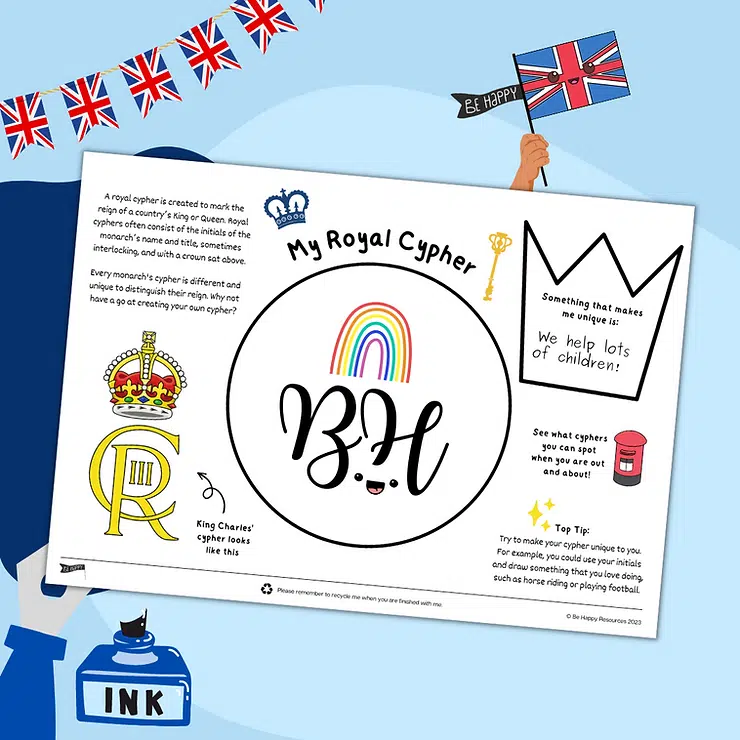
My Royal Cypher
This royal-themed resource is all about creating our own identity and thinking about what makes us unique. Our worksheet explains what a royal cypher is and how they are used to identify and mark the reign of each monarch. Can your children create their own cypher all about them? Will they use their name or initials? Can they draw something they love or which makes them unique? Remember, a cypher is something that is unique to us and distinguishes us from everyone else. Don’t forget to make sure they fill in what makes them unique too!
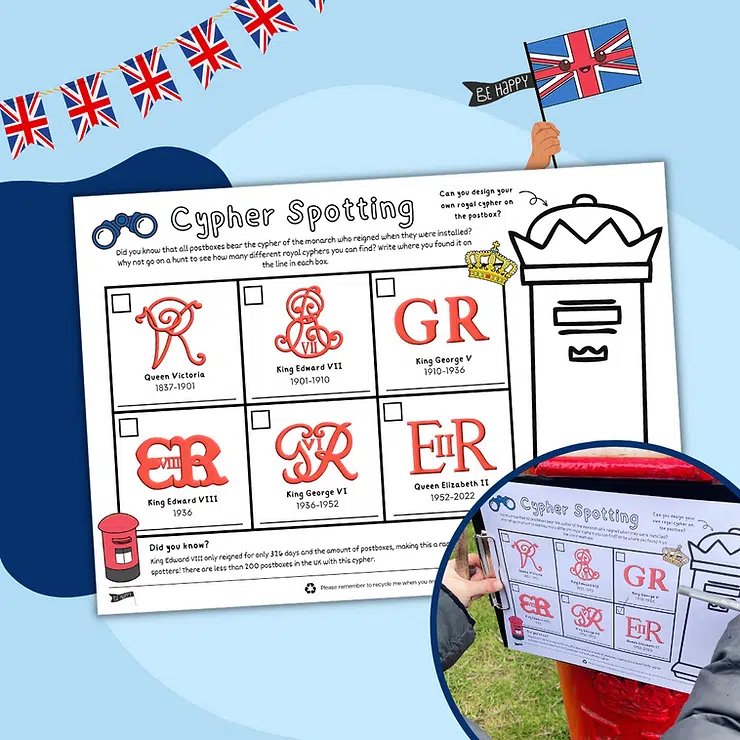
Cypher Spotting
Cypher Spotting is a fun scavenger hunt with a difference. Let’s head outside, breathe in the fresh air and get walking with this mindful worksheet, plus, learn all about the past history of some of our recent Kings and Queens.
Did you know that every postbox in the UK bears the cypher of the monarch that reigned during the time it was installed? Why not go on a hunt in your local town to see how many different cyphers you can see? Some postbox cyphers are very rare, such as the ones that bear the cypher of King Edward VIII who reigned for less than a year, whilst 60% of the UK’s postboxes have the cypher of Queen Elizabeth II. Your child can create their own cypher on our postbox too.
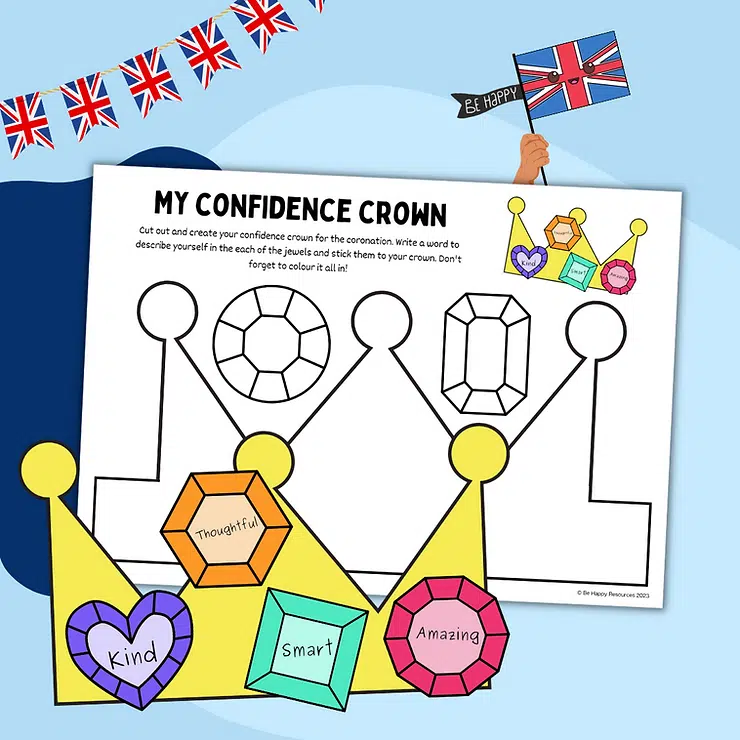
Create a Confidence Crown this Coronation! Kings and Queens always appear very confident don’t they? But we reckon they get nervous too! Help children boost their self esteem with this royal activity – Create your crown using our template and directions, then, have your child write a word that describes them in each of our 6 jewels. Stick the jewels to the crown and wear with pride!
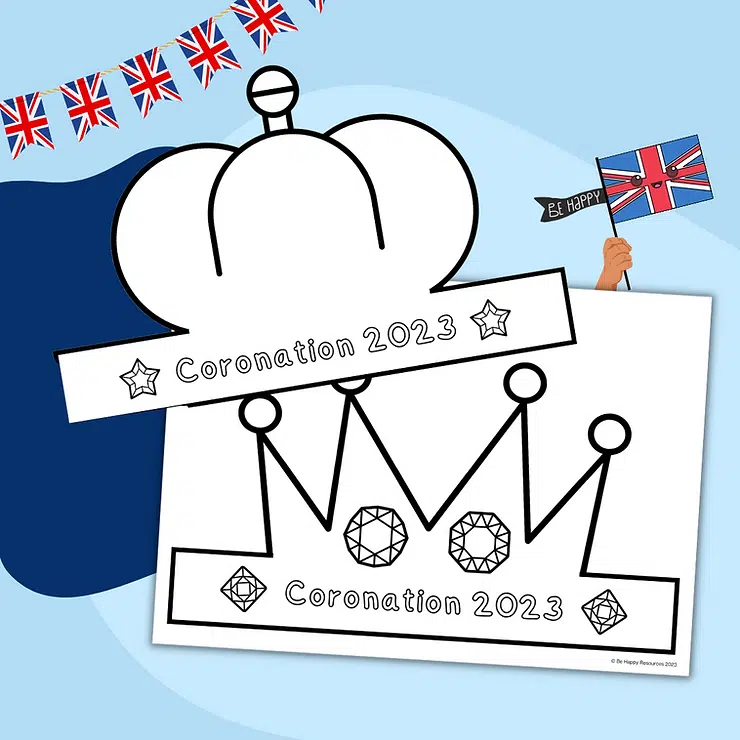
Coronation Crown 2023
It isn’t a Coronation without a crown – but we think that everyone should have their own! Our Coronation 2023 crown templates are easily printed and crafted at home or in the classroom. Directions: Choose your favourite crown template, colour in and decorate, then cut out. Using the extra strips, place around your head and use glue or tape to secure.
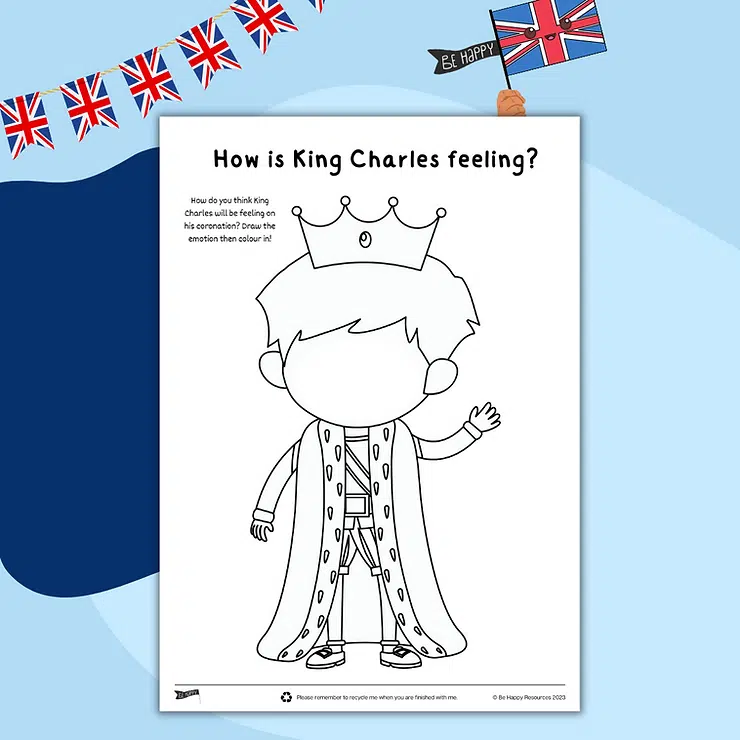
How is the King Feeling?
This is a great activity to help children learn how to put themselves in other peoples’ shoes and explore emotions. How do they think King Charles is feeling on Coronation day? How would they feel? Excited, happy, nervous, scared? Draw the emotion face on our King and then colour in!
FREE Coronation Colouring Sheets and DIY Coronation Bunting – available to all!
We also have some FREE new resources for you this week with our King Charles III free colouring pages and our free colour-your-own bunting! Simply print and enjoy the mindful art of colouring. If you’re having a Coronation party at home, you could use these activities to keep children busy, if you’re having a classroom party, why not have your class create the decorations? You can download these now below:
FREE Coronation Colouring Sheets 2023
.pdf
Download PDF • 3.78MB
FREE Coronation DIY Bunting 2023
.
Download • 1.82MB
What else is new?
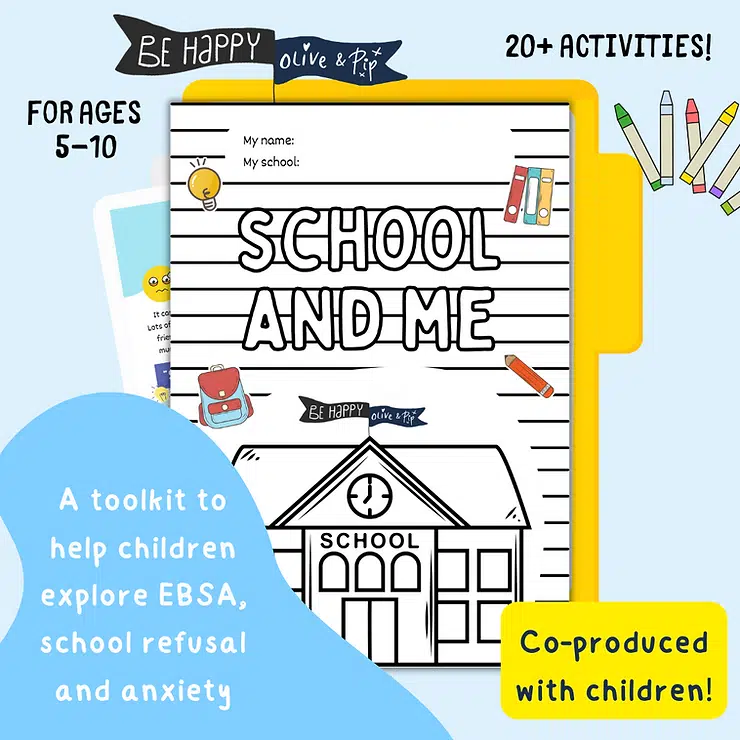
School and Me – A Helpful Toolkit to Help Children Explore EBSA and School Anxiety
Our Emotionally Based School Avoidance (EBSA) and school anxiety toolkit has been designed to help children explore the reasons surrounding their school avoidance and learn how to identify and communicate their worries with their caregivers and professionals. This toolkit features 21 specially designed EBSA resources to support children to explore, communicate and manage their worries. From helping children to learn about where they might feel worry to exploring calming techniques and coping tools they can use at school. Co-produced with children experiencing EBSA and school anxiety.
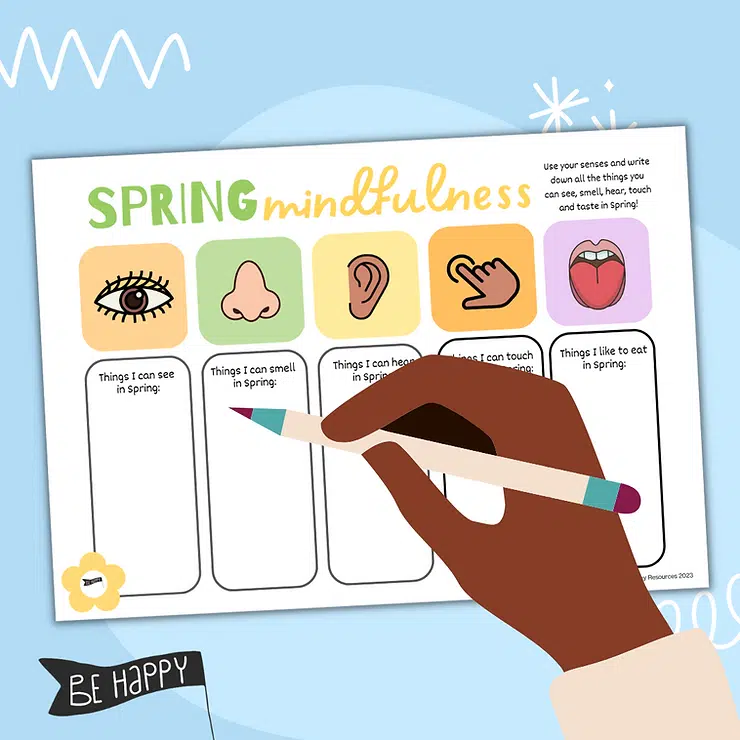
Spring Mindfulness Worksheet
Spring has officially sprung and we want your children to explore the changing season with their senses! Being mindful and using our senses to connect with our environment is a great way to feel calm and grounded. Practising mindfulness regularly can help us to feel safe and happy. You can let your child know that this activity is great for their mental health, they can do it just for fun, or whenever they need to feel calm.
Directions: Your child can complete this at home, in the classroom or outside! Bonus mindfulness points for heading outside and making the most of the wonderful Spring weather! Ask your children to use their senses and fill in our worksheet. What can they see, smell, hear, feel and taste in Spring?
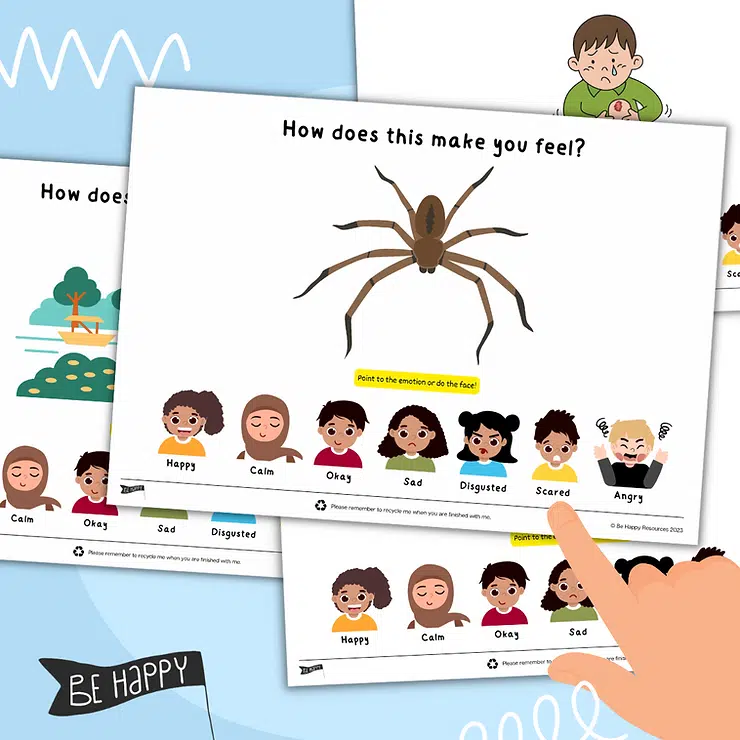
How Does This Make You Feel?
This resource is perfect for discussing emotions with pre-school and early years children. We have 15 sheets with different images to help your children explore a range of emotions and how each image makes them feel! Can they point to the feeling – or maybe they can show you the emotion themselves? We’ve also included a blank sheet for you to laminate and add your own images.
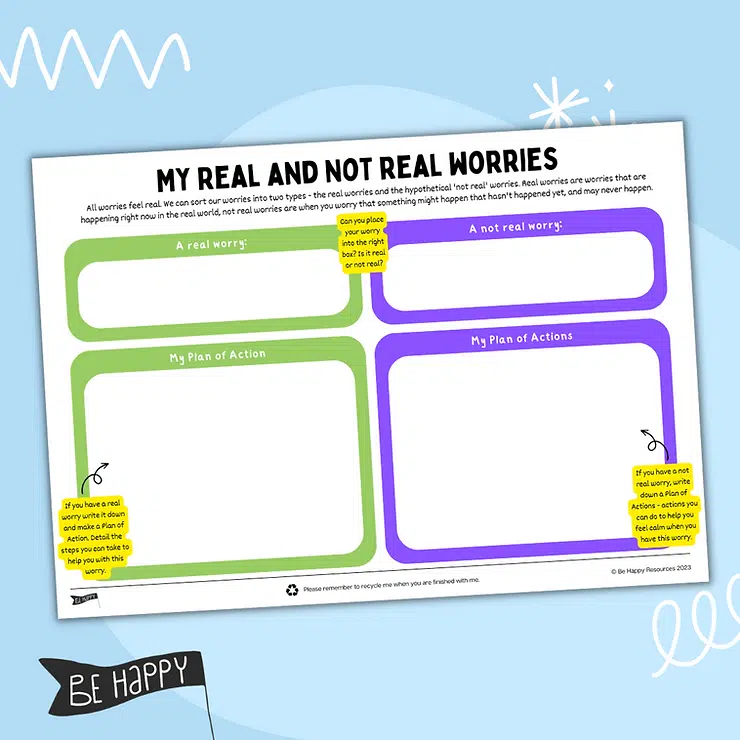
My Real and Not Real Worries
We know that all worries feel real, but not all worries are real. This worksheet is all about working out which worries are real-life and real-time worries – those worries happening in our lives right now – and hypothetical worries or ‘not real’ worries – those worries that haven’t happened and may never happen. Work through each of these worries with your child and explore ways to manage them. If your child has a real worry, they can make a plan of action – things they can do about the worry. If your child has a not real worry, they can make a ‘plan of actions’ – things they can do, think or say when this worry appears to help them feel calm.
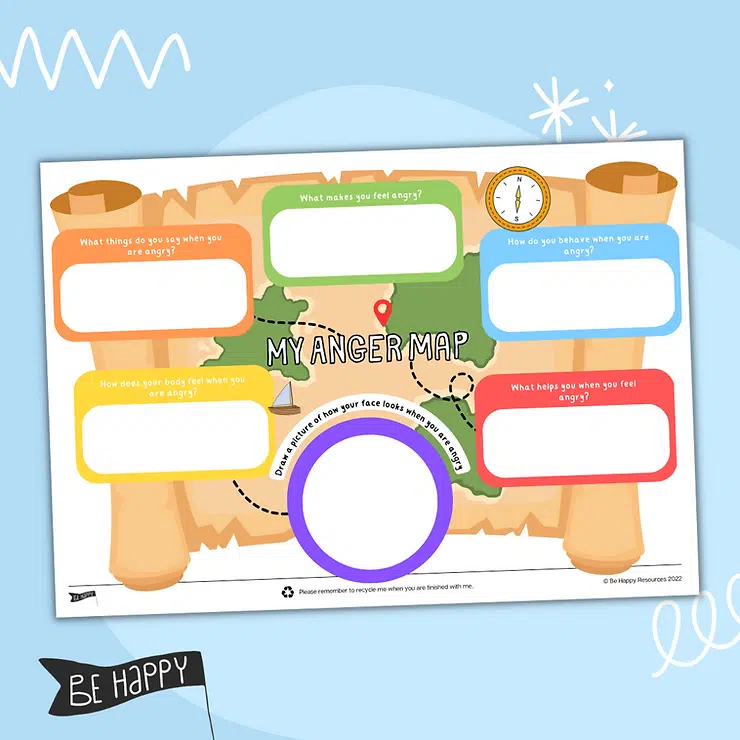
My Anger Map
This anger worksheet for kids helps children to explore their triggers and responses to anger. Help your child to ‘map’ their anger by filling in our prompts, this can help them to reduce their own exposure to certain triggers and learn how to manage their emotions by thinking about what helps them when they feel angry.
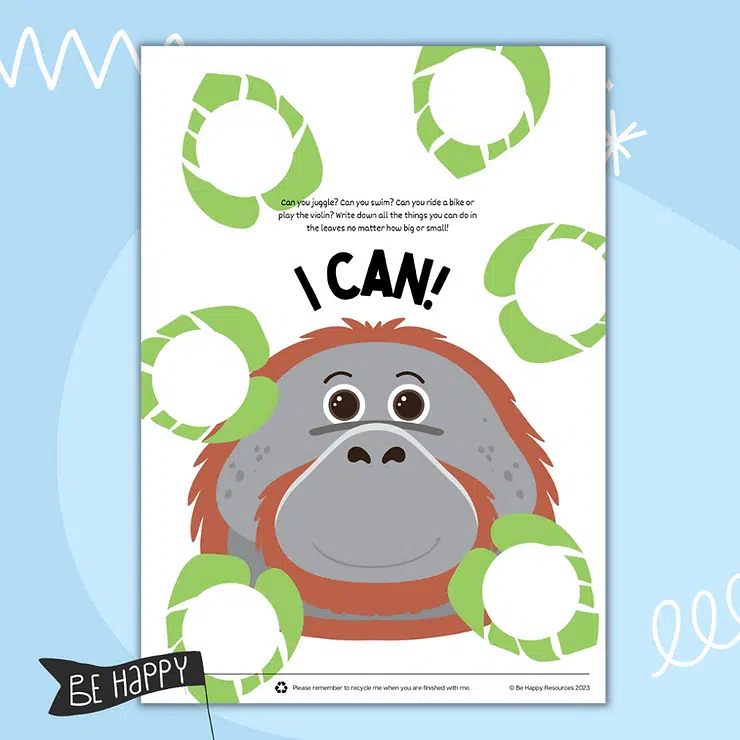
I Can Orangutan
I Can Orangutan is part of our popular Orangutan Can series of resources, which are on the Hub now. The Orangutan Can is all about helping children say ‘I Can’ instead of ‘I Can’t!’ In this latest worksheet, we want your children to tell the orangutan all the things they can do. Can they swim, ride a bike, tie shoelaces? Can they count or do hard sums? Help children to boost their confidence and list six things they CAN do! And remember, the orangutan never says he can’t…
Recent statistics reported by the Guardian show an overwhelming amount of children being denied mental health treatment in the UK. On average, a third of children being referred to mental health services are being turned away, this figure is up to 60% in some areas. Some experts state that the pandemic has caused an insurgence in referrals, causing mental health services to tighten thresholds.
As part of this we are also seeing an increase in children experiencing Emotionally Based School Avoidance (EBSA) – sometimes referred to as school refusal, or school avoidance. In a system that pushes 100% school attendance, EBSA can have a huge affect not just on the child, but the whole family.
What is Emotionally Based School Avoidance (EBSA?)
EBSA is a term referring to reduced or nonattendance at school by a child or young person. We prefer the term EBSA, rather school refusal or school avoidance. This is because EBSA recognises that the reasons the child doesn’t want to attend school are due to emotional or mental health issues. EBSA can have a drastic affect mentally on the whole family and network of support around the child – particularly when letters and threats of fines or prosecution rear.
We believe that supporting children and exploring their anxieties and reasons for avoidance is the best way to get children back into classrooms. Often, a teacher may have no idea that a child is experiencing EBSA or school-related anxiety, children can mask their emotions and thoughts at school, leaving caregivers to suffer the emotional outbursts and distressing consequences.
A lot of caregivers and even teaching professionals may not fully understand the emotional and mental affects of EBSA and how to explore these confidently with children. This is where we can help.
Causes and Symptoms
EBSA can be an accumulation of many different causes or reasons all interlinked together. These can be complex and interwoven and can relate to the school itself, a child’s own anxieties and fears or their home environment.
It’s important to remember that a child will have no control over the emotional issues affecting their absences. Therefore, schools and parents should seek to understand and support, rather than force or threaten.
Reasons a child may not want to attend school can include things like, social anxiety, bullying, social pressures, academic demands or separation anxiety. Often, the child is seeking to avoid things that make them anxious or stressed.
There can be many physical and emotional symptoms of EBSA, which typically worsen the nights and mornings before school, and can almost become entirely absent during school holidays and weekends.
Symptoms can include:
Anxiety symptoms such as racing heart, shaking, sweating, panic attacks, tummy aches, nausea or pins and needles
A child may often complain of being ill despite no signs of physical illness
Fearfulness, tantrums, outbursts of anger or frustration and panic when faced with attending school
Symptoms of low mood such as not wanting to take part in their usual activities, being more quiet than usual, expressing negative feelings and changes in appetite.
How can you support a child experiencing EBSA?
Be supportive and understanding
Acknowledge your child’s fears and feelings and facilitate open communication around thoughts and emotions – whether at home or in the classroom. Try not to be forceful – don’t tell them they must go to school or you will get fined for example. Be sensitive and reassuring and allow them to explore their worries with you. Get to know your child’s support network and who they trust to speak to – is it you or someone else? It can be extremely stressful being a parent and feeling like you have to force your child to go to school – our advice is to do what is best for yours and their mental health.
Ask them what you can do to help
Ask your child to think of or list some things you can do to help. It could be something as simple as walking them into the classroom or asking their teacher if they can have a time out during the school day. Some ideas may not be feasible, but try to accommodate the ones that are by talking to your child’s school. Try to get them to really think, instead of just saying, ‘not going to school,’ as this can give them a sense of control over something they feel they have no control over.
Arrange a meeting
Whether you’re a teacher or parent, a meeting with all caregivers and professionals in the child’s life is the easiest way to find out how best to support them. Together, you can come up with a list of changes to help the child return to the classroom – for example, would it help the child if they could arrive 10 minutes early with a parent to settle them into class? Could a buddy or mentor be assigned to them to help them during the school day? Or could the school allow more flexible start and finish times?
Create a safe space
A safe space can be created anywhere – at school or at home – or both. If the child has one at school, they can sit here before class or during break times. Fill their safe space with all the things they find comforting and calming. Sensory toys, teddies and calming worksheets and activities work well.
Encourage them to do things that help them relax
Help children to learn coping techniques and calming mechanisms that can help them feel relaxed inside and outside of school. Perhaps it is a taking a deep breath every time they pick up a pen or pencil or reading a book when they come home from school – ask your child what helps them to feel relaxed and build it into their daily routine.
Create and stick to routines
All childrenthrive from routine, but for children with anxiety, having a fixed routine can help them feel calm and prepared. Create a relaxing morning routine before school, try to avoid rushing or running around and try to do the same things in the same order each day. This can also reduce stress for you as the parent too.
Recognise small achievements
Recognise those small wins – is it getting out of bed on time? Getting dressed themselves? Doing their school work or improving in a subject? Be sure to give children praise and encouragement no matter how big or small.
Use our toolkit
Our EBSA and school anxiety toolkit has been designed to help children explore the reasons surrounding their school avoidance and learn how to identify and communicate their worries with their caregivers and professionals. Take a look at some of our activities below.
About the Activities
This toolkit features 21 specially designed EBSA resources to support children to explore, communicate and manage their worries. From helping children to learn about where they might feel worry, to exploring calming techniques and coping tools they can use at school.
Where I Feel Worry – The aim of this activity is to help children explore their physical responses to anxiety. Perhaps they may get a tummy ache before school, or their legs may feel like jelly. This activity helps children to realise that anxiety can cause lots of different physical symptoms and how to recognise these.
My School of Worries – When we are worried about something, it’s always better to talk about it! But it might be hard to find out what we’re worrying about or what is worrying us the most. This activity helps your children to get down all the thoughts out of their head onto paper. Then, it asks them to think about which worries are affecting them the most. Maybe they only have one worry, or maybe they have a few – this activity is all about exploring how each worry makes us feel. Once they have identified which worries are upsetting them the most, they can complete our Rate Your Worry activity.
Rate Your Worry – This activity is all about managing those worries and thoughts that are affecting your child. If it is a real worry – this is a worry that is happening right now, such as bullying – make a plan of action to do something about this worry. If it’s a hypothetical worry – a worry that hasn’t happened yet and may never happen – make a ‘plan of actions’ – things they can do when they feel this worry. For example, they could talk to a grown up and take some deep breaths.
Things That Make Me Feel Safe – This activity is about helping your child realise what things at school can comfort them if they are feeling anxious or upset. It also helps children to think of school as a safe and comforting place.
My Safe Place – Some children with EBSA may have a dedicated safe place at school, such as a calm corner or comfort area. If your child has one of these, this activity asks them to write and draw their safe place. This is a mindful activity, reinforcing the comfort this safe place gives them by using their senses.
My Weekly Top 3 – This activity is all about helping your child think positively about school and the good things that happen. We understand that for children with anxiety, it can be hard to think of positive things, your child may say for example that nothing good has happened. This can be a natural reaction. You can help your child realise their own positives – they don’t have to be huge accomplishments, but small weekly wins that made them feel good.
Conversation Cards – Our Conversation Cards are fun ways to learn about your child’s day. Have you ever picked your child up from school and instantly asked them if they had a nice day and they just say ‘yeh’ or ‘can’t remember?’ When children finish school they are still processing the day’s events, and for children with EBSA they may have spent the day masking. We would recommend you use our Conversation Cards when they have settled at home – they are designed to get your child thinking about the good things that happened in their day. Our Conversation Cards work both ways – it’s much more fun when they get to ask the questions too!
My Coping Pencil Case – This fun craft activity is all about helping your child to learn about ways that help them feel calm when they are experiencing distress or panic. Have them cut out and create their Coping Pencil Case! We have suggested some tools and techniques in our toolkit to help your child learn about ways to feel calm.
Fun Things To Do On The Way to School – All our activities have been suggested from our expert contributors! But we know that your child may also have games they like to play – so we’ve included some blank cards for them to create their own. These can be used as a distraction technique to keep minds busy on the way to school.
My After School Bucket List – We’re sticking with the theme of things to look forward to in this activity and helping your child through the school day. What’s on their after school bucket list? Is it watching their favourite programme, making a fun craft or maybe it’s having their favourite evening meal? Don’t forget to have them tick each activity off as they do it!
Breathing Exercises – Deep breathing can help children bring their focus to something they can control – their breath – instead of thoughts and fears that can exasperate anxiety. Not only this, but deep breathing has many benefits for both mental and physical wellness. We’ve included two fun breathing exercises, combined with some mindful tracing in this toolkit.
Guide for Caregivers – We’ve provided a helpful guide for parents and caregivers at the back which guides you through each activity and helps you feel confident in supporting your child. We’ve also explained how each activity is designed to support your child’s emotional and mental wellbeing.
To read more about EBSA, school avoidance or school anxiety and seek support we have provided some helpful websites below, and take a look at our other resources as well. If you are viewing this toolkit on a computer you can click the links that are underlined.
Your local government will most likely have a page about EBSA – simply search EBSA and the name of your local council.
You can also talk to your child’s school and your GP.
Disclaimer: This toolkit is not a replacement for professional support. It may help your child in exploring and communicating how they are feeling and things that may be troubling them. We would recommend you share this toolkit with your child’s teacher or any professionals in your child’s life. If you have any concerns about your child’s mental health, or you feel that their mental health may be worsening, please visit your GP or contact a mental health professional.
This week we’ve been looking at feelings wheels, a popular tool to help children identify and learn about different emotions. With the clocks going forward, we’re also welcoming a new season all about new beginnings – Spring! Take a look to see what’s new to the Be Happy Hub.
We have some lovely new resources for you this week, including a cracking Friday Freebie. Want to see why we’re named the number 1 tool for ELSAs? Then read on to see what’s new!
Feelings Ferris Wheel
Just like a ferris wheel goes round and round,
Our feelings can also go up and down!
So hop aboard our ferris wheel,
Which carriage best shows how you feel?
This is the Feelings Ferris Wheel. It’s here to help young children age 1-5 learn about emotions. This is our take on the traditional feelings wheel, a tool used by professionals and psychologists to help children identify their emotions. Our Feelings Ferris Wheel also gets your children thinking how they can regulate their emotions, if they’re in the sad carriage for example, what can they do to change into the happy carriage?
Feelings Wheel (ages 5+)
For older children we have our more traditional looking feelings wheel that will help children learn all about the primary human emotions and the feelings that accompany these. Recommended for ages 5-11.
Colour a Feeling
As we grow, we naturally associate feelings with colours – for example, red can be angry, blue can signify calm – but what does your child think? Perhaps they see the world differently to us. This is a fun resource to get your children thinking all about how colours can make us feel!
Spring Clean My Thoughts
Spring is a time for new beginnings and ditching old habits. This resource encourages your children to spring clean their thoughts! Were they thinking some thoughts over the winter that made them feel sad that they’d rather leave behind? We’ve tasked them with coming up with three thoughts they wish to leave in Winter, and three new, helpful thoughts they wish to take into Spring!
Step into Spring
The beginning of Spring can be a natural mood-lifter, lighter evenings, more vitamin D and the promise of warmer weather can help us to feel good – so let’s get exploring what we love about this season. Children can create their own Spring footprint and list all the things that make them happy. Plus, we challenge them to walk with a spring in their step all day!
This week’s *FRIDAY FREEBIE!* – For Mailing List subscribers only
What Makes Me Crack
An egg can be surprisingly strong, but if you apply uneven pressure, it will crack. Just like us, we can crack when we’re angry, overwhelmed or frustrated. This week we’re exploring our triggers and things that make us CRACK and lose control!
Directions: This resource asks your child to come up with four things that can cause them angry, upset or frustrated. This is a great talking tool to help you and your child explore things that can cause us to lose control. Perhaps it’s not one thing, but a series of events or maybe it’s difficult for your child to identify their own triggers. This is why discussion is so important in this resource, you could even share your own triggers too! Understanding our triggers, can help us to minimise them and manage our response to them more effectively.
Please note: We’ll be taking a short break for the Easter holidays, our Friday Freebie will resume on Friday 14th April.
Missed this resource? Paying members can access all our Friday Freebies at any time in the Hub.
Join our mailing list to receive our future Friday Freebies – just scroll to the bottom of any page and input your email.
Looking for fun and calming Easter themed emotional literacy resources or mindful activities for the holidays? Our resources are perfect for primary schools or at home! From our Emotion Egg Hunt to Egg Breathing, see our favourite printable Easter activities and resources below.
What can go wrong during a week of all you can eat chocolate and exciting egg hunts? We know that many children will need some fun resources to help them feel calm amidst the chaos in the run up to and during the Easter holidays, so we’ve come up with some fun resources for you below!
Easter resources for younger children, EYFS and KS1
Easter Feelings Hunt
This Easter hunt combines emotional learning with a mindful scavenger hunt! Cut out our cards and task your child with finding things in their environment that makes them feel these eight emotions – happy, calm, sad, proud, angry, hopeful, excited and loved. Make sure they tick off each emotion when they find something and write it on the card!
Little Chick Emotions
Our five little chicks don’t have faces! Can your children draw on some emotions? Make sure they label the emotions above each chick. Can they think of a story why each chick is feeling that emotion?
Emotion Egg Hunt
Another Easter hunt this Easter, this time, your child must hunt the emotion eggs and tick them off when they find them! Cut out the eggs and hide around your home or classroom, then, have children find the eggs. They must match the egg with the emotion and tick it off as they find each one!
Easter Egg Breathing
We have four different designs of our Easter Egg Breathing sheets, simply print and let your child choose which colour egg they wish to trace round each day!
Create an Easter Crown [Craft]
There’s always time for a mindful craft – help your children to make their very own Easter Crown in this mindful printable. Colour in the eggs, cut out and make our crown, then stick on the eggs to finish! Best printed on card or 200gsm paper and above.
Match the Emotion
Can your children cut out our emotion eggs and stick them in the right basket? We have 9 emotions to match!
Easter resources for older children, KS1 and KS2
Easter Calm Cards – Blank
Use this resource to help your child create their own deck of calm cards! Have your child write eight of their favourite and effective calming techniques in the cards, cut out and keep.
My Basket of Egg-firmations
Help boost confidence and self esteem this Easter with our Basket of Egg-firmations, can your children come up with some easter-themed affirmations to say each day? We’ve included a few below to give you some ideas!
I am Eggs-ellent!
I am a good egg
Every bunny loves me
I am egg-cited for the future!
I am eggs-tra special
Can you think of any more? Comment them below!
Feeling Eggs-ellent!
Have your children write six reasons why they are simply eggs-ellent in this resource! If they can’t think of anything or are having lots of unhelpful or self-critical thoughts, you could help them by suggesting all the ways they are amazing.
Time for a fun experiment! Did you know it’s almost impossible to crush an egg in your hand? No – we couldn’t believe it either! If you hold an egg like our picture above, the egg will not break. This is due to pressure being distributed evenly over the curved shell of the egg. This got us thinking that if something so fragile like an egg can be so unexpectedly strong and keep calm under pressure, then so can we! Can your children think of ways they can keep calm under pressure? Perhaps it’s taking a break, taking deep breaths or simply thinking they are as strong and amazing as an egg! – Have them write them in the stripes of our egg.
Doodle Eggs
An egg of dots, an egg of spots, an egg of stars, an egg of hearts, an egg about me, an egg for free, an egg of stripes, an egg of all the things I like! Doodling is a fun way to be mindful and calm, but we know a lot of children can struggle to think of what to doodle! In this egg-themed activity, we’ve given children some prompts around the eggs to doodle in each egg. Mindfulness guaranteed!
Spring may have officially arrived, but judging by the weather, we’re still waiting! This week we bring you fun emotional literacy resources using the weather to learn about, track and predict emotions, plus much more.
We’re also looking at setting goals for summer with our Goal Digger and helping children learn the power of ‘I Can!’ with The Orangutan Can. Keep reading to find out more about our new mental health and emotional literacy resources.
Are you a parent or teacher who loves our resources? We’d love to know! Please submit your feedback to hello@behappyresources.co.uk. We’re looking to find a few lovely quotes to display on our new website!
Using the weather to learn about emotions
The weather can have a huge impact on our emotions, but did you know you can also use the weather to help children understand and accept their emotions?
Emotions naturally come and go – just like the weather. And we have about as much control over our emotions as we do the weather!
Emotions can be unpredictable, just like an angry storm or freezing snow. Notice that no matter how difficult the weather, the sun still shines and the sky remains unharmed.
Sometimes we can predict how we may feel, just like the weather. But we might not always get it right.
Just like putting a rain coat on to protect ourselves from the rain, we can do things to help us when we feel certain emotions. Such as things to help us feel calm when we feel angry, or happy when we feel sad!
We have three new weather themed resources for you this week. Find out more below!
My Feelings Forecast
Chart your child’s daily feelings and help them predict how they may feel in our Feelings Forecast.
Weekly Emotion Chart
Log weekly feelings in this emotion report! Features 9 emotions which can also double as fun emotion flashcards.
My Coping Umbrella
My Coping Umbrella is a fun calming craft activity for kids that puts them in control. Have them think about all the things that help them to feel calm and write them in the spaces on the umbrella. Cut out the umbrella, and secure through the middle to the blank page. Spin the umbrella to choose a coping technique!
What else is new?
The Orangutan Can
This is the Orangutan can, he can do ANYTHING! But more importantly, he believes that he can. This is a fun activity to help children think of other, more helpful ways of saying ‘I can’t.’
The Mind Mine
Let’s mine for nice thoughts – deep in your mind is the Mind Mine where lots of helpful thoughts are waiting to be found! This is a wonderful positive thinking and confidence-boosting activity for children.
Feelings Scramble
A mindful worksheet this week – can your children unscramble the letters to reveal the emotion word? We’ve included emotion faces on our eggs to help!
This week’s *FRIDAY FREEBIE!* – For Mailing List subscribers only
THE GOAL DIGGER
This week we are focusing on helping your children reach a BIG goal with our goal digger. Perhaps it’s to learn to ride a bike or tie their shoelaces, this goal setting activity will inspire confidence and determination.
But oh no! – Their big goal is under all that rubble, it‘s impossible to reach! So how can we reach it? We want your children to think of three small steps to dig towards their goal.
Just like a digger has to make lots of small digs to clear the mound, reaching a big goal can seem a lot more achievable when we take smaller steps to reach it.
Directions: Ask your children to think of what their BIG goal is. Is it learning to swim, moving up a reading band or two or even learning to play an instrument? A big goal can seem daunting at first, but we want children to feel like they can achieve anything! Once they’ve written their goal in the mound, help them to come up with three small steps they can take to achieve their goal.
Why is goal setting good for mental health?
Goal setting is a great way to help children build self-confidence and help them to create healthy habits. Goal setting encourages children to dream big, showing them that hard challenges are attainable through small steps.
Missed this resource? Paying members can access all our Friday Freebies or any of our resources at any time in the Hub.
Join our mailing list to receive our future Friday Freebies – just scroll to the bottom of any page and input your email.
Pocket sized breathing exercises for kids will help your children keep calm on the go – and we’re looking at how music affects our emotions! See what’s new to the Be Happy Hub this week.
This week we had a request for some fun breathing exercises that can be used on the go, such as on lanyards, in pockets or bags. Our new Breathing Flashcards can be printed in A6 or A7 size and we even have a handy folded booklet too!
New Breathing Cards for Kids
Our new breathing cards bring your children 7 fun ways to keep calm on the go. Whether it’s at school, on a plane or somewhere that makes them feel anxious. These cards will help children with anxiety or panic attacks know just what to do should they become overwhelmed whilst away from home.
Printable Breathing Flashcards for Children – A6
You can choose to download these fun breathing exercises for kids in A6 or A7 – simply print and cut out! Pictured above are the A6 printable and below are the A7 printable.
Our A7 size are the perfect size for school bags, pockets and even key chains. Why not laminate, cut out and add to a lanyard?
Or perhaps you’d rather have them in a small, portable booklet? This concertina style booklet is so easy to make, simply download, print and fold! Each page gives directions on how to feel calm by helping children learn to control their breathing. If you’d like to read about the benefits of deep breathing and how to encourage deep breathing from an early age, you can read our blog post here – ‘How to Teach Your Child Deep Breathing.’
What else is new to the Be Happy Hub?
My Mindful Playlist
Did you know that music is extremely powerful for mental health? Research shows people who listen to music recover from stress faster than those who don’t. Not only can music be an instant mood lifter, but scientific research has found that listening to upbeat music with an intention of getting in a better mood actually works.
In fact, there are so many benefits of listening to music, it probably warrants its own blog post! But for now, let’s focus on one of our latest resources – My Mindful Playlist asks your children to come up with their own calming playlist to listen to when they need to feel relaxed. Perhaps they already know the songs on their playlist, or maybe they need to get listening to some music to figure out which songs belong on their playlist. This fun activity is all about exploring music that can help us to de-stress.
Songs That Make Me Feel…
Another music and mental health themed resource this week, this activity is all about learning how music impacts our emotions. Songs have the ability to make us feel all sorts of emotions – they can make us cry, they can make us feel excited and they can even give us goosebumps. Listening to music is a great way to improve our mental health, but first we need to know which songs and genres inspire those feel good emotions.
Have fun listening to different songs and music styles with your children and find ones that invoke all these emotions. Again, maybe your children already know exactly which songs make them feel happy or sad, but if they don’t, be sure to engage in the mindful art of music therapy and broaden those musical horizons!
This week’s *FRIDAY FREEBIE!* – For Mailing List subscribers only
The Miserable Monkey
This is the Miserable Monkey, he’s as sad as can be, can you think of ways to make him happy? This week we’re thinking about things that make us feel happy when we are sad. This is a great discussion activity for children ages 3-7. We have trialled this activity with younger children and it has been great fun!
Directions: Task your children with thinking of ways to cheer up our miserable monkey. Write them down on the banana slices and have fun feeding them to him! We used scissors to cut a small hole over the monkey’s mouth to push the banana pieces through, but you could also glue them on or have your child simply imagine him eating them. When you’re finished, cut out the monkeys happy smile and stick it in place – you’ve turned the miserable monkey’s frown upside down!
This activity is all about discussion – ask children why they think the monkey feels sad, tell them that feeling sad is a natural emotion we all feel and then ask them what makes them feel happy for some ideas!
If your children aren’t confident writers, you could use this activity in lots of other ways too. For example, you could have each child feed him a banana slice and say something to cheer him up as they feed him. Or, you could simply say that every banana piece makes him happier and happier! Just don’t forget to stick that smile on at the end to show that our miserable monkey is now a happy monkey!
Missed this resource? Paying members can access all our Friday Freebies at any time in the Hub.
Join our mailing list to receive our future Friday Freebies – just scroll to the bottom of any page and input your email.
Looking for fun Mother’s Day activities and ideas for the classroom? Or perhaps there’s a child who is coming to terms with a loss this Mother’s Day – check out this week’s mental health and wellbeing resources for children.
From new grief resources to how exercise impacts mental health, keep reading to see what’s new below.
Resources for Mother’s Day
We’ve brought you more fun activity ideas for the classroom and home this Mother’s Day, plus you can find even more downloadable Mother’s Day activities on our Hub.
Remembering You on Mother’s Day
Mother’s Day can be an extremely hard time of year for young children who are grieving a loss in their lives. There can be reminders and triggers everywhere, from cards in shops to school activities – if you know a child struggling this Mother’s Day, we’ve brought you a calming remembrance craft to support their wellbeing.
You’ll need: Four lolly sticks, green paint and a Be Happy Hub subscription!
Directions: Paint the lolly sticks green and set aside to dry. Print our resource above and have your child write down four things they miss about their loved one on the flowers. Cut out and stick to the lolly sticks. You can display in a pot, or leave somewhere special.
My Mum is a Star
Write the reasons why your mum is a star, cut out and gift to your mum. Also available in mom and mummy. Do you need another name or language? Let us know and we’ll personalise this for you for free!
Mother’s Day Trophy
Make mum a trophy for Mother’s Day and let her know you appreciate all the things she does! This activity does not specify a name so can be used for all caregivers.
My Mum’s Cup of Calm
How does your mum relax? What makes her feel calm? This activity is all about helping children to understand the importance of winding down. Perhaps they could do some of these things with mum for Mother’s Day?
Design a Mother’s Day Mug
Design mum a mug for Mother’s Day – perhaps your child could draw all of their mum’s favourite things? Or they could simply write ‘World’s Best Mum!’ – finish off by jotting down what mum’s favourite drink is!
My Mum Thinks and Feels…
This activity is all about helping children to empathise and place themselves in their mum’s shoes! What does mum think and feel? Have them write down some thoughts and feelings they think their mum has during the day!
Exercise and Mental Health
Most of us are aware of the connection between exercise and mental health, but did you know that activity levels in children drastically drop off from age 7?
We want to help children understand that exercise is not just good for their physical health – but also their mental health too! So we have some new resources to help encourage children to get active and help them learn all about how exercise improves their mood.
How Exercise Makes Me Feel
We’ve created this resource to help children learn about the impact of exercise on their emotions firsthand – so let’s put those endorphins to the test in this fun experiment!
Have your child log their emotions 1 hour before commencing an activity or sport, and 1 hour after finishing. What do they notice? Have their emotions changed? Do they feel different? You could do this experiment as many times as you wish, trying out different sports and activities to see which ones help lift your little one’s mood the most!
Get Active!
Help children think about how being active is good for their mental health – how do they like being active and how does it make them feel?
I Like to Move It, Move It!
Being active doesn’t just mean playing a sport or being part of a club – there are lots of ways we are active in our daily lives – and there may be lots of ways we can be MORE active too! Help children to think about their activity levels during the week – what do they do? Perhaps it’s going to the park or walking to school – write their actions in the basketballs. If they can’t think of enough activities to fill the balls – then it’s time to think of ways they can incorporate more exercise into their week!
New Grief Resources for Kids
The Grief Reef
There’s something so calm about the ocean. In this new grief worksheet for young children, help them navigate the negative emotions of grief and what they can do when they feel each one.
When I’m Missing You I Can…
Another grief resource this week as we know that Mother’s Day and holidays can be hard times of the year. Have your child write down what they can do to channel their emotions when the pain of missing their loved one becomes too much. This activity also doubles as a calming exercise, if they are extremely worked up, they can press the dots as they breathe in and out. Have them press the purple dots first, then the yellow ones.
When Someone I Love is Poorly
Lots of children have to navigate their lives with sick caregivers – this worksheet can be filled in whether the caregiver is suffering from a physical illness or mental illness. Having a parent or guardian who is ill can be a source of worry and anxiety, this activity helps children to process their emotions and think of ways they can cope and feel helpful and supported.
This week’s *FRIDAY FREEBIE!* – For Mailing List subscribers only
Helpful or Unhelpful?
HELPFUL OR UNHELPFUL? Help children to learn how to look after their mental health with this card sorting activity! We’ve given you 34 activities – which are helpful for our mental health and which are unhelpful? We want children to learn how to look after their own wellbeing from an early age and this is the perfect activity to help little ones get to grips with ways we can take care of our minds. This activity also hopefully shows that there are so many things we can do to help our mental health – that’s why we’ve purposefully included lots more helpful things than unhelpful things.
Directions: Print out, laminate (optional) and cut out all the cards. You can either use the small helpful and unhelpful cards and ask your child to hold them up, or you can use the bigger cards and ask your child to sort the cards into piles. Spend time discussing each activity card and how this makes them feel – is it helpful or unhelpful?
Missed this resource? Paying members can access all our Friday Freebies and other resources at any time in the Hub.
Join our mailing list to receive our future Friday Freebies – just scroll to the bottom of any page and input your email.
We’ve had a request for some resources for young carers and bring you some new resources around the effective CBT technique of thought reframing. Keep reading to see what’s new to the Hub this week.
Resources and activities for Young Carers
Do you know a young carer in your life? You can support their mental health and wellbeing with some of our new resources. We recently had a request from a new member who works for a charity supporting young carers across the UK.
What is a young carer? A young carer is exactly how it sounds, a young person caring for an adult in their life. They take on extra responsibilities, like dressing the person they look after, cooking, cleaning, shopping, collecting prescriptions and so much more.
Here are some things you might not know about children who are carers:
• Carers can be as young as five years old. • There are 800,000 young carers age between 5 and 17 in the UK. • 1 in 3 young carers have a mental health issue. • Being a young carer can be lonely, 40% of young carers say nobody in their school is aware of their caring capabilities.
We hope to bring you more dedicated resources for young carers soon. In the meantime, you can find out more about our two new resources below.
Self Care for Young Carers
The role of a young carer can be rewarding, but also challenging and extremely tough. Young carers may feel like the miss out on certain experiences and might feel like they don’t have any spare time to do things that they enjoy. But, everyone needs to make time for self care in their day, otherwise this can lead to burn out, exhaustion and mental ill health.
The first part of this resource includes our Self Care for Carers print – a sheet full of quick self care ideas that aren’t too time consuming, but allow a child to take some time to themselves. The second part of this activity encourages a young carer to come up with their own self care plan and gets them thinking about how they can build some self care habits into their day. They can use some of our ideas, or come up with some of their own depending on what helps them to feel relaxed.
Young Carer Strength Shield
Our Strength Shield activity is a great, confidence boosting resource to help young carers realise just how amazing they are! They can fill this in and put it away for those tougher days. This resource supports a young carer’s wellbeing by helping them to realise all the amazing things they do and have achieved being a young carer. To finish, have them draw a picture of themselves or stick a photo of themselves on their shield.
Thought Reframing Activities
Thought reframing is all about learning to think more flexibly and become more in control of your thoughts. If you can learn to identify and separate unhelpful thoughts from helpful ones, you can find a way to look differently and respond differently to situations in your life. Actively noticing unhelpful and negative thoughts and turning these into more uplifting, useful ones is a popular and effective CBT tool to manage mental health and wellbeing. Teaching this technique to children from a young age can help them to develop resilience and cope with life’s ups and downs.
Thought Reframe Exercises
Can your child reframe these common unhelpful thoughts? These are thoughts that the majority of us have had at one time or another – this useful worksheet will help your children become more mindful of these thoughts and know just what to do when they next appear.
Flip the Switch
Flip the Switch is a fun, imaginative activity where children can visualise a switch (or use ours!) and imagine flicking the switch to nice, helpful thoughts when those unhelpful, not so nice thoughts appear. If they have a recurring unhelpful or intrusive thought, they can fill in this worksheet to more effectively manage this thought whenever it appears. The best thing about this activity is that once your child has completed it, they can imagine the switch wherever and whenever they want. They don’t have to have the resource with them to imagine flicking their switch to helpful thoughts!
What else is new?
Pop It Calming Sheets
When you don’t have a pop it to hand, you can use our Pop It Calming Sheets instead! Why not print these sheets and incorporate them as part of your calm space or corner? If you need to calm a child fast, these calming activity worksheets can be used in so many ways – from simply pressing the circles to help ground and focus, to placing counters, buttons or stones on the circles to inspire calm. Plus, this activity has the added benefit of helping to develop those fine motor skills!
Match the Monster Emotion
This week we also have a new fun, monster themed emotion literacy resource for our early years children – can they draw a line matching the monster to the emotion?
Grief and Me
This new grief worksheet for kids can be used to track your child’s thoughts and emotions as they move through the stages of grief, helping them to identify what stage they are in and assuring them that each stage is a normal part of the grieving process. This worksheet doesn’t have to be completed in order either, as we know that grief is different for everyone.
We read a post this week about why a computer works again when you switch it off and on. It is to do with the connections a computer makes that can get muddled and out of sync, when you switch the computer on again, it fires up, restarting the connections and correcting the misfire.
This gave us an idea! What if we could do this with our brains – or – imagine doing this with our brains? This fun script asks your child to imagine an on/off button on their heads, when they press this button, it slows down their thoughts and processes and clears their mind. When they press the button again, their brain lights up and they are able to think more clearly. You can use this fun visualisation script in class to help get little brains in gear and ready to learn, or read it aloud when your child is struggling with overwhelming or intrusive thoughts.
Activities and Resources for International Women’s Day – 8th March 2023
Create a Comic with a Female Hero!
This fun activity tasks children with coming up with a comic strip with their very own female hero. Who is their female hero? What is she called? What is her superpower? Can they come up with a short comic to showcase her amazing abilities? We’ve given you three templates to choose from too!
This week’s *FRIDAY FREEBIE!* – For Mailing List subscribers only
My International Women’s Day Hero
On our mailing list? Then you should have by now received our new Friday Freebie for #InternationalWomensDay. This IWD let’s get thinking about all the amazing female role models in your child’s life. From women who changed history to Queens and princesses, from famous faces to family members – who is your child’s International Women’s Day Superhero?
Directions: Ask your children to think of the woman who inspires them most, it can be anyone throughout history or anyone who’s alive today. When they have chosen their International Women’s Day Superhero, have them write their hero’s name on the worksheet, draw how their hero makes them feel and write their reasons why this person inspires them.
Missed this resource? Paying members can access all our Friday Freebies and other resources at any time in the Hub.
Join our mailing list to receive our future Friday Freebies – just scroll to the bottom of any page and input your email.
If you’re looking for World Book Day resources, this week we bring you two new free World Book Day activities for classrooms and parents, plus more fun resources to support your child’s emotional wellbeing.
World Book Day is all about celebrating the magic of books; and here at Be Happy Resources we understand the mental health benefits of getting lost in a good story. We bring you 8 new resources perfect for World Book Day 2023, plus more new emotional literacy resources and our new Friday Freebie. Take a look what we’ve got for you this week below.
World Book Day 2023
World Book Day is this Thursday 2nd March and we can’t wait to see what innovative costumes and characters your children come up with – it’s the perfect week to engage your little one’s imagination – and we have lots of resources to help!
Two new FREE World Book Day resources
Why Should We Read? – Factsheet
Discover the magical mental health benefits of reading with this free new information sheet. Encourage more reading and support your child’s wellbeing by helping them to understand how reading supports their mental health. Regularly getting lost in a good book can help your children become calmer, happier and smarter! – Aren’t books amazing?
Why I Love to Read – Worksheet
This fun worksheet encourages your child to think of what they love about reading with some prompts to fill in to explore their favourite books and characters. Plus we’ve also included a quick emotional check-in to get your child thinking about how reading makes them feel. Download both these resources below.
FREE RESOURCES World Book Day – Reading for Mental Health (1)
.pdf
Download PDF • 588KB
More World Book Day activities on our Hub!
The Bookshelf of Happiness
Did you know that books have the ability to make us feel happier? It’s a fact! Reading allows us to relate to characters just like us, help us to feel less lonely and can even help us solve problems more efficiently. If you have a child who LOVES reading and who is their most content with their nose in a good story, have them create their own Bookshelf of Happiness. Fill in the prompts on the books, then cut out and stick to the bookshelf. This activity can support your child’s mental health by helping them to realise how powerful books are on their emotions and tasking them to think of all the wonderful books they have read. Feel-good vibes guaranteed!
My Book-et List
Encourage more reading with your very own book bucket list – or a ‘book-et list’! Have fun filling this out with your child then ticking off the books as they read them. When the book-et list is complete, ask your little one to reflect on which book they enjoyed the most. But don’t stop there – you can print this resource as many times as you wish so there is always a book on the horizon!
Design a Book Cover
This activity engages your child’s imagination and encourages creativity by asking them to design a book cover – it can be a book they have made up, a book about their life or a book about their happiest moment. Don’t forget to come up with a title too!
This is Your Life
A simple, feel good activity that asks your child to think of all their happiest and memorable moments and draw or write them in their book of life.
Book Emoji Flashcards
We know you love a themed flashcard and World Book Day is no different! Here are 12 fun book-themed emoji flashcards for our younger minds this World Book Day. Simply print, cut out and use daily.
My Mind Glasses
In this activity, any child can be a wizard… these Mind Glasses are super special glasses, they allow your children to see into their minds! Can they draw or write what’s on their mind in the glasses?
What else is new?
Train of Thought
Help your children track intrusive, anxious or escalating thoughts with the Train of Thought. This activity helps children to recognise how thoughts spiral by tracking an intrusive or upsetting train of thought from the first thought through to the point they became upset. We’ve provided an example below to show you how easy it is for thoughts to get away with us, can your child try to stop the thought in its tracks next time?
The Zebra of Zen
This is the Zebra of Zen, he feels calm when… fill in the prompts and see if this worksheet highlights some of your child’s triggers.
Astronaut Emotions
The perfect resource for budding astronauts! Our space-themed resources have been really popular recently and we know that lots of little children love looking up to the sky. If your little one fancies themselves as a future astronaut, use this activity to have them think about how they’d feel in certain scenarios. From eating freeze dried foods to spotting an asteroid in their path – engage your child’s imagination and help them learn about their emotions at the same time.
This week’s FREE resource! – For Mailing List subscribers only
My Mindful Story
This fun story themed activity helps your children to feel grounded and relaxed, whilst engaging their senses and their imaginations.
Directions: When we are mindful, we are more in tune with the world around us. This can help us feel calm. Ask your children to pick five objects from their immediate surroundings using their senses – something they can see, smell, hear, taste and touch. Can they write a story using the things they have chosen?
Paying members can access all our Friday Freebies at any time in the Hub.
Join our mailing list to receive our future Friday Freebies – just scroll to the bottom of any page and input your email.