This week we’ve been looking at feelings wheels, a popular tool to help children identify and learn about different emotions. With the clocks going forward, we’re also welcoming a new season all about new beginnings – Spring! Take a look to see what’s new to the Be Happy Hub.
We have some lovely new resources for you this week, including a cracking Friday Freebie. Want to see why we’re named the number 1 tool for ELSAs? Then read on to see what’s new!
Feelings Ferris Wheel
Just like a ferris wheel goes round and round,
Our feelings can also go up and down!
So hop aboard our ferris wheel,
Which carriage best shows how you feel?
This is the Feelings Ferris Wheel. It’s here to help young children age 1-5 learn about emotions. This is our take on the traditional feelings wheel, a tool used by professionals and psychologists to help children identify their emotions. Our Feelings Ferris Wheel also gets your children thinking how they can regulate their emotions, if they’re in the sad carriage for example, what can they do to change into the happy carriage?
Feelings Wheel (ages 5+)
For older children we have our more traditional looking feelings wheel that will help children learn all about the primary human emotions and the feelings that accompany these. Recommended for ages 5-11.
Colour a Feeling
As we grow, we naturally associate feelings with colours – for example, red can be angry, blue can signify calm – but what does your child think? Perhaps they see the world differently to us. This is a fun resource to get your children thinking all about how colours can make us feel!
Spring Clean My Thoughts
Spring is a time for new beginnings and ditching old habits. This resource encourages your children to spring clean their thoughts! Were they thinking some thoughts over the winter that made them feel sad that they’d rather leave behind? We’ve tasked them with coming up with three thoughts they wish to leave in Winter, and three new, helpful thoughts they wish to take into Spring!
Step into Spring
The beginning of Spring can be a natural mood-lifter, lighter evenings, more vitamin D and the promise of warmer weather can help us to feel good – so let’s get exploring what we love about this season. Children can create their own Spring footprint and list all the things that make them happy. Plus, we challenge them to walk with a spring in their step all day!
This week’s *FRIDAY FREEBIE!* – For Mailing List subscribers only
What Makes Me Crack
An egg can be surprisingly strong, but if you apply uneven pressure, it will crack. Just like us, we can crack when we’re angry, overwhelmed or frustrated. This week we’re exploring our triggers and things that make us CRACK and lose control!
Directions: This resource asks your child to come up with four things that can cause them angry, upset or frustrated. This is a great talking tool to help you and your child explore things that can cause us to lose control. Perhaps it’s not one thing, but a series of events or maybe it’s difficult for your child to identify their own triggers. This is why discussion is so important in this resource, you could even share your own triggers too! Understanding our triggers, can help us to minimise them and manage our response to them more effectively.
Please note: We’ll be taking a short break for the Easter holidays, our Friday Freebie will resume on Friday 14th April.
Missed this resource? Paying members can access all our Friday Freebies at any time in the Hub.
Join our mailing list to receive our future Friday Freebies – just scroll to the bottom of any page and input your email.
Looking for fun and calming Easter themed emotional literacy resources or mindful activities for the holidays? Our resources are perfect for primary schools or at home! From our Emotion Egg Hunt to Egg Breathing, see our favourite printable Easter activities and resources below.
What can go wrong during a week of all you can eat chocolate and exciting egg hunts? We know that many children will need some fun resources to help them feel calm amidst the chaos in the run up to and during the Easter holidays, so we’ve come up with some fun resources for you below!
Easter resources for younger children, EYFS and KS1
Easter Feelings Hunt
This Easter hunt combines emotional learning with a mindful scavenger hunt! Cut out our cards and task your child with finding things in their environment that makes them feel these eight emotions – happy, calm, sad, proud, angry, hopeful, excited and loved. Make sure they tick off each emotion when they find something and write it on the card!
Little Chick Emotions
Our five little chicks don’t have faces! Can your children draw on some emotions? Make sure they label the emotions above each chick. Can they think of a story why each chick is feeling that emotion?
Emotion Egg Hunt
Another Easter hunt this Easter, this time, your child must hunt the emotion eggs and tick them off when they find them! Cut out the eggs and hide around your home or classroom, then, have children find the eggs. They must match the egg with the emotion and tick it off as they find each one!
Easter Egg Breathing
We have four different designs of our Easter Egg Breathing sheets, simply print and let your child choose which colour egg they wish to trace round each day!
Create an Easter Crown [Craft]
There’s always time for a mindful craft – help your children to make their very own Easter Crown in this mindful printable. Colour in the eggs, cut out and make our crown, then stick on the eggs to finish! Best printed on card or 200gsm paper and above.
Match the Emotion
Can your children cut out our emotion eggs and stick them in the right basket? We have 9 emotions to match!
Easter resources for older children, KS1 and KS2
Easter Calm Cards – Blank
Use this resource to help your child create their own deck of calm cards! Have your child write eight of their favourite and effective calming techniques in the cards, cut out and keep.
My Basket of Egg-firmations
Help boost confidence and self esteem this Easter with our Basket of Egg-firmations, can your children come up with some easter-themed affirmations to say each day? We’ve included a few below to give you some ideas!
I am Eggs-ellent!
I am a good egg
Every bunny loves me
I am egg-cited for the future!
I am eggs-tra special
Can you think of any more? Comment them below!
Feeling Eggs-ellent!
Have your children write six reasons why they are simply eggs-ellent in this resource! If they can’t think of anything or are having lots of unhelpful or self-critical thoughts, you could help them by suggesting all the ways they are amazing.
Time for a fun experiment! Did you know it’s almost impossible to crush an egg in your hand? No – we couldn’t believe it either! If you hold an egg like our picture above, the egg will not break. This is due to pressure being distributed evenly over the curved shell of the egg. This got us thinking that if something so fragile like an egg can be so unexpectedly strong and keep calm under pressure, then so can we! Can your children think of ways they can keep calm under pressure? Perhaps it’s taking a break, taking deep breaths or simply thinking they are as strong and amazing as an egg! – Have them write them in the stripes of our egg.
Doodle Eggs
An egg of dots, an egg of spots, an egg of stars, an egg of hearts, an egg about me, an egg for free, an egg of stripes, an egg of all the things I like! Doodling is a fun way to be mindful and calm, but we know a lot of children can struggle to think of what to doodle! In this egg-themed activity, we’ve given children some prompts around the eggs to doodle in each egg. Mindfulness guaranteed!
Spring may have officially arrived, but judging by the weather, we’re still waiting! This week we bring you fun emotional literacy resources using the weather to learn about, track and predict emotions, plus much more.
We’re also looking at setting goals for summer with our Goal Digger and helping children learn the power of ‘I Can!’ with The Orangutan Can. Keep reading to find out more about our new mental health and emotional literacy resources.
Are you a parent or teacher who loves our resources? We’d love to know! Please submit your feedback to hello@behappyresources.co.uk. We’re looking to find a few lovely quotes to display on our new website!
Using the weather to learn about emotions
The weather can have a huge impact on our emotions, but did you know you can also use the weather to help children understand and accept their emotions?
Emotions naturally come and go – just like the weather. And we have about as much control over our emotions as we do the weather!
Emotions can be unpredictable, just like an angry storm or freezing snow. Notice that no matter how difficult the weather, the sun still shines and the sky remains unharmed.
Sometimes we can predict how we may feel, just like the weather. But we might not always get it right.
Just like putting a rain coat on to protect ourselves from the rain, we can do things to help us when we feel certain emotions. Such as things to help us feel calm when we feel angry, or happy when we feel sad!
We have three new weather themed resources for you this week. Find out more below!
My Feelings Forecast
Chart your child’s daily feelings and help them predict how they may feel in our Feelings Forecast.
Weekly Emotion Chart
Log weekly feelings in this emotion report! Features 9 emotions which can also double as fun emotion flashcards.
My Coping Umbrella
My Coping Umbrella is a fun calming craft activity for kids that puts them in control. Have them think about all the things that help them to feel calm and write them in the spaces on the umbrella. Cut out the umbrella, and secure through the middle to the blank page. Spin the umbrella to choose a coping technique!
What else is new?
The Orangutan Can
This is the Orangutan can, he can do ANYTHING! But more importantly, he believes that he can. This is a fun activity to help children think of other, more helpful ways of saying ‘I can’t.’
The Mind Mine
Let’s mine for nice thoughts – deep in your mind is the Mind Mine where lots of helpful thoughts are waiting to be found! This is a wonderful positive thinking and confidence-boosting activity for children.
Feelings Scramble
A mindful worksheet this week – can your children unscramble the letters to reveal the emotion word? We’ve included emotion faces on our eggs to help!
This week’s *FRIDAY FREEBIE!* – For Mailing List subscribers only
THE GOAL DIGGER
This week we are focusing on helping your children reach a BIG goal with our goal digger. Perhaps it’s to learn to ride a bike or tie their shoelaces, this goal setting activity will inspire confidence and determination.
But oh no! – Their big goal is under all that rubble, it‘s impossible to reach! So how can we reach it? We want your children to think of three small steps to dig towards their goal.
Just like a digger has to make lots of small digs to clear the mound, reaching a big goal can seem a lot more achievable when we take smaller steps to reach it.
Directions: Ask your children to think of what their BIG goal is. Is it learning to swim, moving up a reading band or two or even learning to play an instrument? A big goal can seem daunting at first, but we want children to feel like they can achieve anything! Once they’ve written their goal in the mound, help them to come up with three small steps they can take to achieve their goal.
Why is goal setting good for mental health?
Goal setting is a great way to help children build self-confidence and help them to create healthy habits. Goal setting encourages children to dream big, showing them that hard challenges are attainable through small steps.
Missed this resource? Paying members can access all our Friday Freebies or any of our resources at any time in the Hub.
Join our mailing list to receive our future Friday Freebies – just scroll to the bottom of any page and input your email.
Pocket sized breathing exercises for kids will help your children keep calm on the go – and we’re looking at how music affects our emotions! See what’s new to the Be Happy Hub this week.
This week we had a request for some fun breathing exercises that can be used on the go, such as on lanyards, in pockets or bags. Our new Breathing Flashcards can be printed in A6 or A7 size and we even have a handy folded booklet too!
New Breathing Cards for Kids
Our new breathing cards bring your children 7 fun ways to keep calm on the go. Whether it’s at school, on a plane or somewhere that makes them feel anxious. These cards will help children with anxiety or panic attacks know just what to do should they become overwhelmed whilst away from home.
Printable Breathing Flashcards for Children – A6
You can choose to download these fun breathing exercises for kids in A6 or A7 – simply print and cut out! Pictured above are the A6 printable and below are the A7 printable.
Our A7 size are the perfect size for school bags, pockets and even key chains. Why not laminate, cut out and add to a lanyard?
Or perhaps you’d rather have them in a small, portable booklet? This concertina style booklet is so easy to make, simply download, print and fold! Each page gives directions on how to feel calm by helping children learn to control their breathing. If you’d like to read about the benefits of deep breathing and how to encourage deep breathing from an early age, you can read our blog post here – ‘How to Teach Your Child Deep Breathing.’
What else is new to the Be Happy Hub?
My Mindful Playlist
Did you know that music is extremely powerful for mental health? Research shows people who listen to music recover from stress faster than those who don’t. Not only can music be an instant mood lifter, but scientific research has found that listening to upbeat music with an intention of getting in a better mood actually works.
In fact, there are so many benefits of listening to music, it probably warrants its own blog post! But for now, let’s focus on one of our latest resources – My Mindful Playlist asks your children to come up with their own calming playlist to listen to when they need to feel relaxed. Perhaps they already know the songs on their playlist, or maybe they need to get listening to some music to figure out which songs belong on their playlist. This fun activity is all about exploring music that can help us to de-stress.
Songs That Make Me Feel…
Another music and mental health themed resource this week, this activity is all about learning how music impacts our emotions. Songs have the ability to make us feel all sorts of emotions – they can make us cry, they can make us feel excited and they can even give us goosebumps. Listening to music is a great way to improve our mental health, but first we need to know which songs and genres inspire those feel good emotions.
Have fun listening to different songs and music styles with your children and find ones that invoke all these emotions. Again, maybe your children already know exactly which songs make them feel happy or sad, but if they don’t, be sure to engage in the mindful art of music therapy and broaden those musical horizons!
This week’s *FRIDAY FREEBIE!* – For Mailing List subscribers only
The Miserable Monkey
This is the Miserable Monkey, he’s as sad as can be, can you think of ways to make him happy? This week we’re thinking about things that make us feel happy when we are sad. This is a great discussion activity for children ages 3-7. We have trialled this activity with younger children and it has been great fun!
Directions: Task your children with thinking of ways to cheer up our miserable monkey. Write them down on the banana slices and have fun feeding them to him! We used scissors to cut a small hole over the monkey’s mouth to push the banana pieces through, but you could also glue them on or have your child simply imagine him eating them. When you’re finished, cut out the monkeys happy smile and stick it in place – you’ve turned the miserable monkey’s frown upside down!
This activity is all about discussion – ask children why they think the monkey feels sad, tell them that feeling sad is a natural emotion we all feel and then ask them what makes them feel happy for some ideas!
If your children aren’t confident writers, you could use this activity in lots of other ways too. For example, you could have each child feed him a banana slice and say something to cheer him up as they feed him. Or, you could simply say that every banana piece makes him happier and happier! Just don’t forget to stick that smile on at the end to show that our miserable monkey is now a happy monkey!
Missed this resource? Paying members can access all our Friday Freebies at any time in the Hub.
Join our mailing list to receive our future Friday Freebies – just scroll to the bottom of any page and input your email.
Looking for fun Mother’s Day activities and ideas for the classroom? Or perhaps there’s a child who is coming to terms with a loss this Mother’s Day – check out this week’s mental health and wellbeing resources for children.
From new grief resources to how exercise impacts mental health, keep reading to see what’s new below.
Resources for Mother’s Day
We’ve brought you more fun activity ideas for the classroom and home this Mother’s Day, plus you can find even more downloadable Mother’s Day activities on our Hub.
Remembering You on Mother’s Day
Mother’s Day can be an extremely hard time of year for young children who are grieving a loss in their lives. There can be reminders and triggers everywhere, from cards in shops to school activities – if you know a child struggling this Mother’s Day, we’ve brought you a calming remembrance craft to support their wellbeing.
You’ll need: Four lolly sticks, green paint and a Be Happy Hub subscription!
Directions: Paint the lolly sticks green and set aside to dry. Print our resource above and have your child write down four things they miss about their loved one on the flowers. Cut out and stick to the lolly sticks. You can display in a pot, or leave somewhere special.
My Mum is a Star
Write the reasons why your mum is a star, cut out and gift to your mum. Also available in mom and mummy. Do you need another name or language? Let us know and we’ll personalise this for you for free!
Mother’s Day Trophy
Make mum a trophy for Mother’s Day and let her know you appreciate all the things she does! This activity does not specify a name so can be used for all caregivers.
My Mum’s Cup of Calm
How does your mum relax? What makes her feel calm? This activity is all about helping children to understand the importance of winding down. Perhaps they could do some of these things with mum for Mother’s Day?
Design a Mother’s Day Mug
Design mum a mug for Mother’s Day – perhaps your child could draw all of their mum’s favourite things? Or they could simply write ‘World’s Best Mum!’ – finish off by jotting down what mum’s favourite drink is!
My Mum Thinks and Feels…
This activity is all about helping children to empathise and place themselves in their mum’s shoes! What does mum think and feel? Have them write down some thoughts and feelings they think their mum has during the day!
Exercise and Mental Health
Most of us are aware of the connection between exercise and mental health, but did you know that activity levels in children drastically drop off from age 7?
We want to help children understand that exercise is not just good for their physical health – but also their mental health too! So we have some new resources to help encourage children to get active and help them learn all about how exercise improves their mood.
How Exercise Makes Me Feel
We’ve created this resource to help children learn about the impact of exercise on their emotions firsthand – so let’s put those endorphins to the test in this fun experiment!
Have your child log their emotions 1 hour before commencing an activity or sport, and 1 hour after finishing. What do they notice? Have their emotions changed? Do they feel different? You could do this experiment as many times as you wish, trying out different sports and activities to see which ones help lift your little one’s mood the most!
Get Active!
Help children think about how being active is good for their mental health – how do they like being active and how does it make them feel?
I Like to Move It, Move It!
Being active doesn’t just mean playing a sport or being part of a club – there are lots of ways we are active in our daily lives – and there may be lots of ways we can be MORE active too! Help children to think about their activity levels during the week – what do they do? Perhaps it’s going to the park or walking to school – write their actions in the basketballs. If they can’t think of enough activities to fill the balls – then it’s time to think of ways they can incorporate more exercise into their week!
New Grief Resources for Kids
The Grief Reef
There’s something so calm about the ocean. In this new grief worksheet for young children, help them navigate the negative emotions of grief and what they can do when they feel each one.
When I’m Missing You I Can…
Another grief resource this week as we know that Mother’s Day and holidays can be hard times of the year. Have your child write down what they can do to channel their emotions when the pain of missing their loved one becomes too much. This activity also doubles as a calming exercise, if they are extremely worked up, they can press the dots as they breathe in and out. Have them press the purple dots first, then the yellow ones.
When Someone I Love is Poorly
Lots of children have to navigate their lives with sick caregivers – this worksheet can be filled in whether the caregiver is suffering from a physical illness or mental illness. Having a parent or guardian who is ill can be a source of worry and anxiety, this activity helps children to process their emotions and think of ways they can cope and feel helpful and supported.
This week’s *FRIDAY FREEBIE!* – For Mailing List subscribers only
Helpful or Unhelpful?
HELPFUL OR UNHELPFUL? Help children to learn how to look after their mental health with this card sorting activity! We’ve given you 34 activities – which are helpful for our mental health and which are unhelpful? We want children to learn how to look after their own wellbeing from an early age and this is the perfect activity to help little ones get to grips with ways we can take care of our minds. This activity also hopefully shows that there are so many things we can do to help our mental health – that’s why we’ve purposefully included lots more helpful things than unhelpful things.
Directions: Print out, laminate (optional) and cut out all the cards. You can either use the small helpful and unhelpful cards and ask your child to hold them up, or you can use the bigger cards and ask your child to sort the cards into piles. Spend time discussing each activity card and how this makes them feel – is it helpful or unhelpful?
Missed this resource? Paying members can access all our Friday Freebies and other resources at any time in the Hub.
Join our mailing list to receive our future Friday Freebies – just scroll to the bottom of any page and input your email.
We’ve had a request for some resources for young carers and bring you some new resources around the effective CBT technique of thought reframing. Keep reading to see what’s new to the Hub this week.
Resources and activities for Young Carers
Do you know a young carer in your life? You can support their mental health and wellbeing with some of our new resources. We recently had a request from a new member who works for a charity supporting young carers across the UK.
What is a young carer? A young carer is exactly how it sounds, a young person caring for an adult in their life. They take on extra responsibilities, like dressing the person they look after, cooking, cleaning, shopping, collecting prescriptions and so much more.
Here are some things you might not know about children who are carers:
• Carers can be as young as five years old. • There are 800,000 young carers age between 5 and 17 in the UK. • 1 in 3 young carers have a mental health issue. • Being a young carer can be lonely, 40% of young carers say nobody in their school is aware of their caring capabilities.
We hope to bring you more dedicated resources for young carers soon. In the meantime, you can find out more about our two new resources below.
Self Care for Young Carers
The role of a young carer can be rewarding, but also challenging and extremely tough. Young carers may feel like the miss out on certain experiences and might feel like they don’t have any spare time to do things that they enjoy. But, everyone needs to make time for self care in their day, otherwise this can lead to burn out, exhaustion and mental ill health.
The first part of this resource includes our Self Care for Carers print – a sheet full of quick self care ideas that aren’t too time consuming, but allow a child to take some time to themselves. The second part of this activity encourages a young carer to come up with their own self care plan and gets them thinking about how they can build some self care habits into their day. They can use some of our ideas, or come up with some of their own depending on what helps them to feel relaxed.
Young Carer Strength Shield
Our Strength Shield activity is a great, confidence boosting resource to help young carers realise just how amazing they are! They can fill this in and put it away for those tougher days. This resource supports a young carer’s wellbeing by helping them to realise all the amazing things they do and have achieved being a young carer. To finish, have them draw a picture of themselves or stick a photo of themselves on their shield.
Thought Reframing Activities
Thought reframing is all about learning to think more flexibly and become more in control of your thoughts. If you can learn to identify and separate unhelpful thoughts from helpful ones, you can find a way to look differently and respond differently to situations in your life. Actively noticing unhelpful and negative thoughts and turning these into more uplifting, useful ones is a popular and effective CBT tool to manage mental health and wellbeing. Teaching this technique to children from a young age can help them to develop resilience and cope with life’s ups and downs.
Thought Reframe Exercises
Can your child reframe these common unhelpful thoughts? These are thoughts that the majority of us have had at one time or another – this useful worksheet will help your children become more mindful of these thoughts and know just what to do when they next appear.
Flip the Switch
Flip the Switch is a fun, imaginative activity where children can visualise a switch (or use ours!) and imagine flicking the switch to nice, helpful thoughts when those unhelpful, not so nice thoughts appear. If they have a recurring unhelpful or intrusive thought, they can fill in this worksheet to more effectively manage this thought whenever it appears. The best thing about this activity is that once your child has completed it, they can imagine the switch wherever and whenever they want. They don’t have to have the resource with them to imagine flicking their switch to helpful thoughts!
What else is new?
Pop It Calming Sheets
When you don’t have a pop it to hand, you can use our Pop It Calming Sheets instead! Why not print these sheets and incorporate them as part of your calm space or corner? If you need to calm a child fast, these calming activity worksheets can be used in so many ways – from simply pressing the circles to help ground and focus, to placing counters, buttons or stones on the circles to inspire calm. Plus, this activity has the added benefit of helping to develop those fine motor skills!
Match the Monster Emotion
This week we also have a new fun, monster themed emotion literacy resource for our early years children – can they draw a line matching the monster to the emotion?
Grief and Me
This new grief worksheet for kids can be used to track your child’s thoughts and emotions as they move through the stages of grief, helping them to identify what stage they are in and assuring them that each stage is a normal part of the grieving process. This worksheet doesn’t have to be completed in order either, as we know that grief is different for everyone.
We read a post this week about why a computer works again when you switch it off and on. It is to do with the connections a computer makes that can get muddled and out of sync, when you switch the computer on again, it fires up, restarting the connections and correcting the misfire.
This gave us an idea! What if we could do this with our brains – or – imagine doing this with our brains? This fun script asks your child to imagine an on/off button on their heads, when they press this button, it slows down their thoughts and processes and clears their mind. When they press the button again, their brain lights up and they are able to think more clearly. You can use this fun visualisation script in class to help get little brains in gear and ready to learn, or read it aloud when your child is struggling with overwhelming or intrusive thoughts.
Activities and Resources for International Women’s Day – 8th March 2023
Create a Comic with a Female Hero!
This fun activity tasks children with coming up with a comic strip with their very own female hero. Who is their female hero? What is she called? What is her superpower? Can they come up with a short comic to showcase her amazing abilities? We’ve given you three templates to choose from too!
This week’s *FRIDAY FREEBIE!* – For Mailing List subscribers only
My International Women’s Day Hero
On our mailing list? Then you should have by now received our new Friday Freebie for #InternationalWomensDay. This IWD let’s get thinking about all the amazing female role models in your child’s life. From women who changed history to Queens and princesses, from famous faces to family members – who is your child’s International Women’s Day Superhero?
Directions: Ask your children to think of the woman who inspires them most, it can be anyone throughout history or anyone who’s alive today. When they have chosen their International Women’s Day Superhero, have them write their hero’s name on the worksheet, draw how their hero makes them feel and write their reasons why this person inspires them.
Missed this resource? Paying members can access all our Friday Freebies and other resources at any time in the Hub.
Join our mailing list to receive our future Friday Freebies – just scroll to the bottom of any page and input your email.
If you’re looking for World Book Day resources, this week we bring you two new free World Book Day activities for classrooms and parents, plus more fun resources to support your child’s emotional wellbeing.
World Book Day is all about celebrating the magic of books; and here at Be Happy Resources we understand the mental health benefits of getting lost in a good story. We bring you 8 new resources perfect for World Book Day 2023, plus more new emotional literacy resources and our new Friday Freebie. Take a look what we’ve got for you this week below.
World Book Day 2023
World Book Day is this Thursday 2nd March and we can’t wait to see what innovative costumes and characters your children come up with – it’s the perfect week to engage your little one’s imagination – and we have lots of resources to help!
Two new FREE World Book Day resources
Why Should We Read? – Factsheet
Discover the magical mental health benefits of reading with this free new information sheet. Encourage more reading and support your child’s wellbeing by helping them to understand how reading supports their mental health. Regularly getting lost in a good book can help your children become calmer, happier and smarter! – Aren’t books amazing?
Why I Love to Read – Worksheet
This fun worksheet encourages your child to think of what they love about reading with some prompts to fill in to explore their favourite books and characters. Plus we’ve also included a quick emotional check-in to get your child thinking about how reading makes them feel. Download both these resources below.
FREE RESOURCES World Book Day – Reading for Mental Health (1)
.pdf
Download PDF • 588KB
More World Book Day activities on our Hub!
The Bookshelf of Happiness
Did you know that books have the ability to make us feel happier? It’s a fact! Reading allows us to relate to characters just like us, help us to feel less lonely and can even help us solve problems more efficiently. If you have a child who LOVES reading and who is their most content with their nose in a good story, have them create their own Bookshelf of Happiness. Fill in the prompts on the books, then cut out and stick to the bookshelf. This activity can support your child’s mental health by helping them to realise how powerful books are on their emotions and tasking them to think of all the wonderful books they have read. Feel-good vibes guaranteed!
My Book-et List
Encourage more reading with your very own book bucket list – or a ‘book-et list’! Have fun filling this out with your child then ticking off the books as they read them. When the book-et list is complete, ask your little one to reflect on which book they enjoyed the most. But don’t stop there – you can print this resource as many times as you wish so there is always a book on the horizon!
Design a Book Cover
This activity engages your child’s imagination and encourages creativity by asking them to design a book cover – it can be a book they have made up, a book about their life or a book about their happiest moment. Don’t forget to come up with a title too!
This is Your Life
A simple, feel good activity that asks your child to think of all their happiest and memorable moments and draw or write them in their book of life.
Book Emoji Flashcards
We know you love a themed flashcard and World Book Day is no different! Here are 12 fun book-themed emoji flashcards for our younger minds this World Book Day. Simply print, cut out and use daily.
My Mind Glasses
In this activity, any child can be a wizard… these Mind Glasses are super special glasses, they allow your children to see into their minds! Can they draw or write what’s on their mind in the glasses?
What else is new?
Train of Thought
Help your children track intrusive, anxious or escalating thoughts with the Train of Thought. This activity helps children to recognise how thoughts spiral by tracking an intrusive or upsetting train of thought from the first thought through to the point they became upset. We’ve provided an example below to show you how easy it is for thoughts to get away with us, can your child try to stop the thought in its tracks next time?
The Zebra of Zen
This is the Zebra of Zen, he feels calm when… fill in the prompts and see if this worksheet highlights some of your child’s triggers.
Astronaut Emotions
The perfect resource for budding astronauts! Our space-themed resources have been really popular recently and we know that lots of little children love looking up to the sky. If your little one fancies themselves as a future astronaut, use this activity to have them think about how they’d feel in certain scenarios. From eating freeze dried foods to spotting an asteroid in their path – engage your child’s imagination and help them learn about their emotions at the same time.
This week’s FREE resource! – For Mailing List subscribers only
My Mindful Story
This fun story themed activity helps your children to feel grounded and relaxed, whilst engaging their senses and their imaginations.
Directions: When we are mindful, we are more in tune with the world around us. This can help us feel calm. Ask your children to pick five objects from their immediate surroundings using their senses – something they can see, smell, hear, taste and touch. Can they write a story using the things they have chosen?
Paying members can access all our Friday Freebies at any time in the Hub.
Join our mailing list to receive our future Friday Freebies – just scroll to the bottom of any page and input your email.
This week, we’re all about fairytales! From Disney to folklore, we’re using the power of fairytale magic to get your children thinking and talking about their mental health.
We’re coming to the end of Children’s Mental Health Week 2023 and we want to inspire a bit of magic, we’re here to show that mental health and emotional learning can be fun! So we’ve given our emotional literacy resources and mental health resources a fairytale makeover. Fairytales are a place where anything is possible and allow us to use and inspire our imaginations…
Zones of Regulation – Fairytale Edition
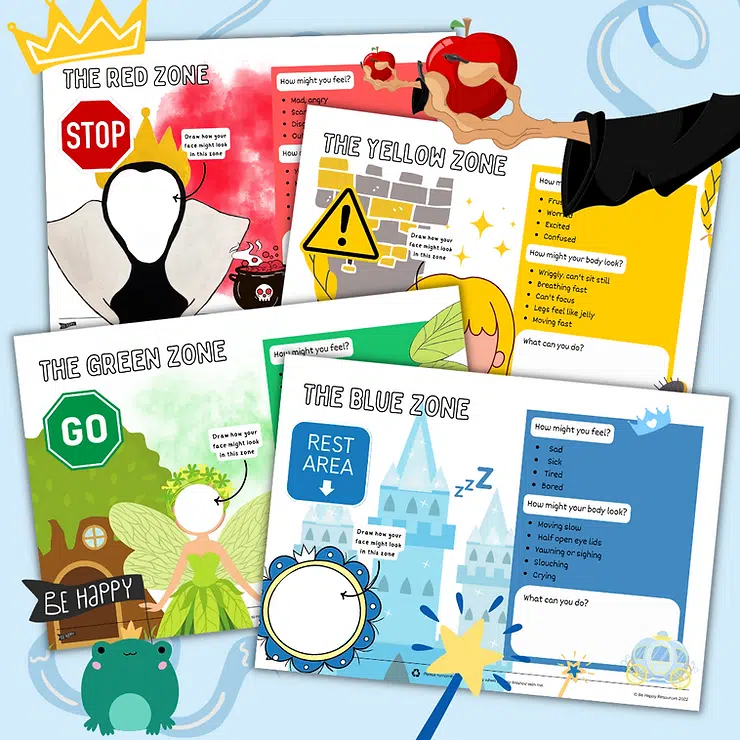
We’ve given the Zones of Regulation a magical makeover, bringing fairytales to the zones. The Zones of Regulation isa curriculum used in many schools and youth groups, based around the use of four colours to help children self-identify how they’re feeling and learn how to self regulate. These four worksheets are full of information to help your children identify and manage their feelings, each sheet provides space to write about what they can do should they find themselves in any particular zone.
Frozen How Do You Feel Today Worksheet/Play-dough Mat
This Elsa emotion activity can be used in a variety of different ways – you can ask your child to draw Elsa’s facial expression to show how they are feeling, or you could laminate and use with a marker pen or play-dough. A fun way to ask any Frozen-lover how they feel!
Princess Emotion Matching Game
Princesses, just like us, have many different emotions – can your child match the picture card to the word card? Optional – can your child think of a story for why our princess is feeling each emotion?
Mirror, Mirror On The Wall…
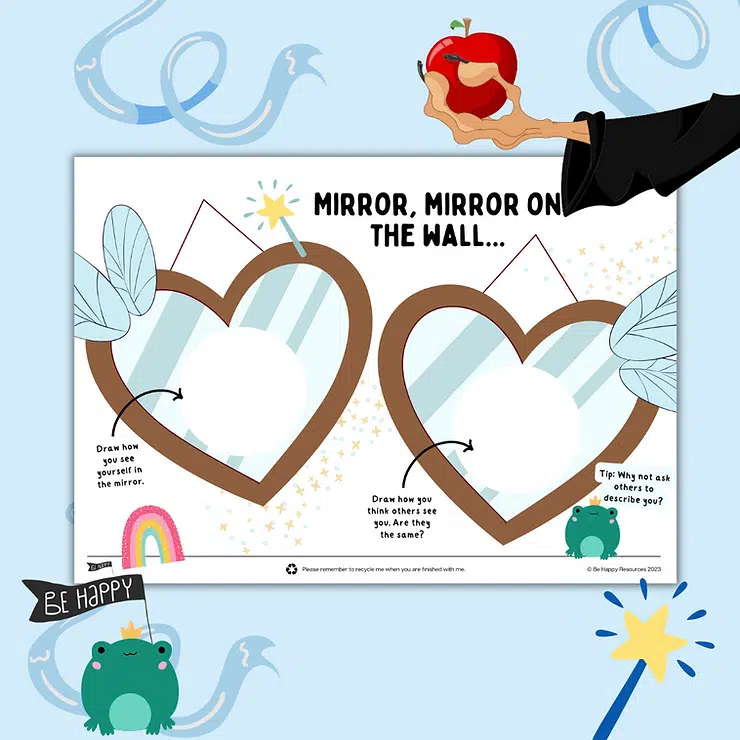
We all know the story of the mirror on the wall that shows the fairest of them all, but in this activity, we’re challenging your child to think about how they see themselves versus how others see them. Ask your child to draw themselves in the first mirror, then have them ask someone they love to describe them and draw themselves again in the mirror on the right. Has the image changed?
In My Castle
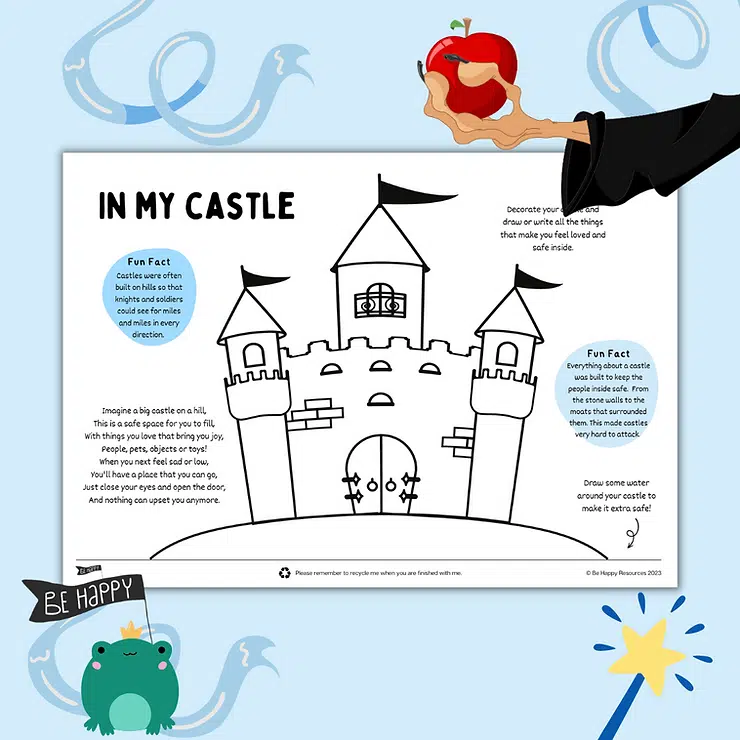
Imagine a big castle on a hill,
This is a safe space for you to fill,
With things you love that bring you joy,
People, pets, objects or toys!
When you next feel sad or low,
You’ll have a place that you can go,
Just close your eyes and open the door,
And nothing can upset you anymore.
In My Castle is a wonderful activity to help children imagine a place to escape. This castle is filled with all the things that they love and helps them to feel safe. Plus we’ve included some fun facts about how castles kept their inhabitants safe from attack. When life gets a bit too much, they can close their eyes and imagine retreating to the safety of their very own castle.
This week’s FREE resource! – For Mailing List subscribers only
This is my Happily Ever After
We’ve stuck with the fairytale theme for this week’s free resource – we want your children to think about what happiness is and what their happily ever after looks like.
Directions: What does happiness mean to your child? We all have our own different versions of what happiness is. Have your child think about this for a moment and write down their thoughts. Then, using this, ask them to write their very own happily ever after. In this exercise, there are no limits, let your child dream and use their imagination – this is a fairytale after all, and anything goes!
If you’d like to receive a free resource each week, make sure you’re signed up to our mailing list! You can sign up at the bottom of any page.
What else is new?
Pack Away My Worries
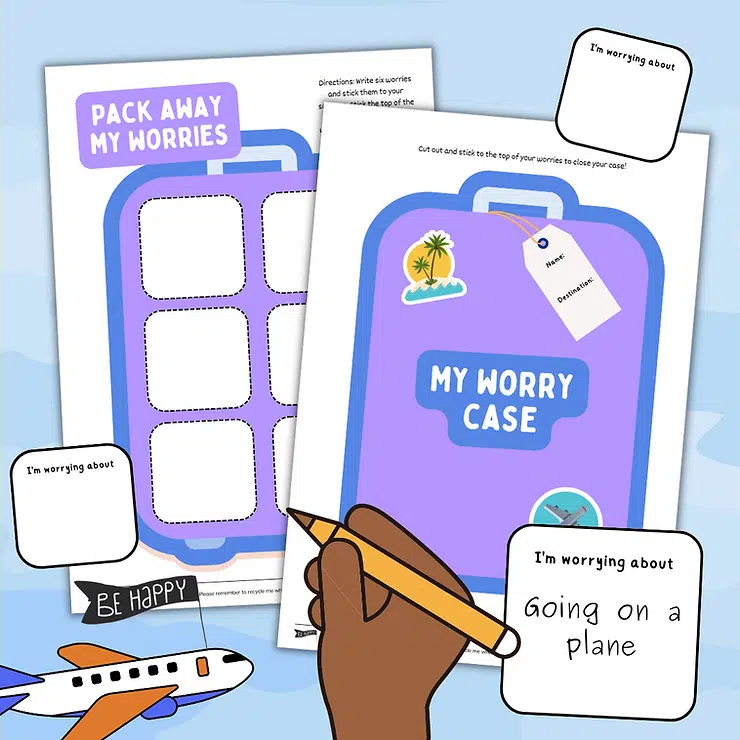
Pack up those worries and send them far, far away in this new activity. Have your child write their worries and pop them in their worry case! Fill in the tag and send the worry case on its way.
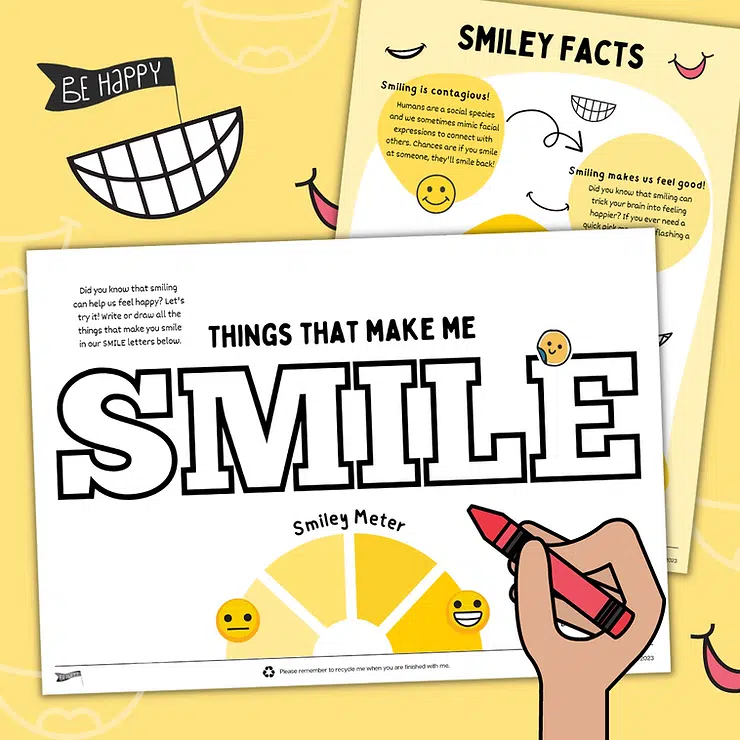
Things That Make Me Smile
This activity is sure to make you smile! Did you know that smiling can trick the brain into feeling happy? Try it when you next feel low and it may bring some temporary relief from any overwhelming emotions.
In this resource we want your children to write or draw all the things that make them smile! Once they’ve done this, they can track their smile on the Smiley Meter – how big are they smiling? We’ve also included a Smiley Factsheet full of wonderful facts all about smiling and how it helps us, from boosting our immune system to connecting with others, smiling is great for our mental health!
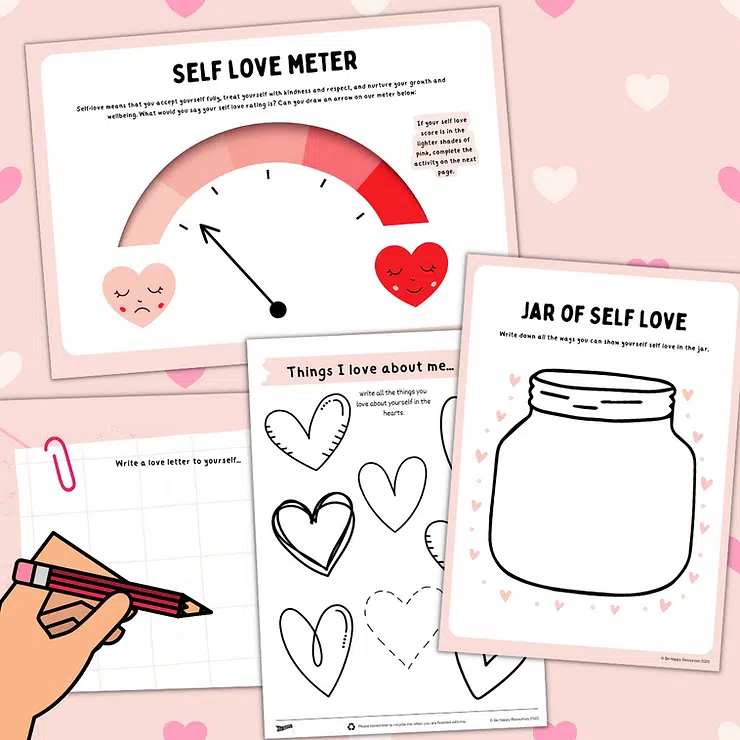
Self Love Meter
This confidence-based activity is perfect for Valentine’s Day. Have your child track their self-love on our meter, if their arrow is towards the lighter pink end of the spectrum, have them complete the activities. Afterwards, ask them to re-draw their arrow on the self love meter – has their confidence improved?
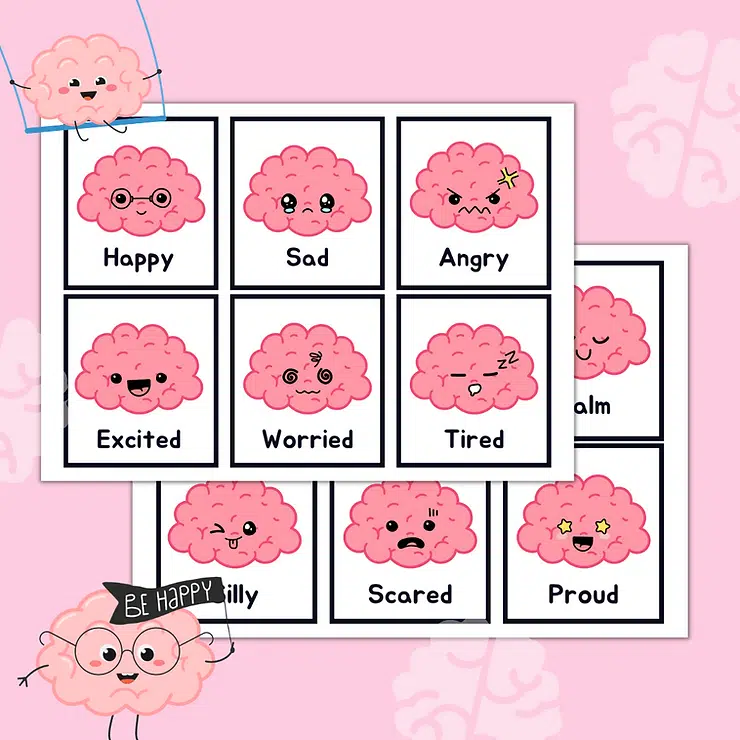
Brain Emotion Flashcards
Also new for our younger minds are our brain emotions flashcards – bringing learning about one of our most important organs to the front of their minds! These cards remind young children that are brains are responsible for our all our feelings – aren’t brains amazing!?
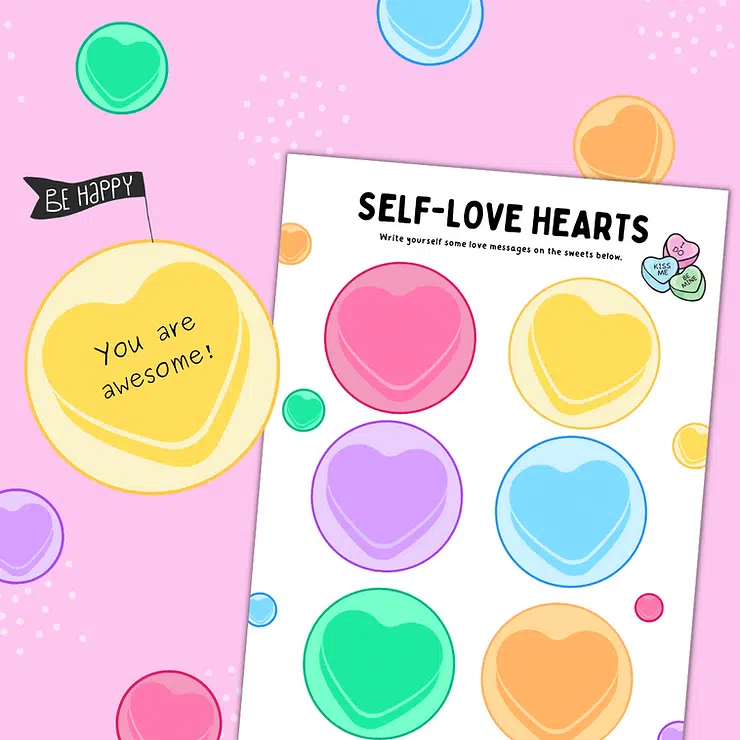
Self-Love Hearts
This new resource focuses on the most important love of all; self-love. Ask your child to write some love-hearts to themselves! You could even cut them out and display them in their room or in your classroom.
It’s a topic that still receives a lot of stigma in adults, nevermind children. But as stats show an increase in children and young people under the age of 19 taking their own lives since the pandemic, we thought we’d get it out in the open.
Suicide is one of the leading causes of death in children and young people.
More than 200 children die by suicide every year in the UK, but this may underrepresent the true number of deaths due to a high burden of proof required by coroners. Not only this, but as some inquests can take a number of years, it’s likely we will see a further increase over the next few years as the true toll from the pandemic comes to light.
It’s important to remember that suicide represents the extreme endpoint of mental ill health, many more children and young people experience suicidal thoughts and a huge number self harm. {Sources below}
The Facts
Since 2013, suicide rates have risen among younger males aged 10-14, and among females across all ages.
In England, a quarter of 11-16 year olds, and nearly half of 17-19 year olds (46.8%), with a mental disorder reported that they have self harmed or attempted suicide at some point in their lives.
Around 7% of all children under 17 have attempted suicide.
Waiting lists for professional support are up to three years in some areas.
Children are waiting more than 12 months for an assessment
The suicide rate for young people aged between 15-19 increased by 35% from 2020 to 2021 alone.
A quarter of teenagers are now suffering from anxiety or depression.
More children than ever are on antidepressants.
Children as young as six have died by suicide.
Most deaths by suicide are preventable, but not all.
The Why
Suicide is linked to many factors, including: poor mental health; self-harm; academic pressures or worries; bullying; social isolation; family environment and bereavement; relationship problems; social media; substance misuse; or neglect.
We are yet to see the true repercussions from the pandemic. We know that feeling safe is one of the biggest protective factors for young minds, yet for a year or two, we effectively told children that the world wasn’t safe and we were to stay inside. We lost connections and physical contact, which we know is important for good mental health and children were unable to socialise with each other.
In fact, primary school teachers have said that the current generation entering schools are the most impacted emotionally, and regular discussions on teacher groups show a huge decline in the lack of emotional regulation in young children.
There are many reasons why children may decide to end their lives, however, suicide is not usually a snap decision and there is usually a journey to reach this destination. We believe that early education and prompt support are key.
Myths
Myth 1: Talking about suicide can give young people ideas
Most experts and professionals agree that not talking about suicide is more harmful than talking about it. In fact, people who are struggling or have felt suicidal will often say what a huge relief it was to be able to talk about what they were experiencing.
“Evidence shows asking someone if they’re suicidal can protect them. They feel listened to, and hopefully less trapped. Their feelings are validated, and they know that somebody cares about them. Reaching out can save a life.” Says Rory O’Connor, Professor of Health Psychology at Glasgow University.
If somebody is having thoughts of self harm or suicide, it is unlikely that you will give them ideas. Talking about suicide provides the opportunity for communication for anyone who is having these thoughts but doesn’t know how to bring up the topic of conversation.
When talking about suicide with young people, you could open up the channels of communication by first saying that this is not a taboo topic and you are open to listening to them about how they’re feeling whenever they need, especially if they ever have thoughts of harming themselves.
Myth 2: People who are suicidal want to die
Most people who have suicidal thoughts do not want to die; they just want the situation they are in to change or the way they are feeling to stop. This distinction is extremely important, because this means that there are ways to help.
Myth 3: Suicide is selfish
Suicide isn’t selfish. People who are suicidal often believe they are a burden to their loved ones and that they would be better off without them.
“Suicide is at the end of a long probable chain of thoughts and it is rarely, if ever, done for selfish reasons. It is ultimate despair.” Says Prof Paul Fearon, medical director at St Patrick’s Mental Health Services.
Myth 4: People who threaten suicidal are attention seeking
People who say they want to end their lives should always be taken seriously. In fact, it could have taken a lot of courage for someone to say they are feeling suicidal and every threat should be treated as though the person has intent to die.
Myth 5: There are no signs if someone is feeling suicidal
If someone is feeling suicidal there can often be signs, but it is important to remember that everyone copes differently. There are some signs that can show someone is going through a difficult time or having difficult thoughts. These may include:
The recent suicide, or death by other means, of a friend or relative.
Previous suicide attempts.
Preoccupation with themes of death or expressing suicidal thoughts.
Depression, conduct disorder and problems with adjustment such as substance abuse, particularly when two or more of these are present.
Giving away prized possessions/appearing to make final arrangements.
Major changes in sleep patterns – too much or too little.
Sudden and extreme changes in eating habits such as losing or gaining weight.
Withdrawal from friends and family or other major behavioural changes.
Dropping out of group activities or losing interest in things.
Personality changes such as nervousness, outbursts of anger, impulsive or reckless behaviour, or apathy about appearance or health.
Frequent irritability or unexplained crying.
Lingering expressions of unworthiness or failure.
Lack of interest in the future.
A sudden lifting of spirits, when there have been other indicators, may point to a decision to end the pain of life through suicide.
Myth 6: Marked and sudden improvement in mental state signifies the suicide risk is over
Sometimes people who are feeling suicidal may experience an uplift in spirits before a suicide attempt, this is because a person with suicidal thoughts may feel that the end of their pain is near and they will not have to live with it for any longer.
Myth 7: Every death is preventable
In an ideal world, every suicidal death could be preventable, but no matter how well intentioned, alert and diligent our efforts may be, there is no way of preventing all suicides from occurring.
Myth 8: You can only call Samaritans if you’re suicidal
Samaritans are available for anyone who has conflicting thoughts and feelings and want someone to talk to. You can call them free, day or night on 116 123 or email jo@samaritans.org.
Myth 9: The only effective intervention for suicide comes from professionals
Whilst people with suicidal thoughts will need the help and support of a trained mental health professional, anyone has the ability to talk to and support a young person in distress. All people who interact with adolescents in crisis can help them by way of emotional support and encouragement. Having a good support network is a huge factor in recovery from suicidal ideation.
Free Resources
The resources below will be free until April 2023 when they will go on to form a part of our new Teen section of our Hub.You can download these to help any pre-teen, teen or young person who is experiencing suicidal thoughts or who is self harming.
Disclaimer: Please remember that our resources do not replace professional support and should you or someone you know be in crisis please refer to our urgent support page here.
My Safety Plan
A Safety Plan is exactly that – a plan to keep yourself safe. For any teen or young person experiencing suicidal thoughts, it is important they fill out a safety plan so that they know what to do, who to talk to and what resources to use to help them when they are experiencing thoughts of self harm or suicide intention.
My Bad Day Support Plan
We all have bad days, for some of us, those bad days can come around a lot more frequently. Have your teen or young person fill out a plan to help cope with those tougher times.
My Circle of Support
For teens and young people experiencing mental ill health, it’s important that they know who to trust and who they can talk to. Having a support network is a huge protective factor in mental health and a major part of recovery.
Self Harm Tracker
Use our weekly self harm tracker to track self harm urges, this tracker will be able to tell you whether you need to explore further help and support.
Things I Can Do When I Feel Like Self Harming
Fill in this self harm distraction plan to cope with the urge to self harm and learn about what works for you.
With Children’s Mental Health Week 2023 on the horizon, we thought we’d give you some tips for talking to your children about mental health. You may be concerned that you don’t know enough or may say the wrong thing – but be rest assured that talking about our emotions is better than not talking about them at all!
Here, we’ll give you some tips to start exploring mental health conversations at home and introduce the importance of taking care of our mental wellbeing.
1. Use our Free Guides
Our free guides can help you to introduce the topic of mental health to young children and will help explain how our brains work. Our free mental health guides for children also help children understand certain topics and disorders, this can be especially helpful if they are experiencing things like panic attacks, loss or separation anxiety. All our guides are regualrly approved and recommended by our Clinical Psychologist.
2. Do something creative – but make sure you’re both feeling relaxed
For some children sitting still can be a difficult task! Break out some mindful colouring or get out a drawing pad and do some doodling together. Whilst you are drawing, ask questions such as how they’re feeling, if they’re feeling calm and how their day has been. Another good time to connect with your child is just before bed, when they are calm and relaxed you can ask a few reflective questions about their day, for example, ‘what was the best part of your day?’ and ‘what can you do differently tomorrow?’
3. Offer a bit of your day first
When sharing conversations about emotions start by offering information on your day and how you feel first. This reaffirms that talking about our mental health is normal and acceptable and helps your child feel they are able to open up. Make time regularly to do this and build an environment that is supportive and open – this will mean that your child is more likely to come to you when they feel upset, worried or overwhelmed.
4. Ask open ended questions
Instead of asking ‘are you feeling ok?’ ask open questions about how they are feeling. If you find that asking something like ‘how are you feeling today,’ doesn’t prompt an open response, try rephrasing the question – for example, ‘what is one thing that is worrying you right now?’ or ‘what was the worst part of your day and why?’ Talking about our feelings doesn’t have to be purely investigative, it can lead to fun conversations too – if you need some inspiration, you can download our Mental Health Conversation Cards for free here.
5. Become more inquisitive throughout the day
Children express themselves routinely through play and drawing. Regularly ask your children questions about what they’re doing and why – you may be surprised at some of the answers! For example, ‘what are you drawing?’ ‘why are you using that colour?’ or if they are playing with dolls or toys you can ask how their teddies are feeling ‘what do you think bear is feeling right now?’ or ‘what would he say if he could talk?’
7. Keep conversations regular – but don’t force it
If your child doesn’t want to open up, don’t force them or keep asking questions. Leave it and try another time but don’t give up.
8. Turn off their screens
Make sure there are no distractions – and that includes your phone and devices too! The most important thing is that you give your child your undivided attention. For example you can let them know that you are opening up the channels of communication by saying, ‘I’m going to switch my phone off for the next hour so we can do something together, is there anything you’d like to talk about?”
9. Remember, talking about mental health is better than not talking about mental health
A lot of us avoid talking about mental health because we don’t understand it ourselves or don’t know what to say. Talking about mental health won’t give your child ideas – for example, talking about anxiety won’t make your child anxious. Instead, it will give your child the knowledge to understand their thoughts and normalise that we all have mental health.