
Resources
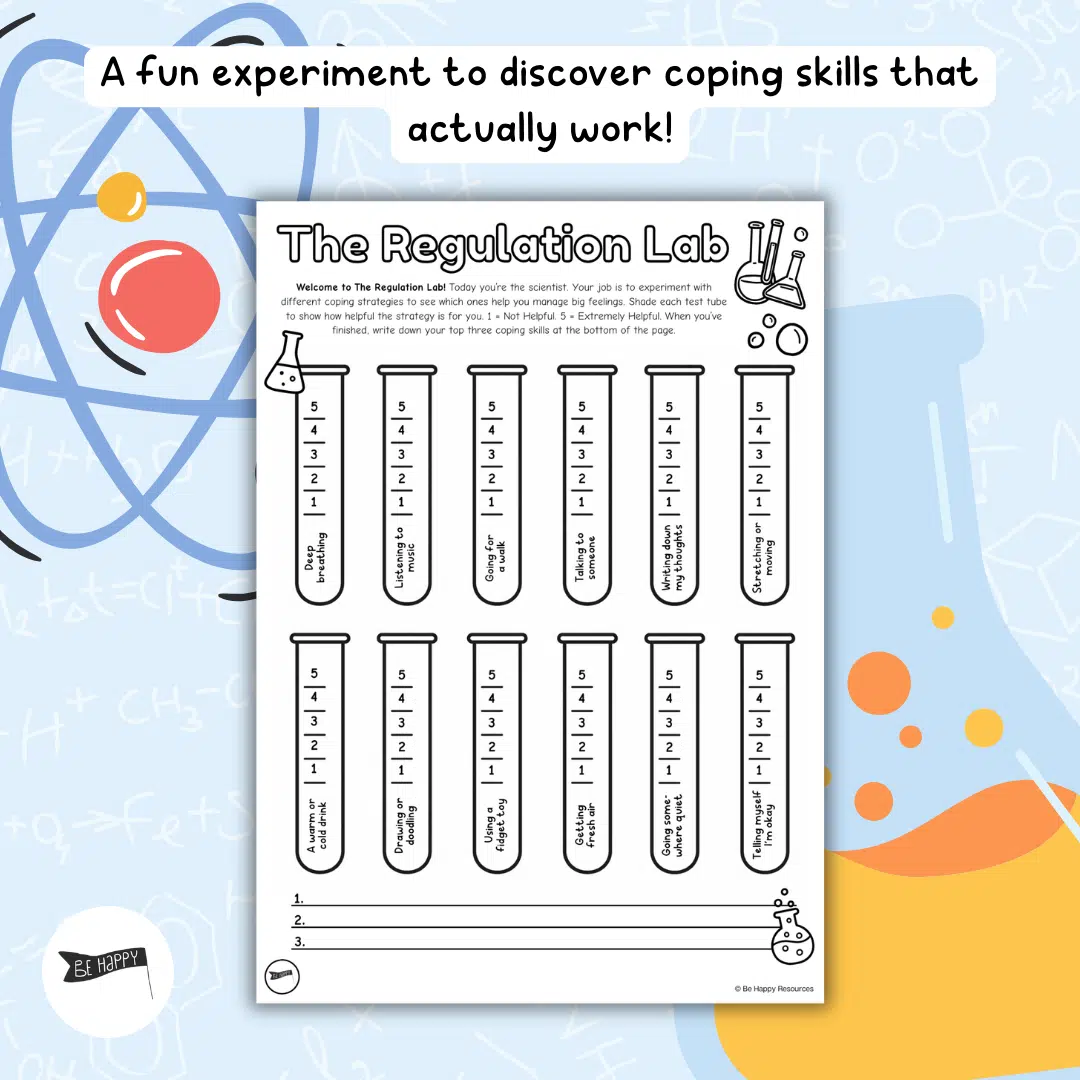
The Regulation Lab – Explore, Test and Rate 10 Different Coping Strategies!
[UPDATED - Apologies there was a typo appearing on the original resource, this has now been fixed. Thank you - Team BH]
Welcome to The Regulation Lab, a creative, science-themed worksheet that helps children and teens explore which coping strategies help them calm down, reset, and handle strong emotions.
Students become the scientist as they test 10 different coping strategies, shading test tubes to rate how helpful each one is. By the end of the activity, they’ll identify their top three go-to strategies for managing stress, frustration, and big feelings.
Perfect for PSHE lessons, counselling sessions, or wellbeing check-ins, this engaging worksheet turns emotional regulation into a fun and memorable experiment!
Member Account Includes
- Access over 800 downloadable mental health resources for children and teens
- Resource packs, activities, games, worksheets, teaching resources and more
- Seasonal themed resources
- Unlimited downloads
- Request your own resources
- Cancel anytime
Resource Info
The Regulation Lab - A Science-Themed Coping Skills Experiment for Children and Teens
A fun, printable worksheet where children act like scientists to test and rate coping strategies, helping them discover which tools work best for managing stress and strong emotions.
Understanding how to manage emotions is an important life skill. However, not every coping strategy works for everyone. Some children find breathing helpful, while others prefer movement, talking to someone, or taking a quiet break.
The Regulation Lab helps children explore this idea by approaching emotional regulation like a scientific experiment, your little scientists can test different strategies and discover what works best for them.
About This Resource
In this activity, students imagine they are scientists working in a lab. Their task is to experiment with different coping strategies and rate how helpful each one is.
Each coping strategy is presented inside a test tube scale from 1 to 5. Children and young people shade the test tube depending on how helpful the strategy is for them.
At the end of the experiment, students reflect on their results and identify their top three coping skills that help them calm down and reset when emotions feel big.
Features
• Fun science-themed regulation activity.
• 10 coping strategies for students to test.
• Visual test tube rating system (1–5 scale).
• Encourages self-reflection and emotional awareness.
• Clear and engaging one-page printable worksheet.
• Suitable for primary and secondary students.
Benefits
This activity helps students:
• Explore different coping strategies.
• Develop emotional awareness.
• Identify personal regulation tools.
• Build confidence in managing stress and strong emotions.
• Understand that different strategies work for different people.
By identifying strategies that work best for them, students can build their own personal toolkit for handling challenging emotions.
How to Use
Students read the introduction and imagine they are scientists running an experiment.
For each coping strategy, they:
-
Read the strategy
-
Shade the test tube from 1 to 5 depending on how helpful it is for them
1 = Not helpful
5 = Extremely helpful
After rating each strategy, students review their results and write down their top three coping skills at the bottom of the worksheet.
Suggested Uses
This worksheet works well for:
• PSHE or wellbeing lessons
• SEL activities
• School counselling sessions
• Mental health awareness lessons
• Small group discussions
• Individual reflection activities
It can also be used as a starting point for conversations about how different people manage stress and emotions in different ways.
The Regulation Lab turns emotional regulation into a fun and memorable experiment. By testing and rating coping strategies, students can discover what works best for them and build a personalised set of tools for handling stress and strong emotions. Download The Regulation Lab today and help students discover their personal coping toolkit.


Our
Members Include


